
As an Amazon Associate, this website earns from qualifying purchases.
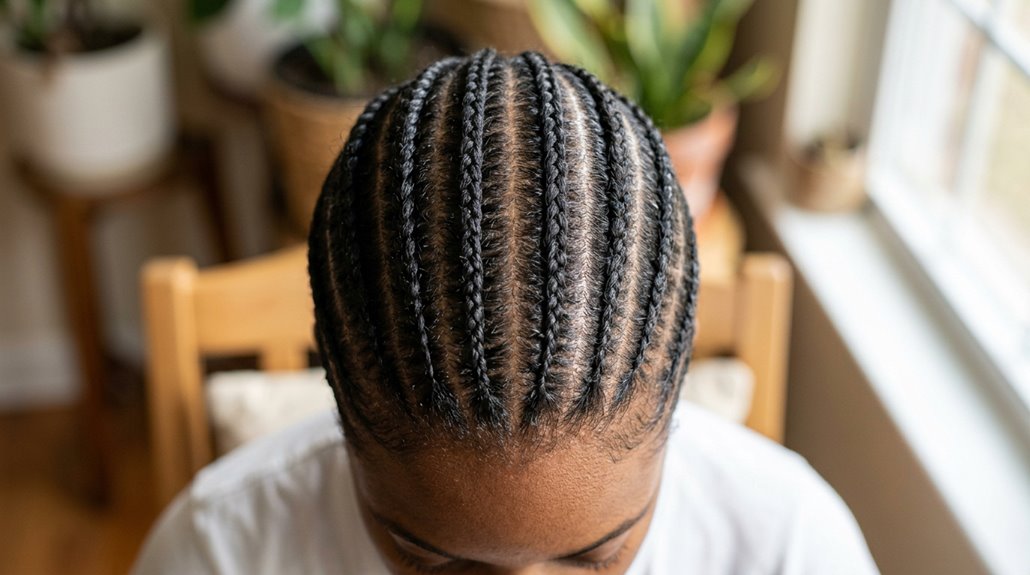
To create plain cornrows on natural hair at home, start with clean, detangled, and moisturized hair, which makes braiding easier and helps maintain healthy hair. Section your hair into three even parts using a rat-tail comb and hold tension while braiding, feeding hair smoothly from the root to keep the braid neat. Use lightweight gels or oils to keep edges tidy. For more tips on perfecting your technique, keep exploring these simple steps.
What Are Cornrows and Why Are They a Great Natural Hair Style
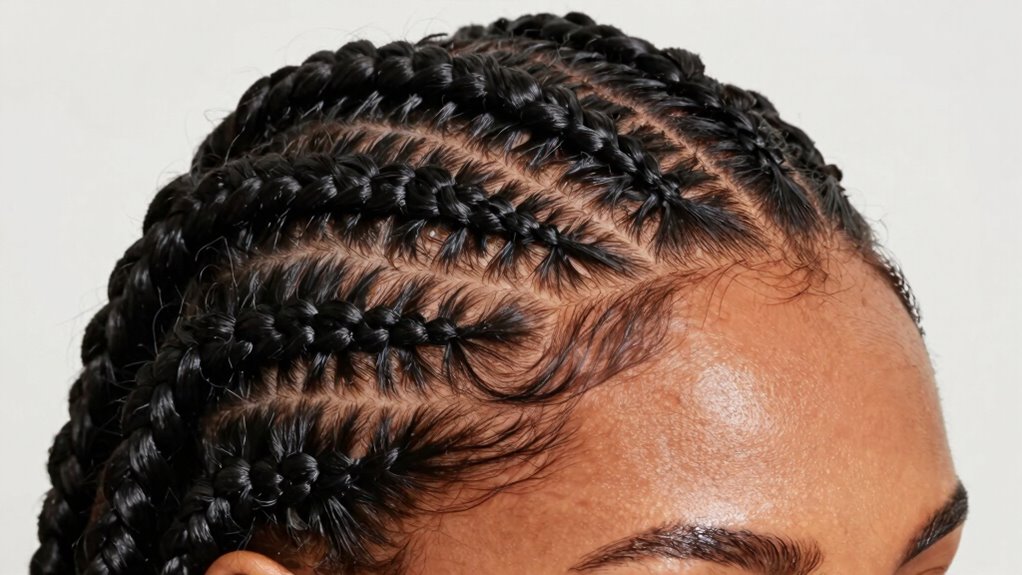
Ever wonder what makes cornrows such a popular choice for natural hair? These braids are a classic protective hairstyle that keeps hair close to the scalp in neat, narrow rows. Because they require minimal daily styling, they help reduce manipulation, which is great for natural hair care.
Cornrows are versatile and can be styled in countless patterns, making them both practical and stylish. Beginners often find them manageable, especially when following step-by-step tutorials that emphasize even tension and consistent technique. They also help retain moisture, which is essential for healthy natural hair.
Whether worn for a special occasion or everyday wear, cornrows offer a low-maintenance, protective way to keep hair healthy while looking sharp. That’s why they remain a favorite for many who want to care for their natural hair effectively.
Essential Tools and Products Needed to Cornrow Natural Hair
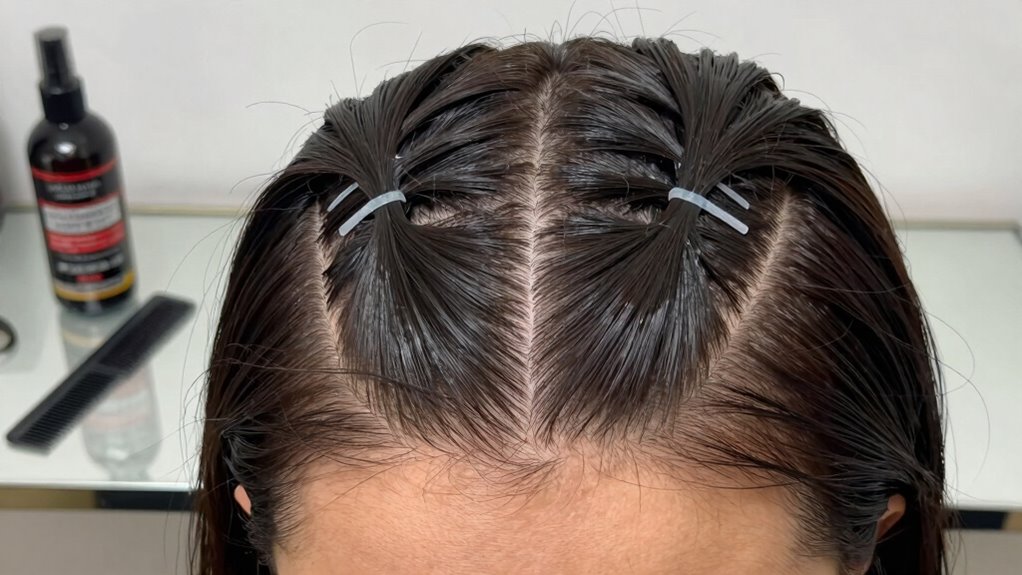
To successfully cornrow natural hair, having the right tools and products on hand makes all the difference. Essential cornrow tools include a fine-to-medium tooth comb for smooth sections, hair clips to keep hair organized, and a rat-tail comb for precise parting. A lightweight hold gel or edge control is key for keeping sections neat and tame, especially around the edges. Additionally, a clear styling product helps minimize frizz and guarantees smoother braiding, while a small spray bottle with water or a detangler keeps hair moist if it dries during the process.
Using small-to-medium sections makes braiding easier, especially for beginners. Finally, a mirror or dual-angle setup is helpful to monitor the back of the head, ensuring consistent tension and clean partings.
Preparing Your Natural Hair for Cornrowing: Cleansing, Conditioning, and Detangling
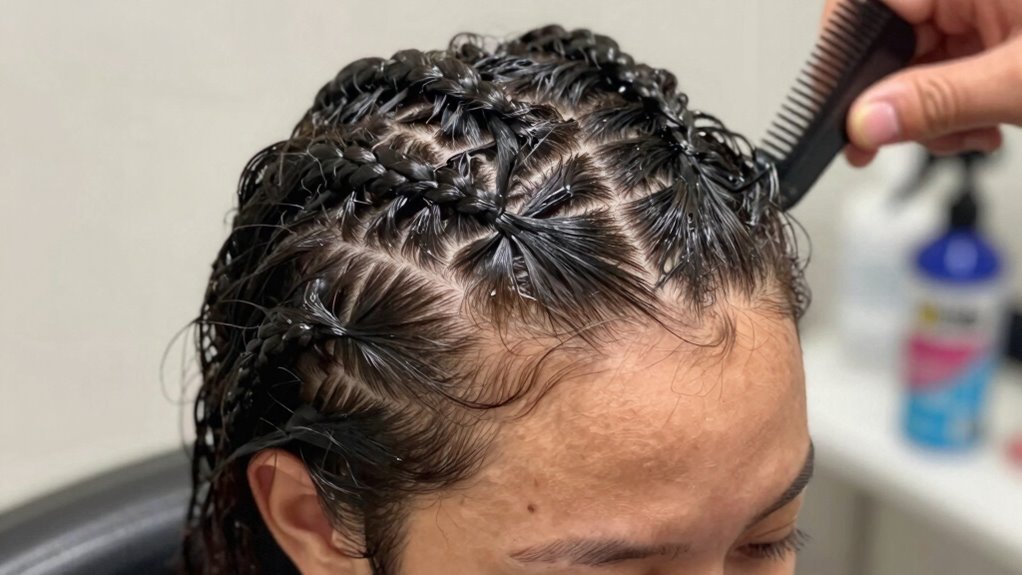
Why is proper preparation so important before starting to cornrow natural hair? Good prep sets the foundation for neat, comfortable braids that last. Cornrow prep involves cleansing the scalp and hair to remove product buildup, which helps the hair lie flat and makes detangling easier. Deep conditioning is essential; it hydrates the hair, reducing breakage during braiding. Moisture conditioning, especially with moisture-rich products, keeps hair soft and manageable.
Detangling thoroughly from ends to roots prevents snags and makes sectioning smoother. Using a wide-tooth comb or detangling brush helps loosen knots without causing damage. Additionally, sectioning hair into even parts creates clean rows and consistent tension. These steps keep the hair healthy and ensure the cornrows turn out neat and long-lasting.
Step-by-Step Guide to Sectioning and Parting Your Hair for Cornrows
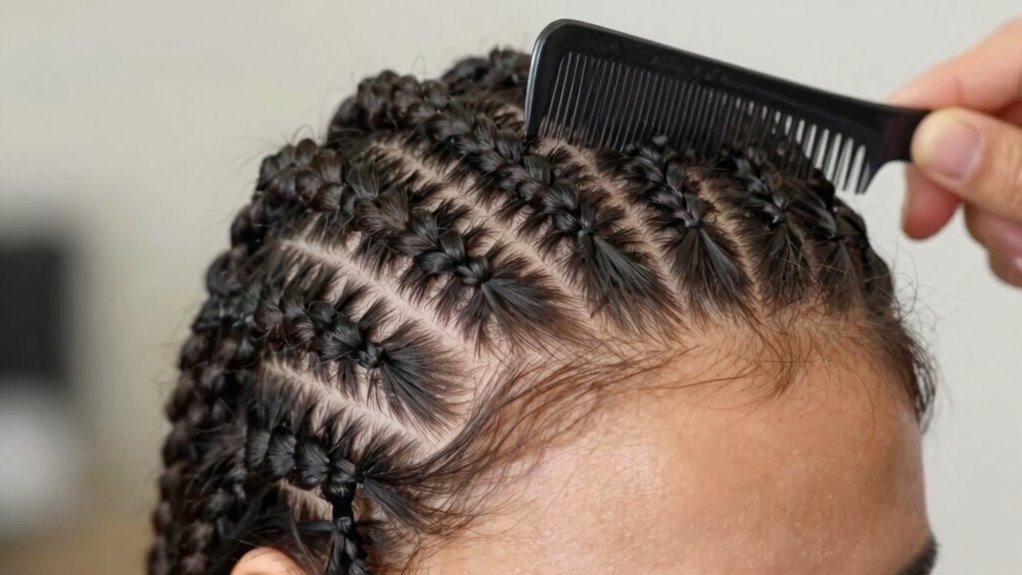
Getting started with sectioning and parting your hair for cornrows might seem simple at first, but taking the time to do it carefully can make all the difference. A clean, defined base helps ensure your cornrow looks neat and stays neat longer. Begin by sectioning off the part of your hair you want to braid, creating a clear line or shape.
When sectioning, take three evenly sized pieces of hair from the section, keeping consistent spacing for uniform cornrows. The key is controlling tension: use your right hand to hold two sections between your fingers, while your left hand loosely holds the remaining piece. As you braid, move the middle piece over to the left, feeding in extra hair with your pointer finger, which helps keep the tension balanced and the cornrow smooth.
How to Grip and Hand Position Correctly for Smooth, Even Cornrows
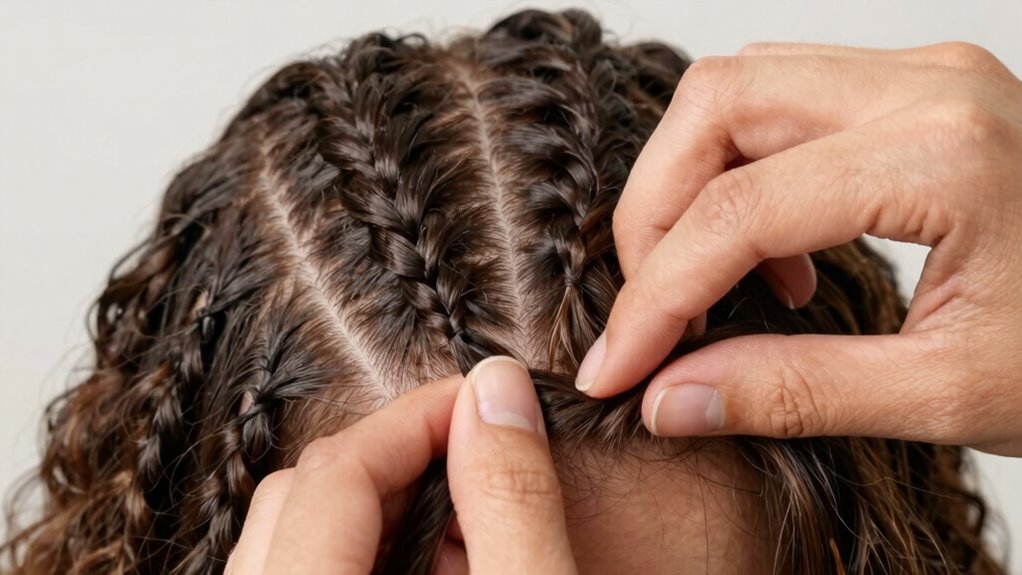
Ever wondered how to keep your cornrows looking sleek and even? The secret lies in the right cornrow technique and proper hand grip. The right hand controls the two sections between the ring, middle, and pointer fingers, while the left hand holds the remaining piece loosely between the middle and ring fingers to manage tension control.
The middle hair piece is always moved over first, helping to pick up new hair from the scalp. This ensures the added hair comes from only the middle section. After gripping, the right section is set aside, and the thumb and pointer finger stabilize the braid. Maintaining a steady rhythm with palms moving in the braid’s direction, along with keeping the left piece taut, helps achieve smooth, even cornrows with consistent tension throughout.
Techniques for Starting Your Cornrow and Building the Braid Pattern
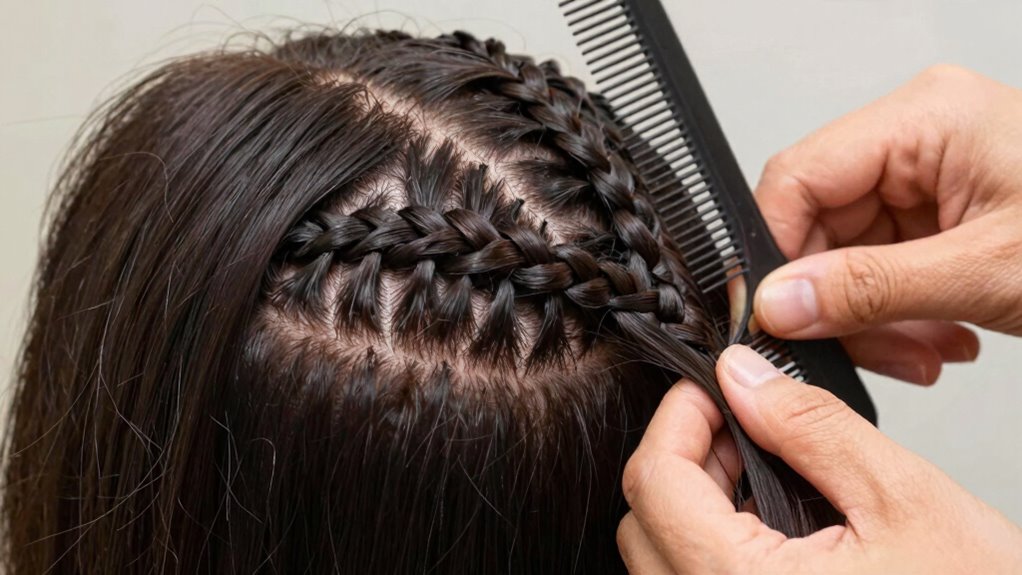
Starting a cornrow involves more than just plaiting hair; it’s about creating a solid foundation that guides the entire braid pattern. The key is proper hair sectioning—dividing the hair into three even chunks using a consistent cornrow technique. With the right hand controlling two inner sections and the left hand holding the remaining piece taut, the braid begins smoothly.
As the braid forms, maintain a rhythm where palms move in the braid’s direction, only adding hair from the middle section during each crossing. This ensures the pattern stays uniform and neat. Watching visual tutorials can help confirm technique. Building the braid steadily, crossing the middle over to the left while pulling in new hair, creates a consistent, beautiful braid pattern every time.
| Step | Action | Tip |
|---|---|---|
| 1 | Section hair | Use even chunks |
| 2 | Cross middle over | Maintain rhythm |
| 3 | Incorporate new hair | Keep pattern consistent |
Tips for Maintaining Tension and Consistency Throughout the Braid
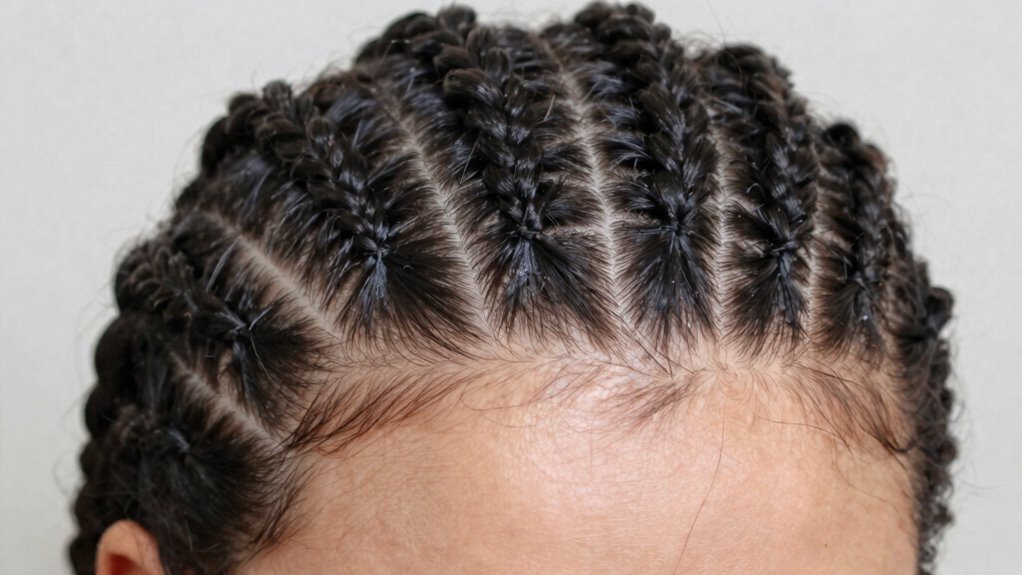
Maintaining good tension and consistency while braiding is like finding the right rhythm in a song, it keeps everything flowing smoothly. To do this, it’s important to hold the left piece taut, ensuring the tension remains even throughout. Meanwhile, the right and middle pieces should stay loose enough to feed in hair gradually, preventing the braid from loosening or becoming uneven.
Using a steady rhythm with your palms moving in the braid’s direction helps keep tension uniform. It’s helpful to start with three equal-density strands, gripping the left with your thumb and pointer finger, while pulling new hair from the middle. After each cross, continue feeding hair from the middle to maintain the braid’s integrity. Regularly compare each new cross to the last and adjust your grip and speed as needed for a smooth, consistent braid.
Troubleshooting Common Cornrow Challenges and How to Fix Them
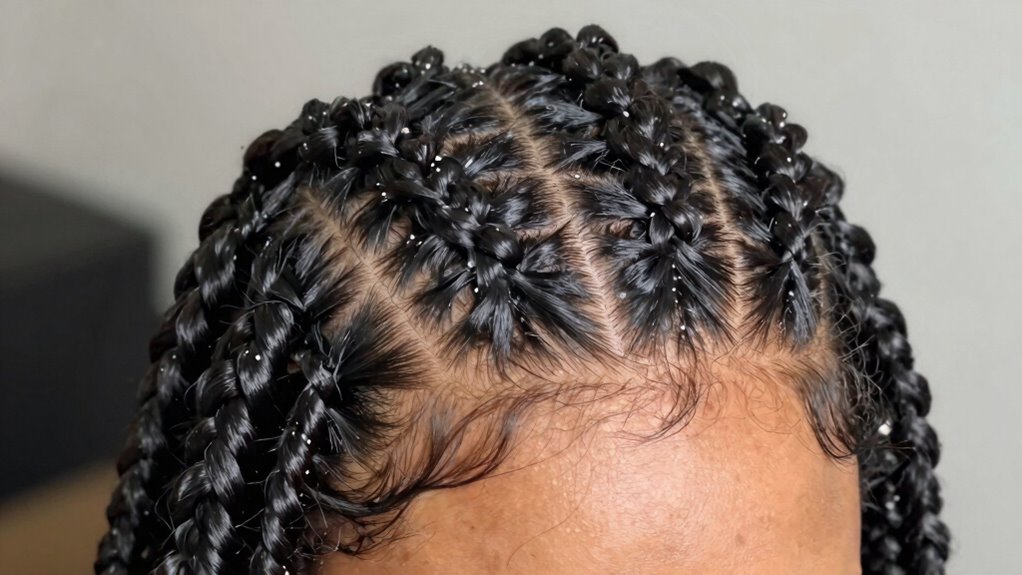
What are some common issues that can come up when braiding cornrows, and how can they be fixed? Cornrow troubleshooting often involves tension, technique, and sectioning misalignment.
If the braids are uneven or loose, it’s usually because the tension wasn’t consistent. To fix this, apply even pressure as you braid, holding sections taut but not too tight, to prevent discomfort or breakage.
Sectioning misalignment happens when parts aren’t evenly divided, leading to crooked rows.
The key is to carefully section hair, grabbing small amounts and pulling them into the middle as you cross sections. Practice helps develop a steady rhythm and proper hand positioning.
Best Practices for Caring for Cornrows to Keep Hair Healthy
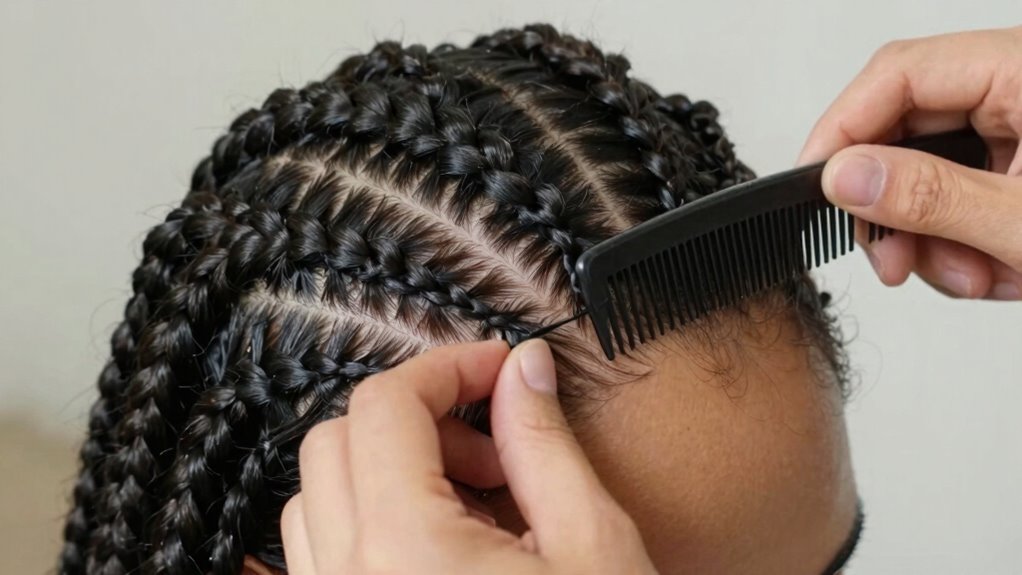
Ever wondered how to keep your cornrows looking fresh and your hair healthy at the same time? Proper cornrow care involves more than just braiding; it’s about maintaining scalp health and moisture retention. To do this, regularly moisturize the scalp and braiding hair with lightweight oils, which helps prevent dryness and breakage.
Using clean, detangled natural hair and sectioning it carefully ensures even tension, reducing stress on the scalp. It’s also important to avoid overly tight cornrows; they can cause thinning around the edges. Additionally, sleeping on a silk or satin scarf and a soft pillowcase minimizes friction and frizz.
Finally, refresh and re-tie your edges every 2–3 days and follow a gentle wash routine to prevent buildup and support healthy hair growth.
Additional Resources and Video Tutorials to Improve Your Cornrowing Skills
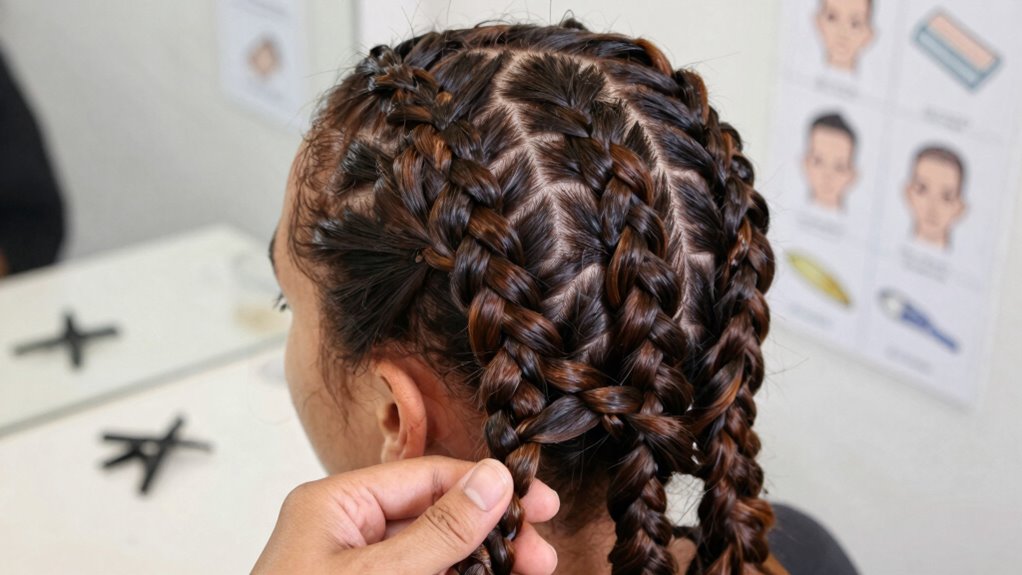
For beginners looking to perfect their cornrowing skills, exploring additional resources and video tutorials can make a big difference. A popular cornrows tutorial titled “How to Cornrow for Beginners (on natural hair)” by Twisted Pretty CEO Lina offers clear, step-by-step guidance suited for natural hair cornrowing. Although viewers may encounter playback issues, troubleshooting prompts are provided to help. Watching both written instructions and visual tutorials boosts confidence and understanding.
The following table highlights some helpful resources for beginners:
| Resource Type | Description | Link/Source |
|---|---|---|
| Video Tutorial | Full beginner-friendly cornrow guide | YouTube (Lina’s tutorial) |
| Written Guide | Step-by-step instructions | Blog posts or articles |
| Practice Tips | Tips for consistent hair addition | Online forums and videos |
| Feedback Platform | Share progress and ask questions | Facebook groups |
| Troubleshooting | Solutions for playback issues | Support links and forums |
These tools make natural hair cornrowing more manageable and enjoyable.