
As an Amazon Associate, this website earns from qualifying purchases.
Growing lemon balm is simple and rewarding, whether in a garden or container. It thrives in sunny spots but benefits from some shade in hot weather. Harvest leaves when morning dew dries, choosing fresh for the best skin soothing properties. To use, infuse leaves in olive oil for weeks or make tinctures with alcohol. These natural remedies can calm skin irritations and cold sores, and if they keep exploring, they’ll discover more easy ways to care for their skin.
Understanding Lemon Balm and Its Skin-Soothing Benefits
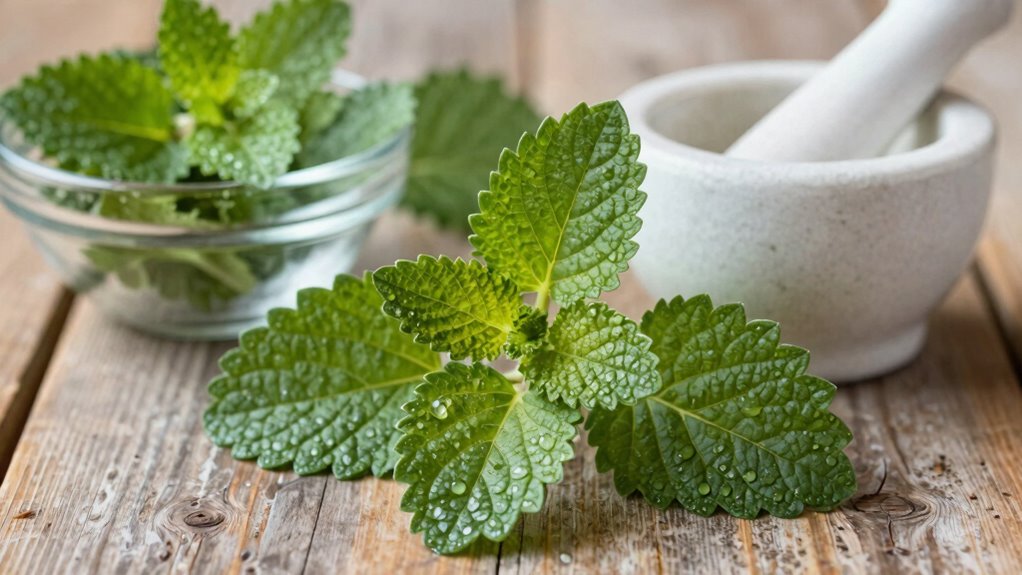
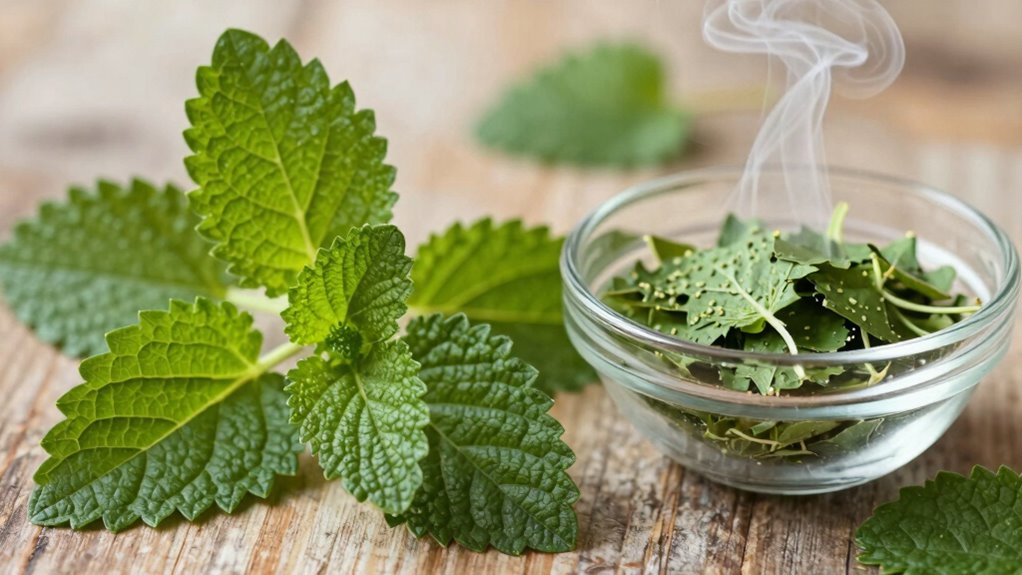
Have you ever wondered how some plants can do more than just look pretty? Lemon balm (Melissa officinalis) is one such plant, known for its skin benefits. This perennial herb, part of the mint family, features heart-shaped, hairy leaves and grows up to 90 cm tall. Topical lemon balm is popular for soothing skin irritations, including cold sores caused by the herpes virus. Its extracts—like tinctures, infused oils, or herbal soaps—harness anti-inflammatory and antiviral properties.
But safety is key: diluted essential oil must be used carefully, as undiluted forms can irritate the skin. Always test a small patch first, and consult a healthcare provider if unsure. When used properly, lemon balm can be a gentle, natural way to promote skin comfort and healing.
How to Grow Lemon Balm in Your Garden or Containers
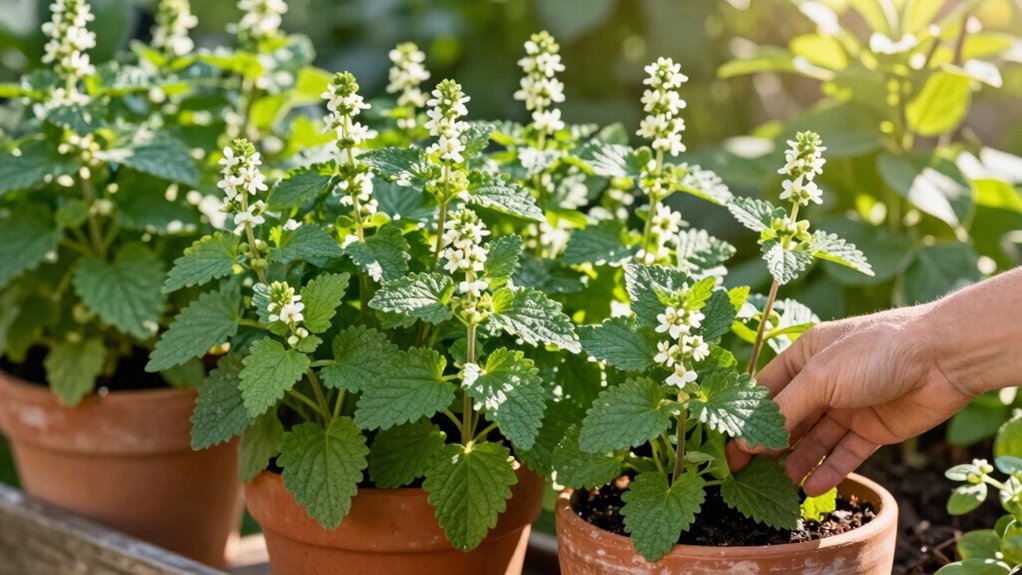
Growing lemon balm at home is a rewarding way to enjoy its soothing benefits firsthand, and it can be easily cultivated whether space is limited or abundant. Lemon balm grows best in garden cultivation or in containers, making it versatile for many settings.
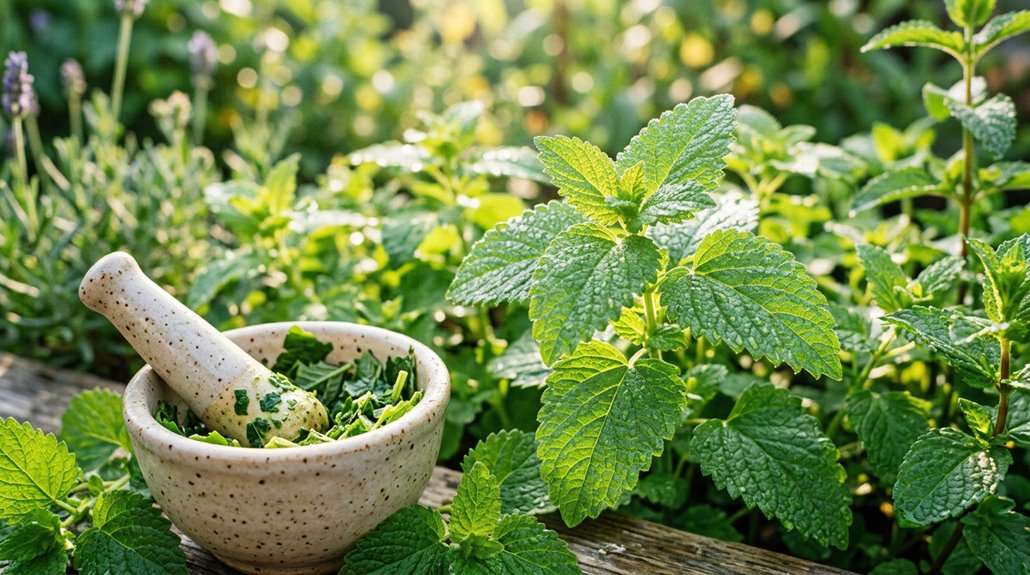
This perennial herb reaches 30 to 90 centimeters tall and has heart-shaped, veined leaves covered in stiff hairs. It tolerates direct sunlight but may yellow in hot summers, so some shade can help. Plants in partial shade tend to be larger and more succulent.
For container growing, use rich, moist soil and place the pot where it receives some sunlight. Regular pruning encourages bushy growth, and harvesting is ideal after dew dries and before the heat of the day. Growing lemon balm becomes simple and enjoyable with these tips.
Harvesting and Preparing Lemon Balm for Skin Care
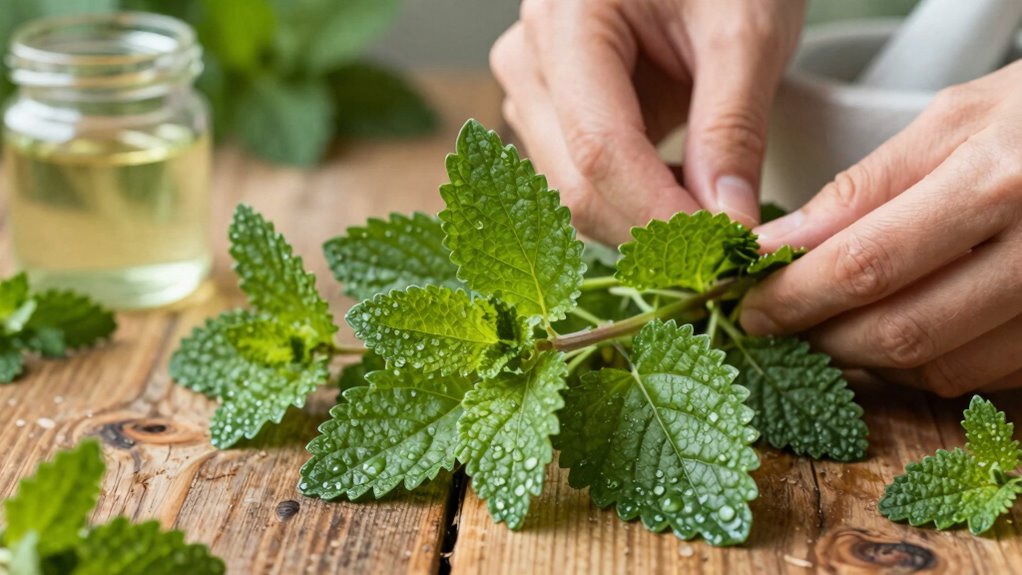
Ever wondered when the best time is to harvest lemon balm for maximum skin-soothing benefits? The ideal moment is after dew has dried and before the day heats up, which helps preserve the plant’s volatile oils.
When harvesting, cut just above the soil level if the plant is established, or prune about one-third of smaller plants to encourage bushier growth. For skin care, fresh lemon balm leaves are preferred because they retain more of their soothing oils than dried ones.
To prepare, infuse these leaves in carrier oils like olive oil for about four weeks in a warm, dark spot. Then strain out the leaves to create a calming lemon balm infused oil. Always test homemade products on a small skin area to avoid irritation.
Making Lemon Balm Infused Oil and Topical Remedies
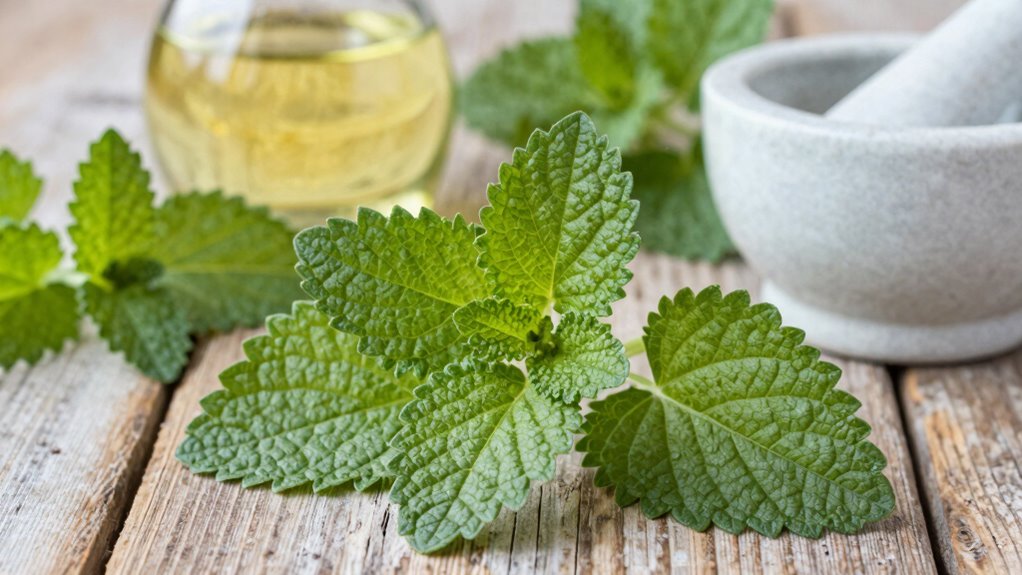
Curious about how to turn fresh lemon balm leaves into a soothing oil? Making lemon balm infused oil involves combining 100 grams of fresh leaves with 750 grams of olive oil in a clean jar. It’s important that the leaves are fully submerged to extract their skin-soothing benefits. Seal the jar tightly and store it in a warm, dark spot, shaking it daily to help release the plant’s natural oils.
After about four weeks, strain out the leaves and transfer the infused oil into dark bottles for better preservation. This lemon balm infused oil can be used as a base for topical remedies, applying gently to irritated or inflamed skin. Using fresh leaves ensures maximum aroma and skin benefits, making the remedy both effective and delightful.
Creating Lemon Balm Tinctures for Skin and General Use
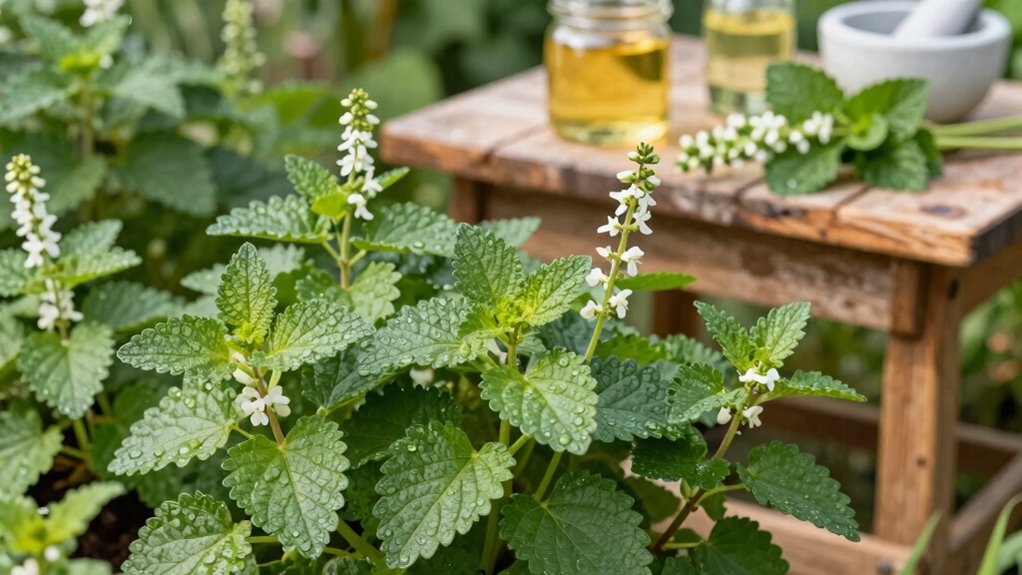
Have you ever wondered how to create a simple, potent herbal tincture using lemon balm? Making a lemon balm tincture involves some easy steps in harvest and tincture preparation that can yield a skin soothing remedy.
First, gather fresh lemon balm leaves, filling a jar about three-quarters full, or use dried leaves about 1/4 to 1/3 full.
Second, cover the leaves with high-proof alcohol, like 80 proof or higher.
Third, seal the jar tightly and store it in a cool, dark place for 4–6 weeks, shaking it periodically.
Fourth, strain and bottle the tincture, which can be stored for at least a year.
This lemon balm tincture can be dabbed directly onto skin or added to creams, offering natural relief for skin irritation or general wellness.
Practical Tips for Incorporating Lemon Balm Into Your Skincare Routine
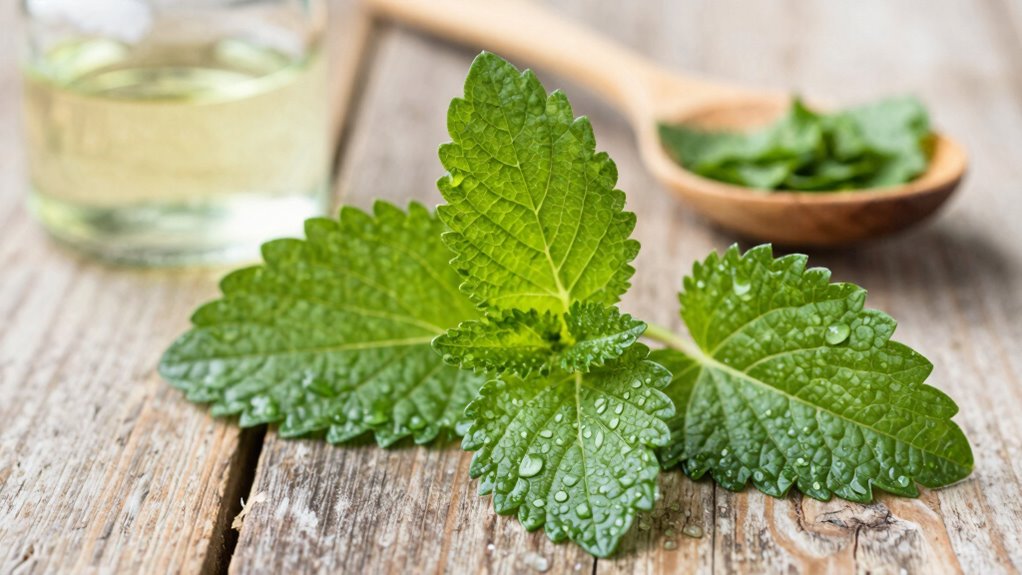
Incorporating lemon balm into a skincare routine can be both simple and rewarding, offering a natural way to soothe irritated or inflamed skin. One effective method is topical application, where fresh or dried lemon balm leaves are infused into creams, lotions, or oils. For example, lemon balm tea or water can be used as a gentle, soothing compress or mixed with clay to create blemish remedies.
Lemon balm extracts, tinctures, or glycerites can also be diluted and added to homemade skincare products, ensuring proper compatibility. Lip balm or cold sore formulations often include lemon balm for its antiviral properties. When applying topically, it’s essential to dilute essential oils to prevent irritation. These practical tips make incorporating lemon balm into daily skincare both accessible and beneficial.
Common Challenges in Growing Lemon Balm and How to Overcome Them
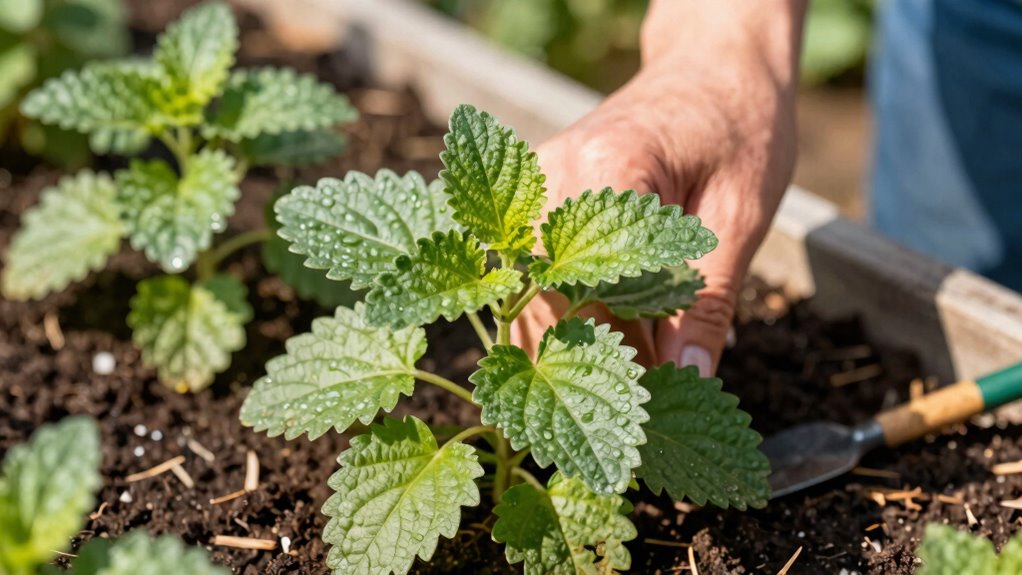
Growing lemon balm can be rewarding, but it does come with its share of challenges. One common issue is managing its invasive spread, as it tends to grow quickly and can take over garden space if left unchecked. To prevent this, many gardeners recommend container cultivation, which makes controlling its growth much easier.
Another challenge is ensuring the plant returns after winter; replanting from established plants or seeds can help boost success. Lemon balm can also struggle in hot, direct sunlight, so providing partial shade helps it thrive. Lastly, regular pruning and environment management, like watering adequately and avoiding overgrowth, keep the plant healthy.
With these tips, gardeners can enjoy lemon balm’s beauty and benefits without the worry of uncontrollable spreading.
Safety Tips and Precautions When Using Lemon Balm on Skin
Ever wonder if using lemon balm on your skin is completely safe? It’s important to consider lemon balm safety, especially with essential oils. Pure lemon balm oil can cause redness, burning, or allergic reactions, so always dilute it with a carrier oil before topical use. This process, called topical dilution, helps reduce irritation risks.
Before applying more broadly, it’s a good idea to do a patch test—apply a small amount of the diluted product on your skin and wait 24 hours to see if any reaction occurs. Individuals allergic to related plants like bee balm or Melissa officinalis should consult a healthcare provider first. Keep an eye out for side effects such as redness or irritation, and discontinue use if adverse reactions happen.