
As an Amazon Associate, this website earns from qualifying purchases.
Making safe DIY skincare involves using natural ingredients like honey, aloe, or cucumber, and carefully measuring each component to ensure safety and consistency. It’s essential to include preservatives for water-based products to prevent microbes, and choosing gentle emulsifiers helps blend oils and water smoothly. Checking pH balances the skincare to match skin’s natural level, reducing irritation. Proper storage in clean containers keeps products fresh. Compact guidance on each step ensures skin-friendly results—more tips are just ahead to perfect your homemade routine.
Why Making Your Own Skincare Can Be Safer and More Natural
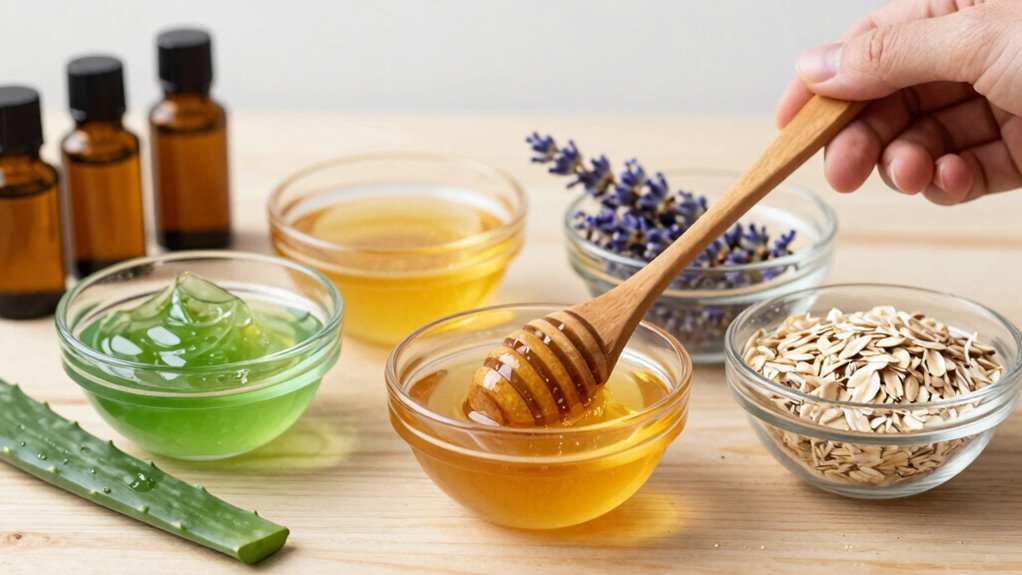
Have you ever wondered if making your own skincare could be safer than buying it from stores? DIY skincare often uses natural ingredients, which means fewer unfamiliar chemicals and preservatives. Commercial products can contain synthetic fragrances and harsh additives that might irritate sensitive skin. When creating skincare at home, ingredient transparency is key—tweens and families can see exactly what’s going in their products. Simple recipes like honey aloe cleanser or cucumber toner use gentle, familiar ingredients, reducing the risk of skin sensitivity.
This focus on basic, skin-friendly ingredients helps promote better skin tolerance. Plus, making skincare together can be fun and educational, encouraging healthier habits from a young age. Overall, DIY routines can be a safer, more natural alternative for caring for sensitive skin.
Essential Ingredients and How to Measure Them Correctly
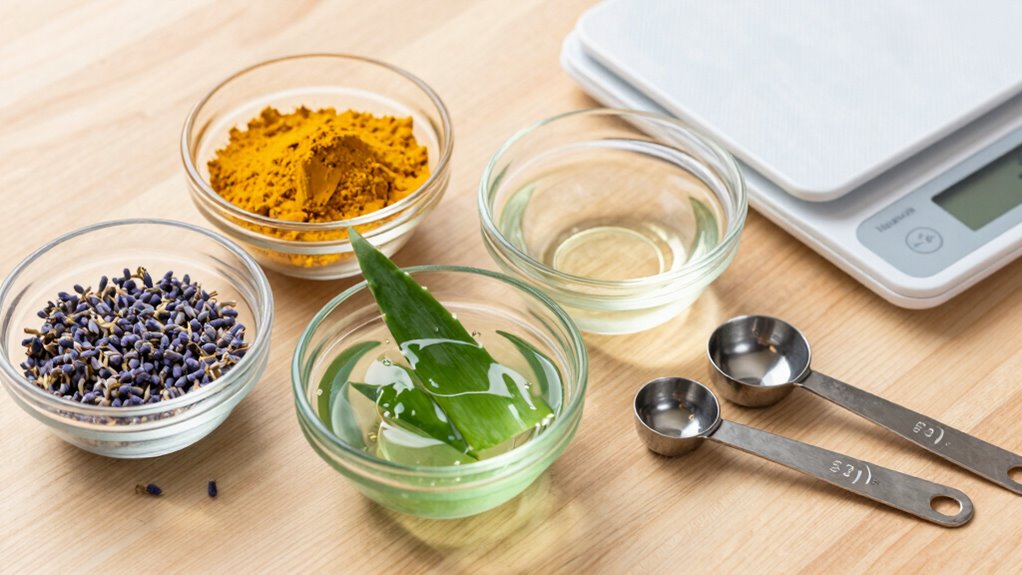
Why is precise measurement so important when making your own skincare? It ensures safety, consistency, and effectiveness. Using accurate measurements, especially in weight rather than drops, helps control the amount of essential oils—usually 1-2%, or 0.5% for lip balms—and prevents irritation. Here are key points to remember:
- Always weigh ingredients to ensure precise measurements, avoiding guesswork.
- Use purified water, like distilled or deionized, for better stability and shelf life.
- Choose reliable emulsifiers for stable oil-in-water formulations, rather than beeswax.
Record all measurements in percentages, making it easier to reproduce formulas safely.
Understanding Water Content and When Preservatives Are Necessary
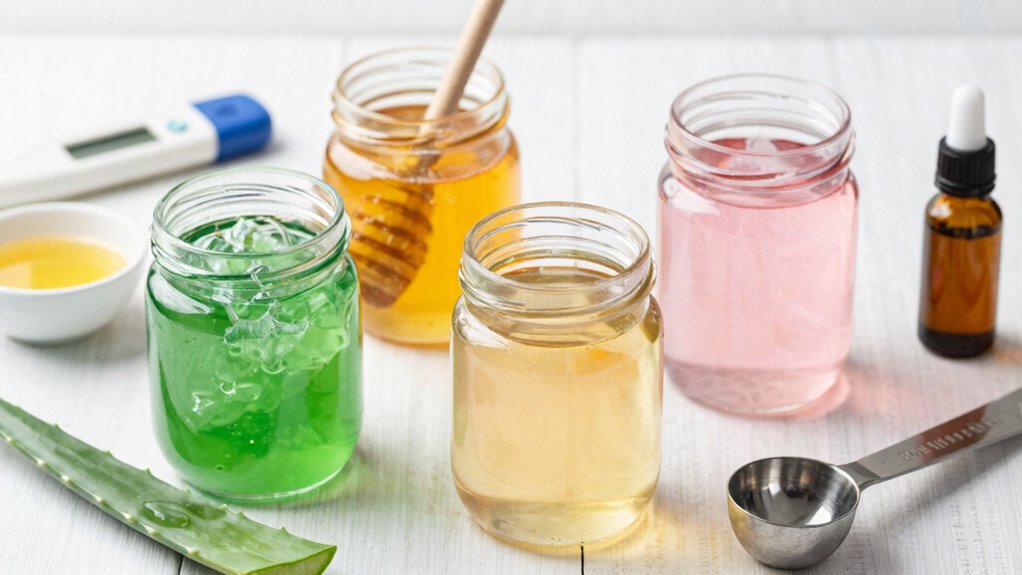
Understanding water content in homemade skincare is key because water can promote the growth of bacteria, mold, and yeast if not properly managed. Water-containing formulations, like hydrosols, floral waters, or aloe vera juice, need preservatives to stay safe and effective. Without preservatives, these products can spoil quickly or cause skin irritation.
On the other hand, anhydrous products—those without water—may not need preservatives if they won’t contact water during use. Using purified water, like deionized or distilled water, helps reduce contamination risks and extends shelf life. When making water-containing products, it’s important to follow preservative guidelines and consider efficacy testing. This ensures the product remains safe over time, providing peace of mind along with healthy, homemade skincare.
Choosing Safe and Effective Emulsifiers and Avoiding Common Mistakes
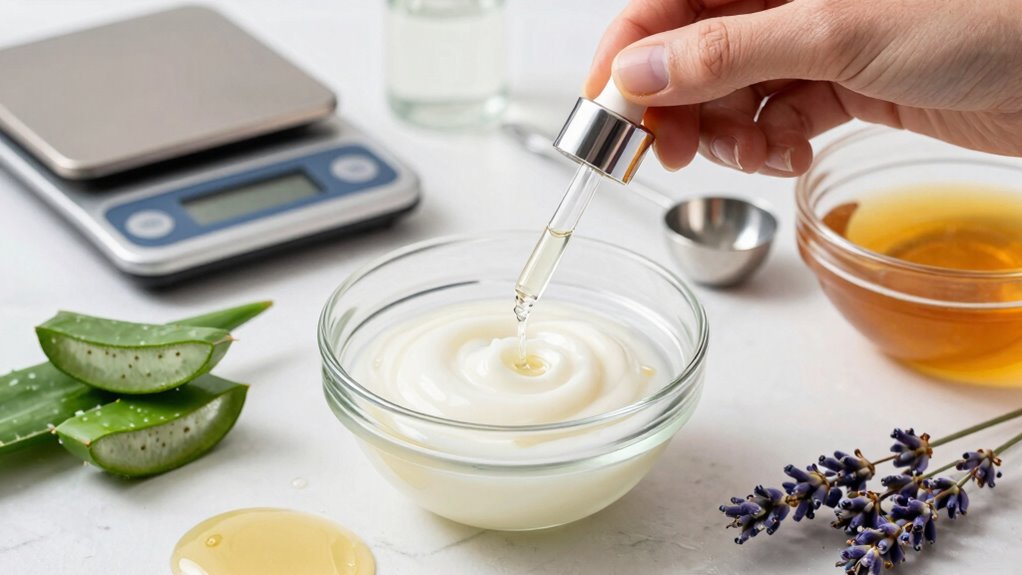
Choosing the right emulsifier is a key step in making stable, safe homemade skincare products. Emulsifiers help blend oil and water, creating a smooth, consistent texture. Relying solely on beeswax isn’t ideal, as it’s oil-soluble and may cause separation if storage conditions aren’t perfect. Instead, consider using three reliable natural emulsifiers that work on both physical and chemical levels for long-lasting stability.
Some tips include:
- Select emulsifiers proven to work with your ingredients.
- Use purified water, like distilled or deionized, to improve stability.
- Incorporate broad-spectrum preservatives to prevent microbial growth.
- Test your formulations regularly to ensure safety and effectiveness.
Avoid shortcuts, and remember: stability depends on good choices and careful testing.
How to Incorporate Preservatives and Antioxidants Properly
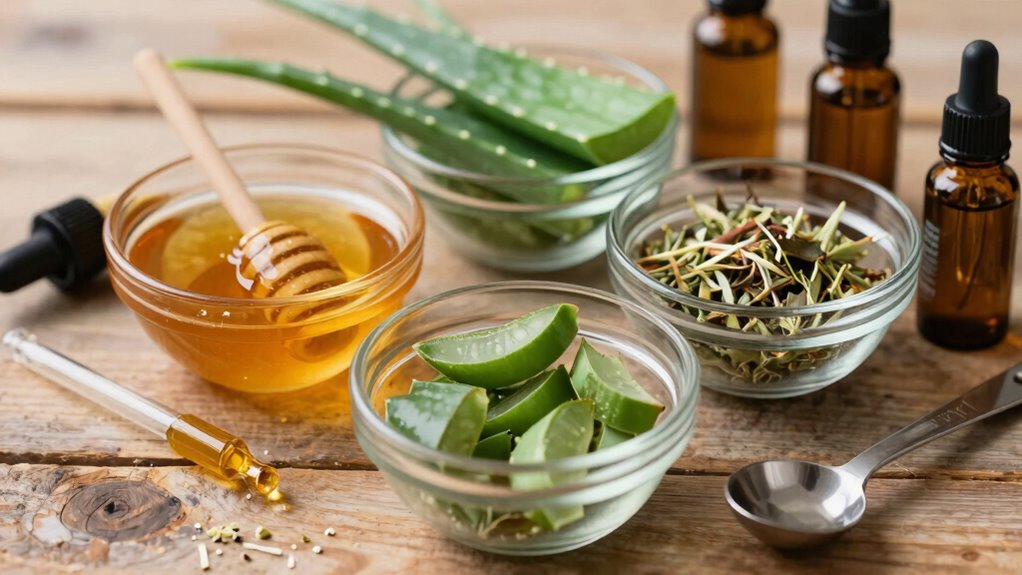
Have you ever wondered why some homemade skincare products last longer and stay safer than others? The secret lies in how preservatives and antioxidants are used. For water-containing formulations, preservatives are essential: they prevent microbes, mold, and yeast from growing, which keeps products safe and effective.
Antioxidants like Vitamin E or rosemary extract help slow oxidation, which can cause products to spoil or become rancid. However, they aren’t substitutes for preservatives in water-based mixes. To incorporate preservatives properly, always follow the manufacturer’s instructions and consider testing their effectiveness through preservation tests. Using high-quality, deionized, or distilled water also boosts shelf life.
When preservation becomes tricky, opting for single-use containers or antioxidant strategies can help, especially in anhydrous, or water-free, products.
Tips for Storing and Handling DIY Skincare to Prevent Contamination
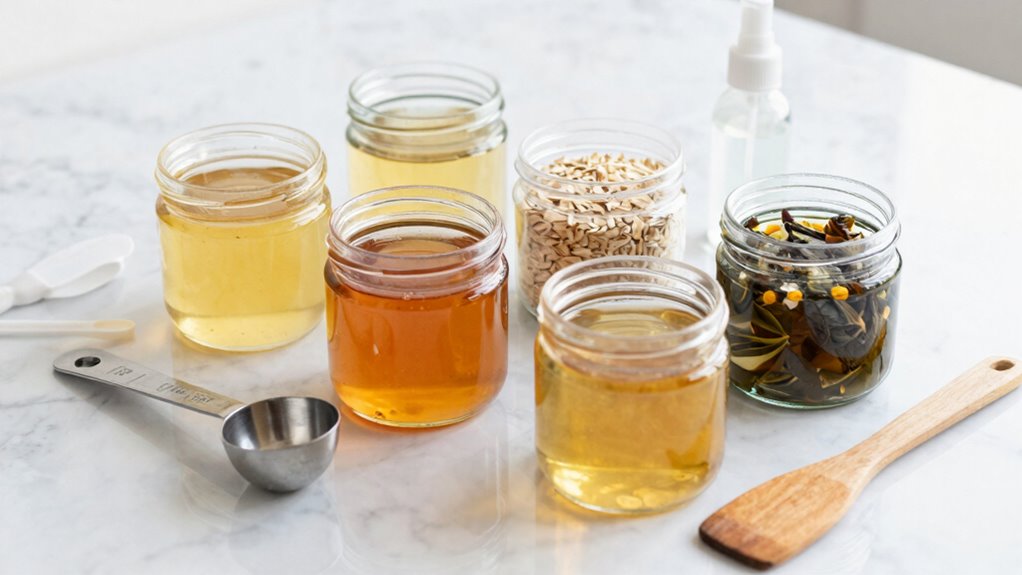
Ever wonder how to keep homemade skincare safe and fresh after it’s made? Proper storage and handling are vital to preventing contamination. First, always keep water-containing products away from moisture, as this encourages microbes. Second, store anhydrous (water-free) products in dry, clean conditions to prevent bacteria or mold growth. Third, use airtight containers like pumps or tubes instead of open jars, which reduces exposure during use. Fourth, label and date each batch to track freshness and follow consistent measuring by weight for reproducibility.
Additionally, sanitation is essential. Sanitize equipment and workspace regularly, and handle products with clean hands or gloves. When water-based products are involved, include a broad-spectrum preservative and perform stability testing to ensure safety and longevity.
Testing and Adjusting pH for Skin Compatibility and Product Stability
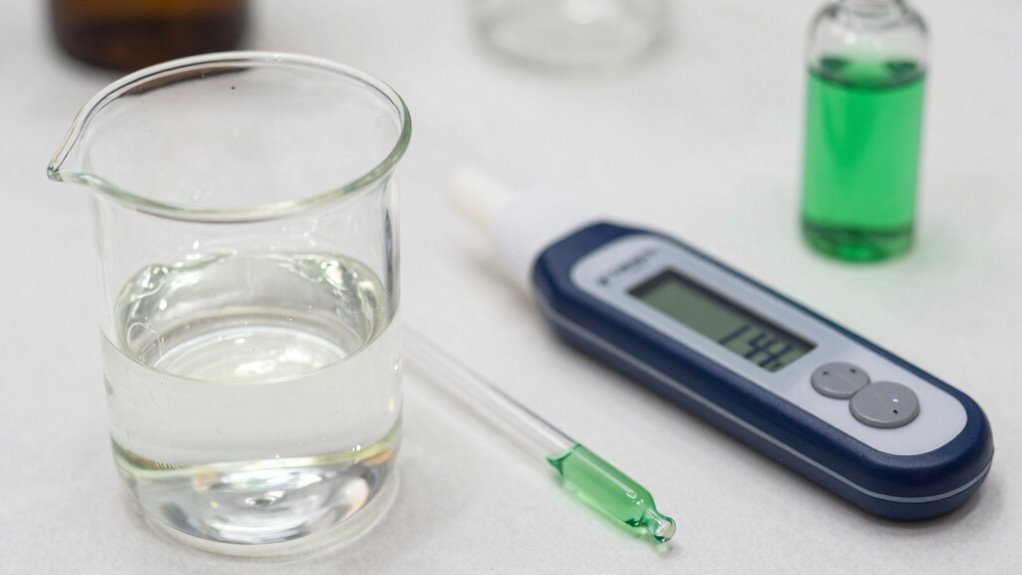
How does one guarantee that homemade skincare products are both safe and effective? The key lies in proper pH testing and adjustment to match the skin’s natural balance, usually around 4.5 to 5.5. Using pH strips helps monitor this, especially after adding ingredients or preservatives, which can alter acidity. If the pH is too high or low, it could reduce preservative effectiveness, risking microbial growth, or cause skin irritation.
To keep products stable and skin-friendly, formulators often adjust pH with gentle acids or bases. Regular testing ensures ongoing compatibility. Below is a simple guide:
| Ingredient | pH Range | Effect on Skin/Preservatives |
|---|---|---|
| Water-based | 4.5-5.5 | Maintains stability, safety |
| Actives | Varies | Adjust pH as needed |
| Preservatives | Designed for pH | Protects against microbes |
| Buffers | 4.5-5.5 | Stabilizes pH |
| pH Testing | 4.5-5.5 | Ensures safety and effectiveness |
Practical Recipes and Final Tips for Safe, Effective DIY Skincare
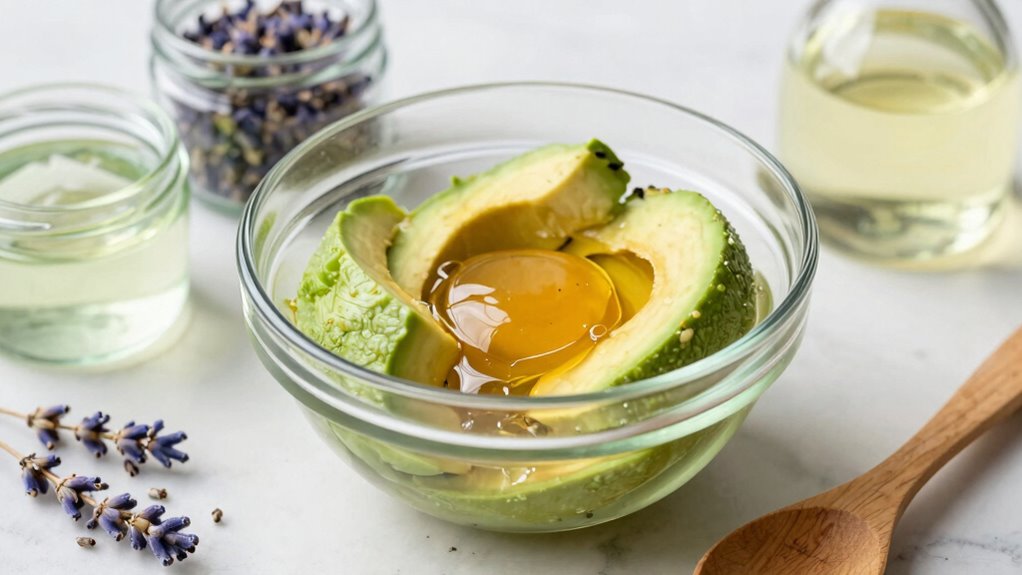
Creating effective DIY skincare at home is both an exciting and manageable process when approached with care and attention to detail. To craft safe, effective products like a DIY moisturizer or aloe vera skin care, starting with simple recipes is best.
- Use small batches and weigh ingredients precisely, especially essential oils, which should be about 1–2 grams per 100 grams of product.
- Opt for purified water—deionized or distilled—and include broad-spectrum preservatives tested for safety and shelf stability.
- Choose proper emulsifiers, not beeswax, for stable oil-in-water mixtures, and store in airtight containers to prevent contamination.
Always patch-test new ingredients and avoid household items like lemon juice that can irritate or disrupt pH. These steps help ensure a natural skin care routine that’s safe and effective.