
As an Amazon Associate, this website earns from qualifying purchases.
To create effective homemade face masks, first identify your skin type—whether oily, dry, sensitive, or a mix—and choose ingredients accordingly. For oily skin, try egg whites or banana with lemon, while dry skin benefits from soothing avocado or honey. Follow step-by-step instructions: gather ingredients, mix until smooth, apply evenly, and leave on the recommended time. Proper application and troubleshooting can optimize results. Stay tuned to discover more tips to customize your skincare routine effectively.
Identify Your Skin Type and Its Specific Needs
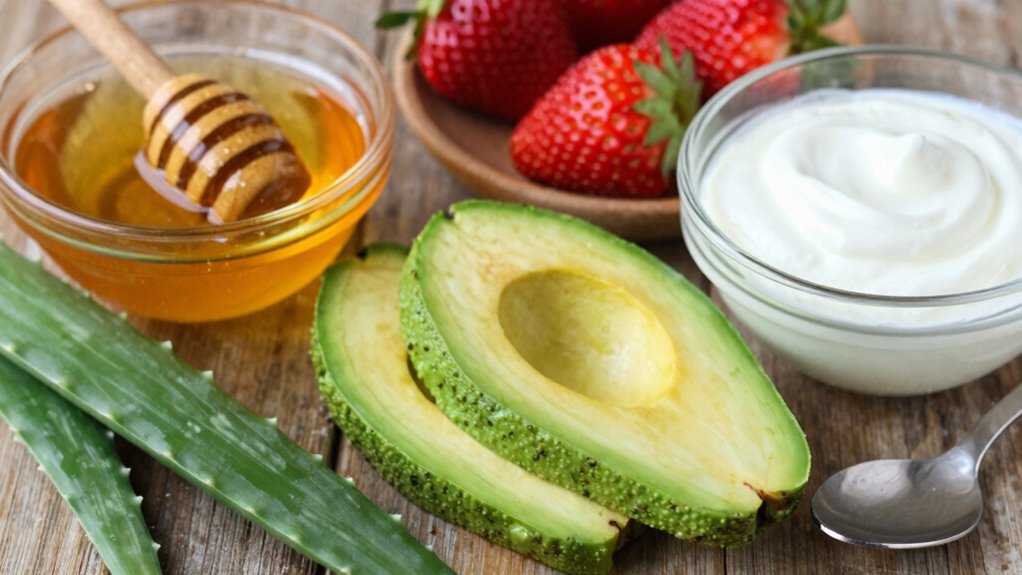
Have you ever wondered why some face masks work perfectly for one person but not for another? The key is knowing your skin type. Whether your skin is oily, dry, combination, or sensitive, selecting the right mask makes all the difference in acne care and overall glow.
A simple way to start is by observing how your skin feels and reacts—does it get shiny, dry, or red? For oily skin, masks that absorb excess oil, like charcoal or banana with lemon juice, are best. Dry skin benefits from hydrating ingredients like cucumber or yogurt. Sensitive skin needs calming options such as oatmeal or green tea.
Recognizing your skin type helps you choose or create a DIY face mask tailored to your needs, making homemade skincare both effective and enjoyable.
Select Natural Ingredients That Target Your Skin Concerns
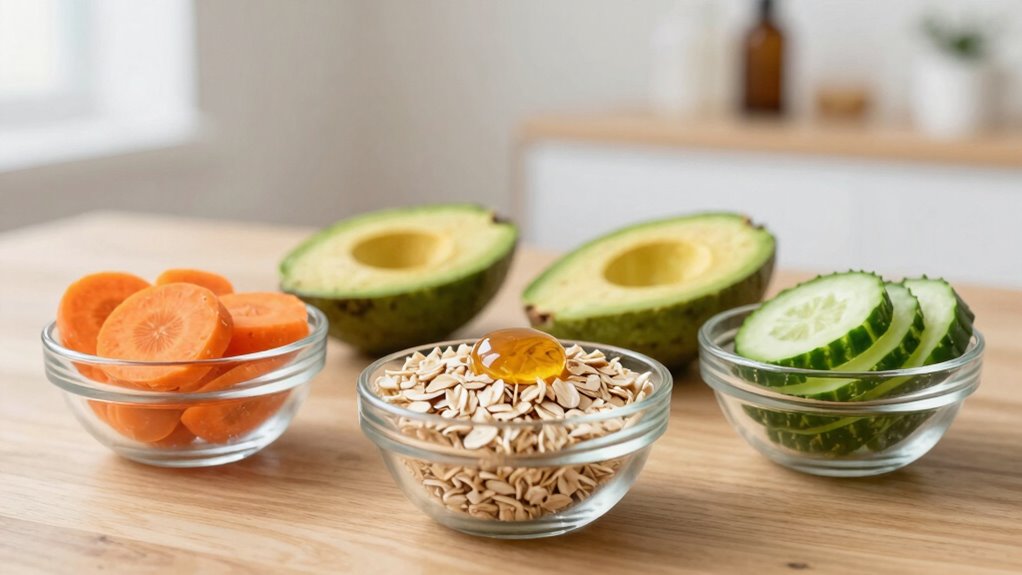
What makes certain natural ingredients effective for specific skin concerns? It’s their unique properties that target particular issues. For example, DIY avocado face mask recipes can soothe dry skin because of their rich, moisturizing fats. Egg whites tighten pores and reduce oiliness, making them great for acne-prone skin. Turmeric’s anti-inflammatory qualities help fade hyperpigmentation, while oatmeal gently unclogs pores.
Bananas combined with lemon juice can balance oily skin, and cucumber blended with aloe vera hydrates dry skin. When choosing ingredients, think about your skin’s needs and match them accordingly. For sensitive or oily skin, natural remedies like DIY face masks with avocado provide gentle, effective relief.
These ingredients work best when tailored to your skin type, helping you achieve a healthier, clearer complexion.
Learn Step-by-Step Instructions for Making Your Homemade Masks
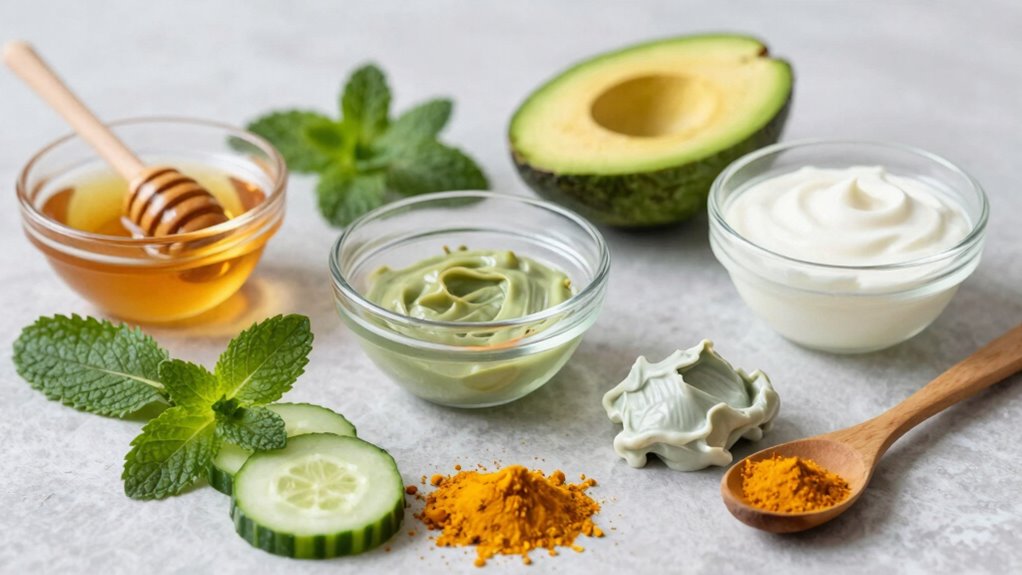
Knowing how to make your own face masks at home can feel a bit overwhelming at first, but once the process is broken down into simple steps, it becomes much easier and even enjoyable.
First, gather your ingredients, such as honey, turmeric, or avocado, depending on your chosen recipe.
Next, measure out the ingredients carefully—using teaspoons and tablespoons ensures the right consistency.
Mix them thoroughly in a bowl until smooth; some masks, like the turmeric one, need a gentle stir, while others, like the honey mask, form a thick paste.
Apply the mask evenly to a clean, dry face, avoiding the eye area.
Use your fingers or a brush for precise application.
Once on, relax and let the mask work its magic before rinsing thoroughly with warm water.
Apply and Use Your Masks Safely for Best Results
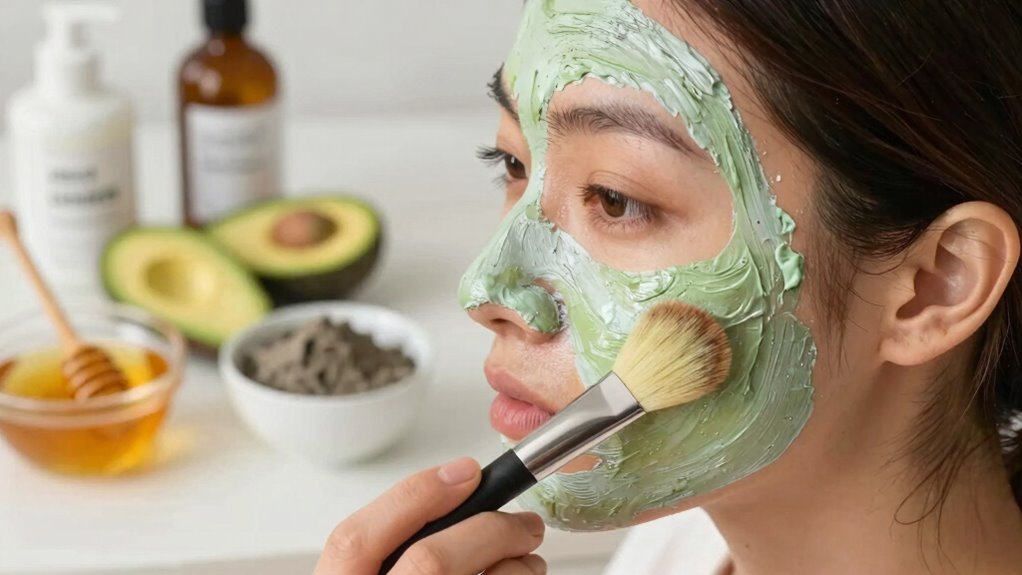
Applying your homemade face mask correctly can make a big difference in how well it works and how your skin feels afterward. To get the best results, follow the specific instructions for your mask type. For example, acne masks with egg whites should be applied with a cotton swab, left for 10–15 minutes, and then rinsed gently with a damp cloth. Masks for hyperpigmentation, like turmeric or papaya options, need careful application and patience. Oatmeal masks for clogged pores should be massaged onto clean skin and rinsed with warm water.
Oily-skin masks require applying the banana-lemon-oil mixture evenly and rinsing after 15 minutes. Dry-skin masks, like cucumber and aloe vera, should be left on for about 30 minutes before rinsing. Always wash your face beforehand for better absorption. Use gentle circular motions when applying masks. Avoid the delicate eye area. Follow recommended time limits. Finish with a moisturizer to lock in benefits.
Customize and Troubleshoot Your Masks for Optimal Skin Benefits
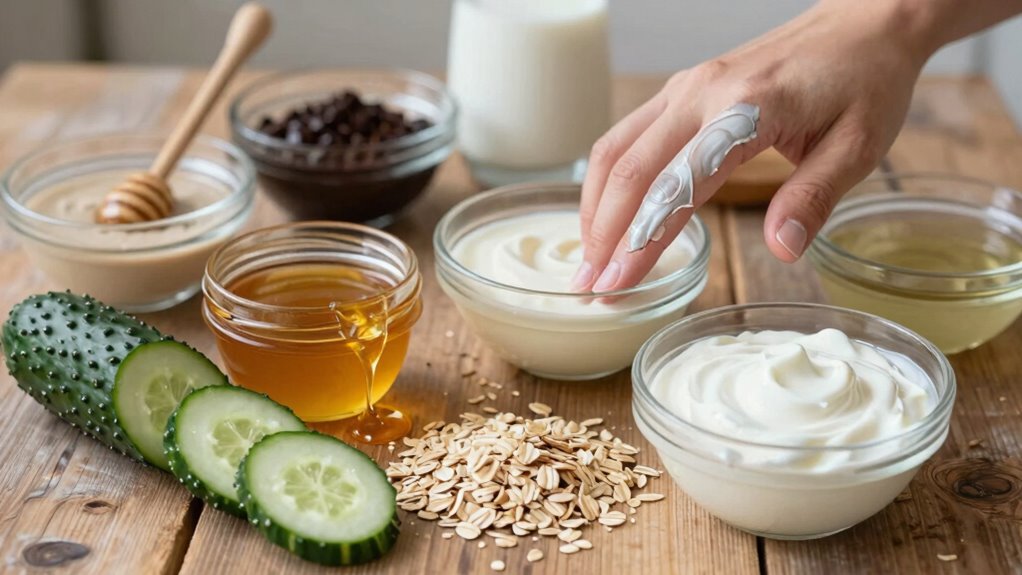
Have you ever wondered how to make your homemade face masks work even better for your skin? Customization is key to getting the best results. For oily or acne-prone skin, ingredients like activated charcoal or green tea can help detoxify and soothe inflammation. Just remember to limit mask time to 10–15 minutes to prevent over-drying.
Dry skin benefits from hydrating additions like avocado, honey, or aloe vera. But avoid harsh acids or lemon juice that might irritate. Always patch test behind the ear first, and start applying masks once a week, increasing only if your skin tolerates it well. For best results, apply masks for 15–20 minutes, rinse with lukewarm water, and store leftovers properly—refrigerate and use within 1–2 days to keep ingredients fresh.