
As an Amazon Associate, this website earns from qualifying purchases.
To use basil oil for skin and hair benefits, it’s best to dilute it with a carrier oil like jojoba or coconut to prevent irritation. For skin, apply diluted basil oil to target areas with acne or redness, or mix with rose water for a refreshing toner. For hair, gentle scalp massage with the mixture can boost circulation and fight dandruff. Remember to do a patch test first. Exploring these simple steps reveals how basil oil can enhance your routine.
What Are the Benefits of Using Basil Oil for Skin and Hair
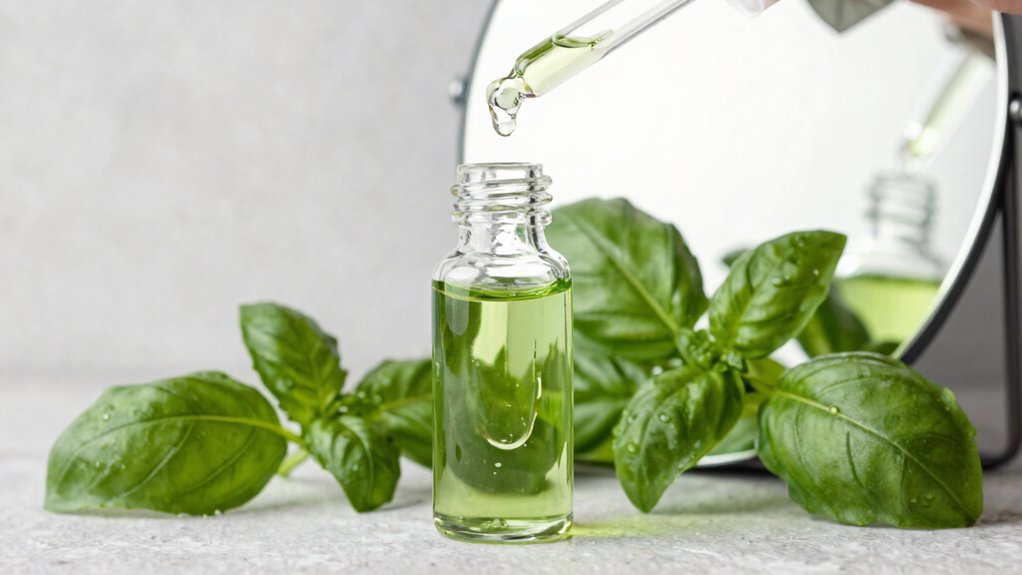
Did you know that basil oil offers a range of benefits for both skin and hair? This natural essential oil is celebrated for its anti-inflammatory properties, making it a helpful addition to skincare routines. When applied topically in diluted form, basil oil can reduce skin irritations like redness, swelling, and acne inflammation, soothing the skin effectively. It also helps unclog pores by removing excess sebum, dirt, and dead skin cells, leading to a clearer complexion and smoother skin texture. Plus, its antibacterial and antifungal actions target harmful pathogens that can cause skin issues.
For hair care, basil oil supports scalp health and can help prevent dandruff. Overall, incorporating basil oil into your routine can promote healthier skin and hair, thanks to its natural, soothing benefits.
How to Properly Dilute and Apply Basil Oil Safely
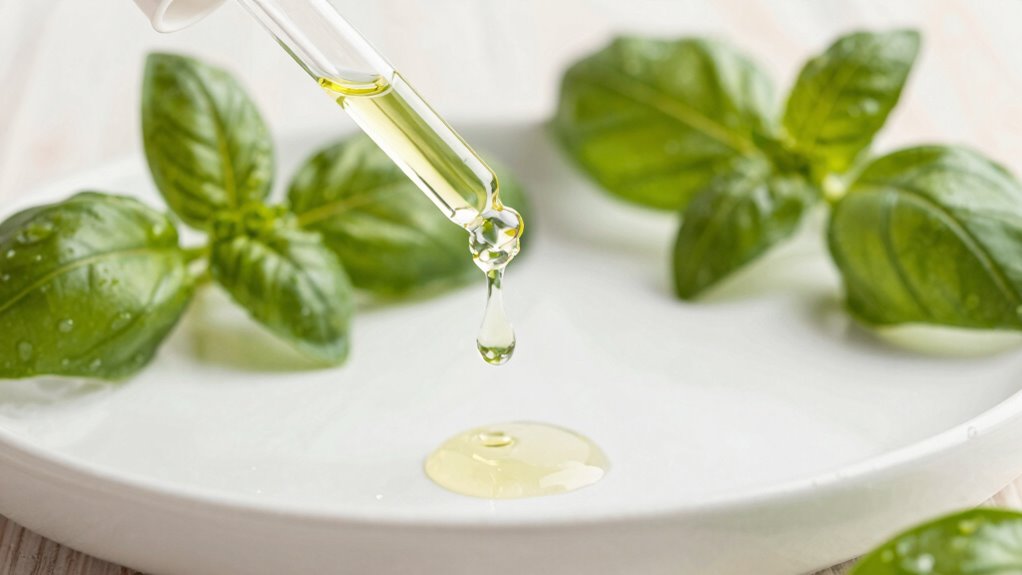
Wondering how to use basil oil safely and effectively? When making homemade basil oil or learning how to make basil oil, it’s essential to dilute the essential oil with a carrier oil. This prevents irritation and allows safe application. Typically, a 2–3% dilution is recommended: mixing 2-3 drops of basil essential oil in a tablespoon of carrier oil like coconut or jojoba.
To apply, gently massage the diluted mixture into the scalp or skin, focusing on areas needing attention. Before broader use, perform a patch test behind the ear or on the inner elbow, waiting 24 hours for any reaction. Remember, never apply undiluted basil oil directly, and avoid contact with eyes or mucous membranes.
Consulting a healthcare professional is wise if you have sensitive skin or health concerns.
Best DIY Recipes for Incorporating Basil Oil Into Your Skincare Routine
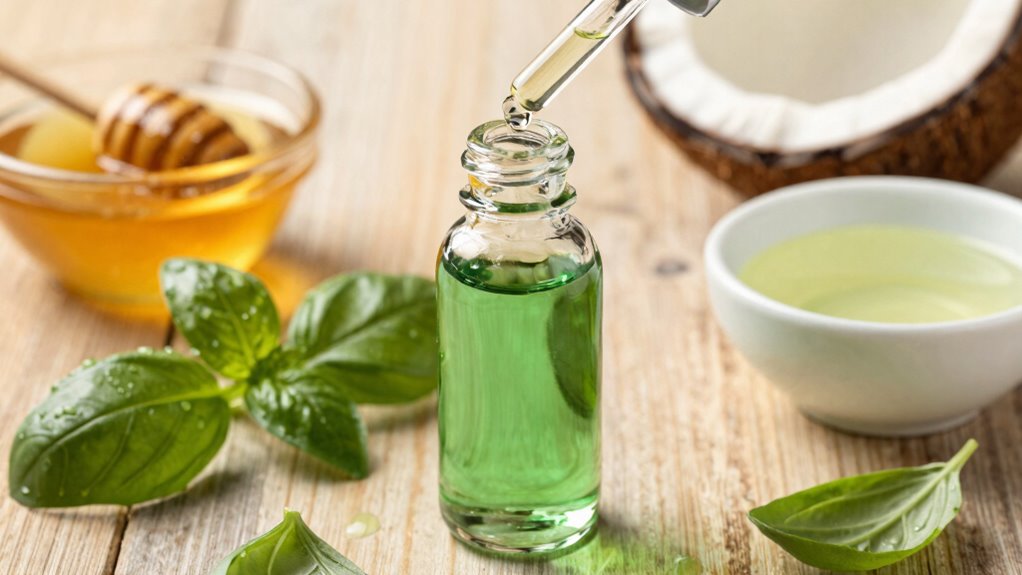
Incorporating basil oil into a skincare routine can be both simple and rewarding when approached with the right recipes.
One easy option is a soothing blend of basil oil, jojoba oil, and lavender. Combine two tablespoons of jojoba with ten drops of basil and five of lavender, then gently massage onto the scalp. This promotes circulation and nourishes hair follicles.
For clearer skin, mix basil oil with rose water and lemon juice to help unclog pores and reduce inflammation. This mixture is perfect for acne-prone skin.
Another effective recipe includes a paste of baking soda, apple cider vinegar, and a few drops of basil oil to balance scalp pH and combat fungi.
Always remember to patch test before trying new mixtures, especially if skin is sensitive or pregnancy is involved.
Using Basil Oil to Promote Hair Growth and Scalp Health
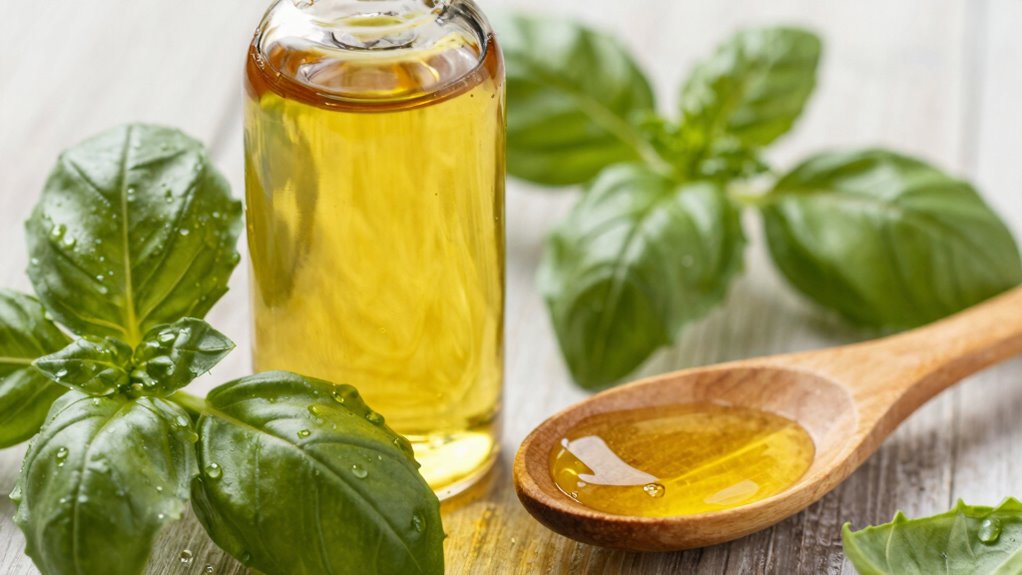
Have you ever wondered how a simple drop of basil oil can boost hair growth and improve scalp health? Basil oil supports this by stimulating blood flow to hair roots through vasodilation, which helps deliver essential nutrients and oxygen. It also acts as an anti-inflammatory and antimicrobial agent, creating a cleaner, healthier scalp that’s less prone to irritation, redness, and infections.
Regular use, such as a diluted scalp massage (2–3% basil oil with carrier oils like jojoba or coconut), practiced 2–3 times weekly, can nourish follicles and extend the hair’s growth phase. Some prefer blending Sweet Basil for shine and circulation, with Holy Basil to soothe inflamed or itchy areas. For best results, leave the mixture on the scalp for 30 minutes or overnight.
Combining Basil Oil With Other Natural Ingredients for Enhanced Results

Combining basil oil with other natural ingredients can considerably boost the effectiveness of skin and hair care routines. For example, mixing basil oil with rose water and lemon juice can help clear acne and brighten the skin. When caring for hair, adding a drop or two of basil oil to shampoo can remove excess oil and add shine, while blending it with baking soda and apple cider vinegar balances the scalp’s pH, reducing dandruff.
Always remember to dilute basil oil with a carrier oil and perform a patch test before applying. These combinations harness basil’s anti-inflammatory and antimicrobial properties, promoting healthier skin and scalp. Here’s a helpful table to visualize some natural blends:
| Ingredient 1 | Ingredient 2 |
|---|---|
| Rose water & lemon juice | Acne treatment |
| Baking soda & vinegar | Scalp balancing |
| Carrier oil & basil oil | Gentle skin or hair application |
| Essential oils blend | Soothing skin or scalp |
Tips for Choosing Pure and High-Quality Basil Essential Oil
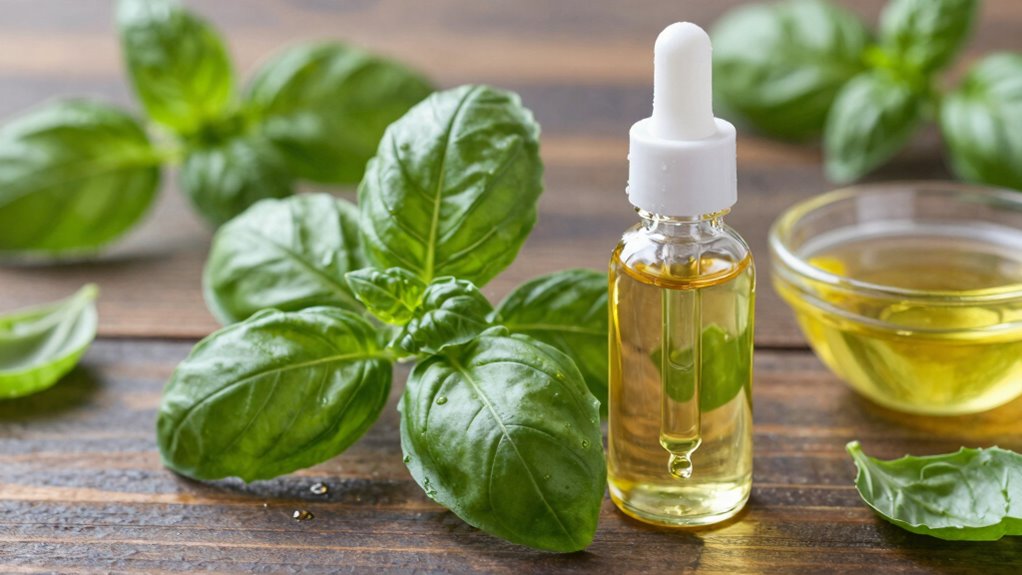
Choosing a high-quality basil essential oil starts with knowing what to look for on the label and understanding how it’s made. Reputable brands typically use steam distillation from Ocimum basilicum or Ocimum sanctum, so check for these names. It’s also smart to verify GC/MS testing, which confirms the oil’s purity and quality.
Packaging matters too: dark glass bottles like amber or cobalt blue protect the oil from UV rays that can break down its beneficial compounds. Beware of very cheap options, as they often suggest poor quality or adulteration. Additionally, brands should disclose the country of origin, since regional differences, like Egypt, can influence aroma and chemical makeup.
Always ensure the label states “100% pure basil essential oil” and avoid blends with unknown additives for skin and hair care.
Common Mistakes to Avoid When Using Basil Oil on Skin and Hair
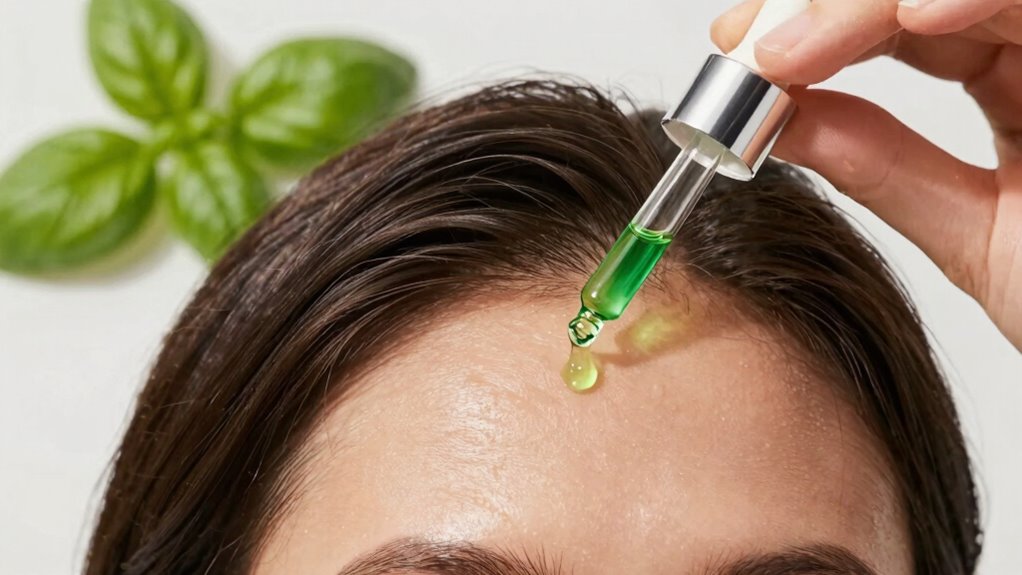
What common mistakes might someone make when using basil oil on skin and hair, and how can they be avoided? One common error is applying undiluted basil oil directly to the skin or scalp. This can cause burns, irritation, or sensitivity because essential oils are potent. To prevent this, always dilute basil oil with a carrier oil like coconut or jojoba—aim for about 2–3% dilution.
Another mistake is skipping a patch test. Applying a small amount behind the ear or on the inner elbow first helps check for allergic reactions. Additionally, exceeding recommended use, such as massaging the oil into the scalp more than 2–3 times weekly, can lead to irritation. Finally, avoid contact with eyes, children, or internal ingestion, as basil oil can be highly sensitive and unsafe in these situations.
FAQs About Basil Oil for Skin and Hair: Risks, Precautions, and Effectiveness
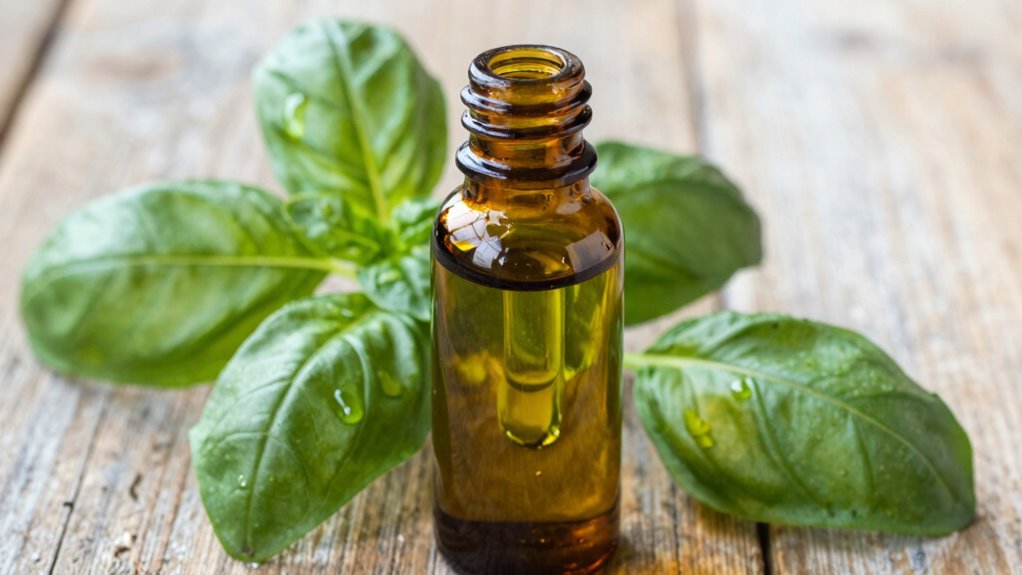
Are there any safety concerns or potential risks when using basil oil on skin and hair? Yes, caution is important. Basil oil is known for its anti-inflammatory and antimicrobial properties, but undiluted use can cause irritation, especially on sensitive skin or scalp.
To stay safe, always dilute basil oil with a carrier oil like coconut or jojoba before applying—just a few drops mixed well. Performing a patch test first can help prevent allergic reactions. Avoid contact with eyes and internal exposure, as basil oil can be irritating or harmful.
Pregnant women and those with epilepsy should consult a healthcare professional before use. When used properly, basil oil can support skin and scalp health, but safety always comes first to enjoy its benefits without worries.