
As an Amazon Associate, this website earns from qualifying purchases.
Castor oil and frankincense are popular natural skin allies because they deeply moisturize, support skin renewal, and help reduce signs of aging like fine lines and dullness. When used together, castor oil’s thick, hydrating properties help frankincense’s antioxidants penetrate deeper, boosting skin health. The best time to use them is during your evening routine or whenever your skin needs extra nourishment, but always patch test first. If you stay curious, you’ll find many helpful tips for incorporating these oils effectively.
What Are Castor Oil and Frankincense, and Why Are They Popular for Skin?
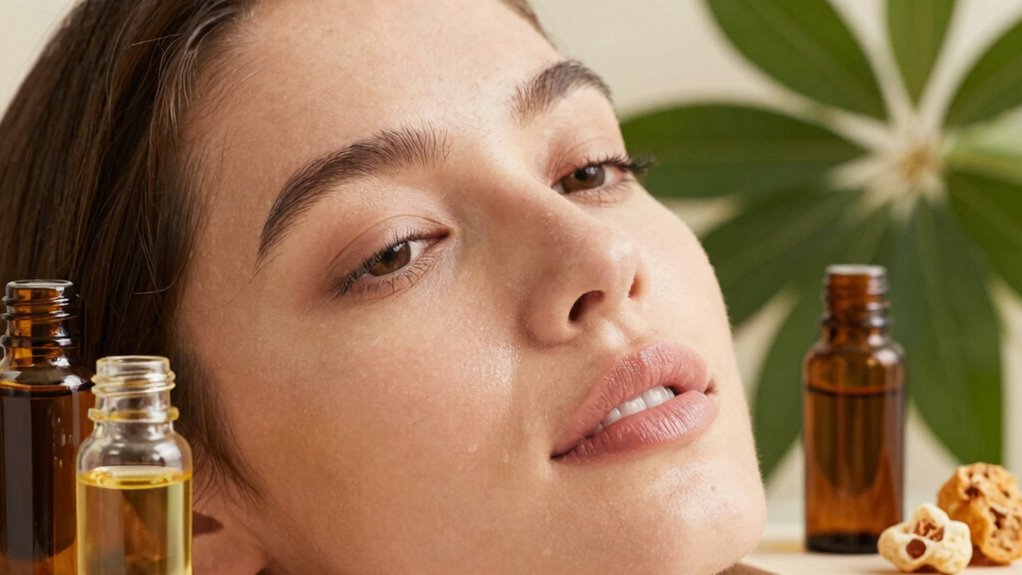
Have you ever wondered why some skincare ingredients become so popular? Castor oil and frankincense essential oil are two such ingredients, loved for their skin care benefits. Castor oil is a thick, sticky oil rich in ricinoleic acid, which acts as a humectant, drawing moisture into the skin and helping to strengthen the skin’s moisture barrier.
Frankincense essential oil, derived from resin, is known for toning and tightening the skin, as well as supporting natural regeneration. These ingredients work well together because castor oil’s deep penetration helps deliver frankincense’s anti-inflammatory and antioxidant properties. This combination can target dryness, fine lines, and uneven texture, making these ingredients popular choices for those seeking healthier, more resilient skin.
How Do Castor Oil and Frankincense Work Together to Support Skin Aging?
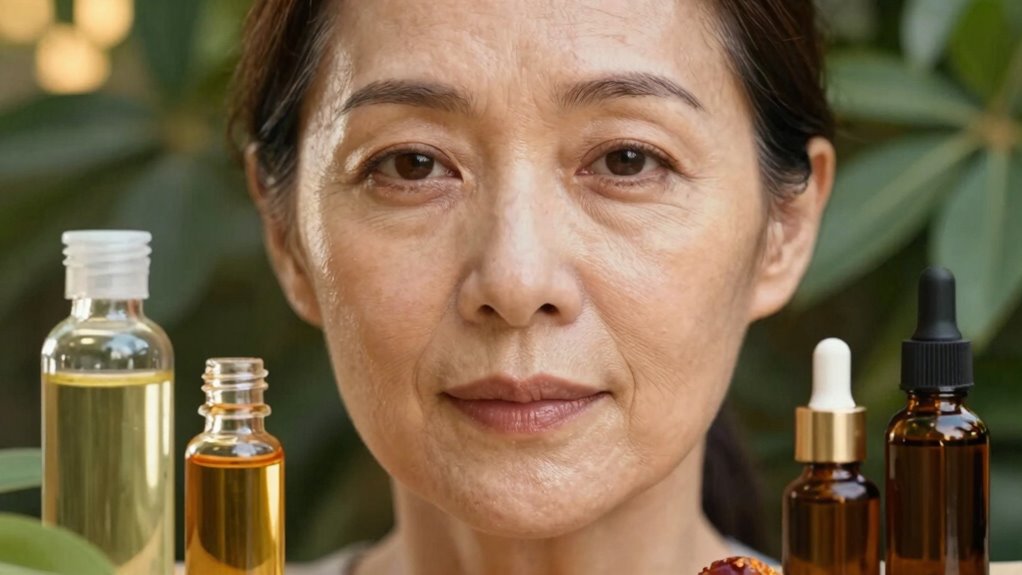
It’s intriguing how certain natural ingredients can work together to support skin aging gracefully. Organic castor oil, rich in ricinoleic acid, deeply hydrates and strengthens the skin’s moisture barrier, helping it stay resilient over time. When combined with frankincense oil, it creates a powerful duo; frankincense oil promotes cellular regeneration and improves skin elasticity, reducing fine lines.
Together, they enhance microcirculation and nourish tissues, which can lead to a more lifted, smoother appearance. Using castor oil as a carrier helps frankincense compounds penetrate deeper into the skin, maximizing anti-aging effects.
- Boosts skin elasticity and firmness
- Supports skin hydration and resilience
- Promotes cellular renewal
- Enhances microcirculation
- Encourages a more youthful, lifted look
What Are the Main Benefits of Using Castor Oil and Frankincense on Your Face?
| Benefit | Explanation |
|---|---|
| Deep Hydration | Castor oil, rich in ricinoleic acid, acts as a humectant, drawing moisture into the skin. |
| Skin Nourishment | It helps support the skin’s moisture barrier, keeping skin soft and supple. |
| Anti-Aging Support | Frankincense offers antioxidants and anti-inflammatory properties, encouraging cell renewal. |
| Improved Circulation | Together, they can reduce puffiness and fine lines by boosting blood flow and hydration. |
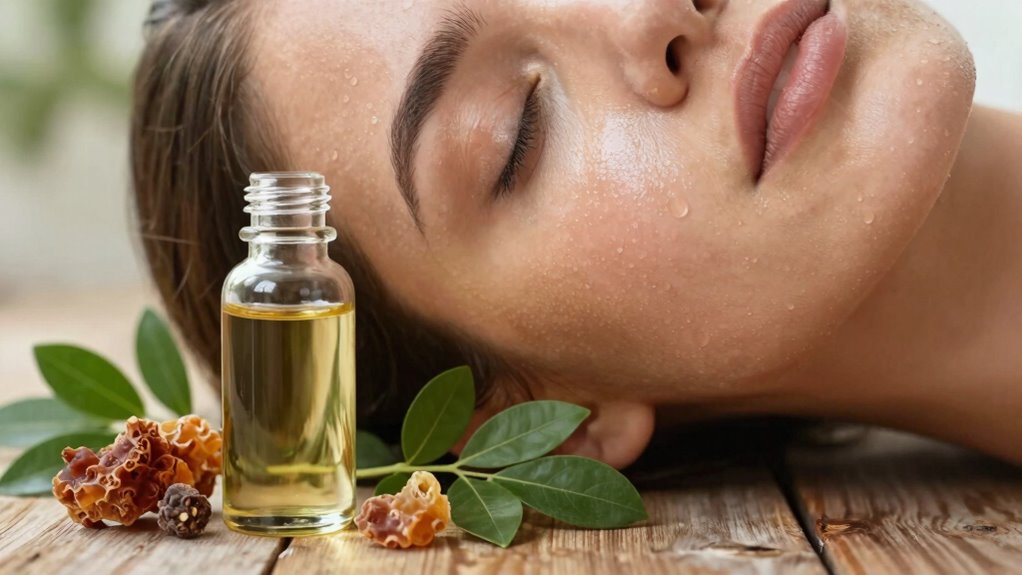
Curious about how natural ingredients can transform skin? Combining castor oil and frankincense offers a powerful duo. Castor deeply hydrates, while frankincense helps tone and regenerate skin cells. When used together, they support a more youthful, radiant complexion.
This blend can also reduce puffiness and fine lines by improving circulation and moisture retention. Remember, using high-quality oils and proper dilution ensures safety.
Together, these ingredients offer a gentle but effective way to nurture your skin naturally—without harsh chemicals or expensive treatments.
When Is the Best Time to Incorporate Castor Oil and Frankincense Into Your Skincare Routine?

Determining the best time to incorporate castor oil and frankincense into a skincare routine depends largely on individual needs and daily habits. For many, these oils work best when integrated into a structured skincare ritual rather than used alone.
Morning use after cleansing and hydrating, followed by a serum and sunscreen, helps protect skin throughout the day. Nighttime applications after cleansing and toning support the skin’s overnight repair process. During colder, harsher weather, using the blend as a moisture barrier can keep skin comfortable.
Always perform a patch test first to check for sensitivities, especially to frankincense. Avoid eye contact and overuse, which can cause irritation or increase sun sensitivity. Timing matters, so adjusting based on skin condition and climate helps maximize benefits while minimizing risks.
How Do You Properly Apply Castor Oil and Frankincense for Optimal Results?

Proper application of castor oil and frankincense can make a noticeable difference in how your skin responds to these natural remedies. To start, mix one tablespoon of castor oil with 2–3 drops of frankincense essential oil to create a balanced facial blend.
Before applying, ensure your face is cleansed and slightly damp, which helps the skin absorb the oils better.
Using your fingertips, gently massage the blend into your skin with upward, circular motions, targeting areas like under the eyes, forehead, and cheeks.
Warming the mixture in your palms before pressing it onto your skin can enhance absorption.
Be cautious around sensitive areas, especially the eyes, and perform a patch test beforehand.
For best results, follow this step with a serum and protective moisturizer, especially in the morning.
What Are Common Mistakes to Avoid When Using These Natural Oils?
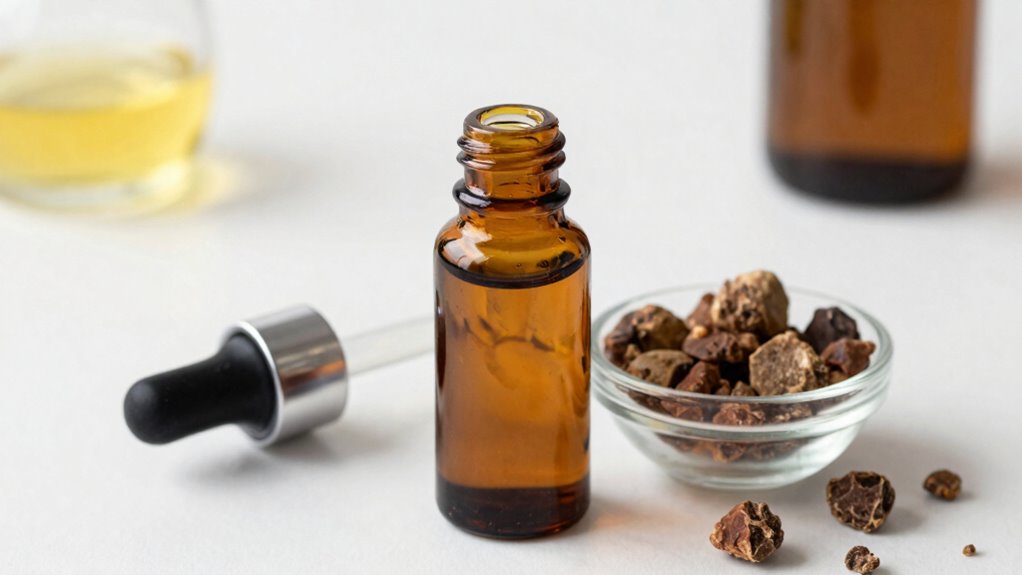
Many people make simple yet common mistakes when incorporating castor oil and frankincense into their skincare routines, which can reduce their effectiveness or even cause irritation. One mistake is using too much frankincense essential oil, as high concentrations can lead to skin reactions or sun sensitivity. Applying oils to dirty skin is another common error; dirt and dead skin can trap the oils, dulling the complexion.
Skipping patch tests is risky since reactions vary from person to person. Testing on the inside of the forearm for 24 hours helps prevent adverse effects.
Additionally, using low-quality or adulterated oils can diminish benefits, so opt for cold-pressed castor oil and pure frankincense.
Lastly, relying solely on DIY blends instead of a balanced skincare routine might hinder progress and cause unnecessary irritation.
Are There Any Safety Tips or Precautions to Keep in Mind?
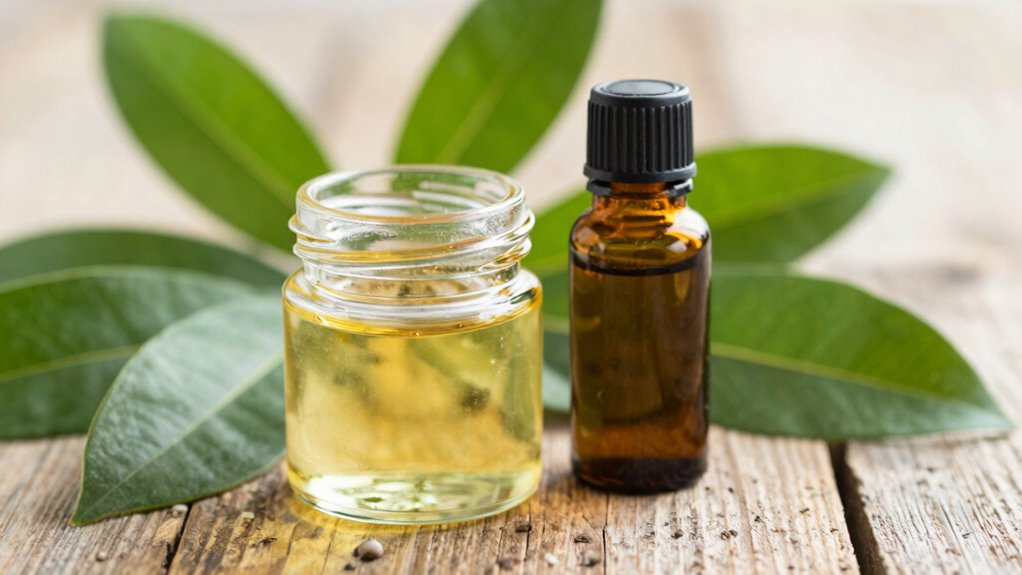
Are there any safety tips or precautions to keep in mind when using castor oil and frankincense on the skin? Yes, safety is key when working with natural oils. First, always perform a patch test by applying a diluted blend on the inside of the forearm 24 hours before facial use. This helps spot any redness, itching, or burning.
Here’s a quick guide:
| Precaution | Explanation |
|---|---|
| Dilute frankincense | Keep it mixed with a carrier oil like castor oil to avoid irritation. |
| Avoid the eye area | The skin around the eyes is sensitive; rinse immediately if irritation occurs. |
| Use high-quality oils | Choose cold-pressed castor oil and pure frankincense to reduce allergy risks. |
Following these tips helps ensure a safe and enjoyable experience.
How Can Professional Treatments Enhance the Effects of Castor Oil and Frankincense?
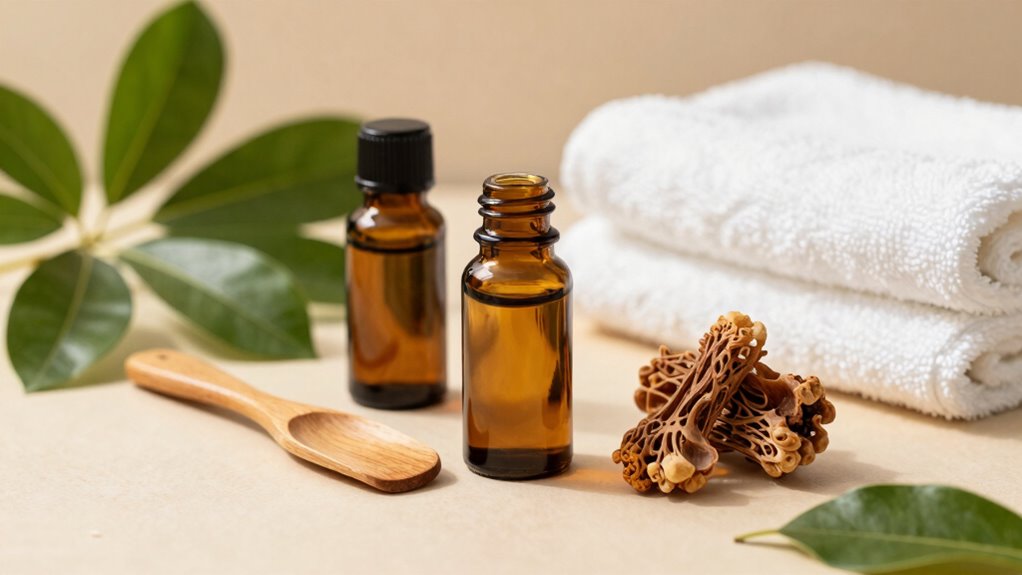
Have you ever wondered how professional skincare treatments can boost the benefits of natural oils like castor oil and frankincense? These treatments use concentrated formulas and specialized techniques to deliver deeper, more effective results. For example, clinics may combine cell-energy complexes, peptides, and Quintessence to support firmer skin and a radiant glow.
A skilled therapist can assess individual needs, adjust dilution levels, and layer products safely, ensuring optimal benefits without irritation. In addition, professional treatments often start by strengthening the skin’s barrier before introducing active essential oils, reducing risks of sensitivity. This approach bridges traditional herbal care with clinical science, providing enhanced outcomes that DIY methods can’t match.
Ultimately, professional care amplifies natural oils’ potential for skin renewal and hydration.
Are These Oils Suitable for All Skin Types and Concerns?
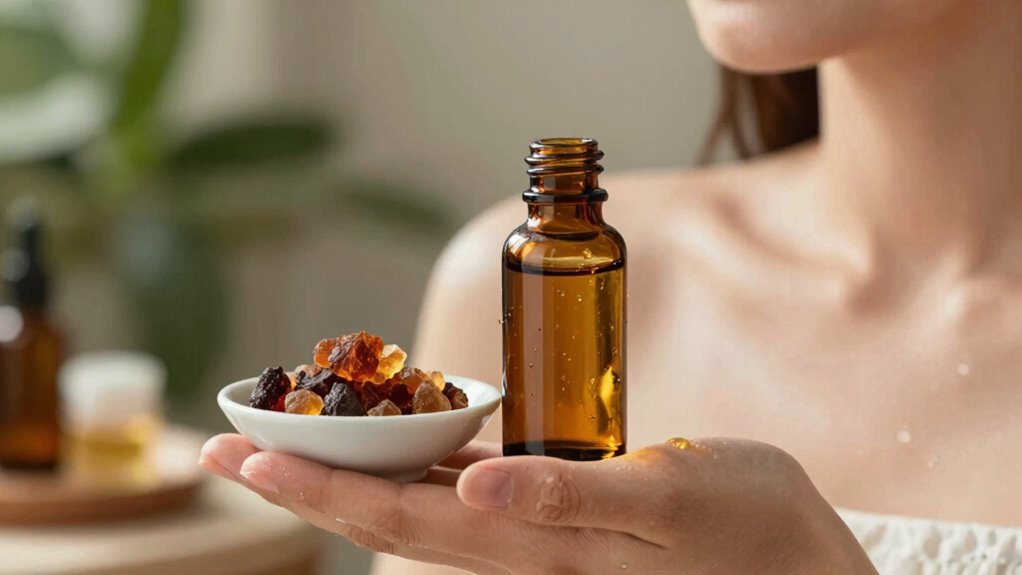
While natural oils like castor oil and frankincense can offer wonderful benefits for the skin, their suitability varies depending on individual skin types and concerns. Castor oil’s thick, viscous texture makes it ideal for deep hydration, but it’s best used in small amounts or blended with lighter oils, especially on the face, to avoid clogging pores.
Frankincense offers toning and skin regeneration. Yet, it must be diluted and patch-tested first since it can cause sensitivities or allergies—particularly with components like limonene. These oils tend to suit calmer, well-hydrated skin better, while oily or reactive skin should start with tiny patches and observe reactions.
DIY applications work best as part of a broader skincare routine, not a standalone fix, especially in harsher climates.