
As an Amazon Associate, this website earns from qualifying purchases.
Castor oil may help improve scalp health and reduce breakage, which can support hair growth over time, especially for dry or damaged hair. However, scientific evidence is limited, and results vary—some see noticeable changes after six to eight weeks, with longer-term benefits taking months. It’s not a miracle cure, but consistent use might strengthen hair and add shine. To get the most out of it, follow proper application tips, and explore more about what to expect next.
Does Castor Oil Really Promote Hair Growth? What the Science Says
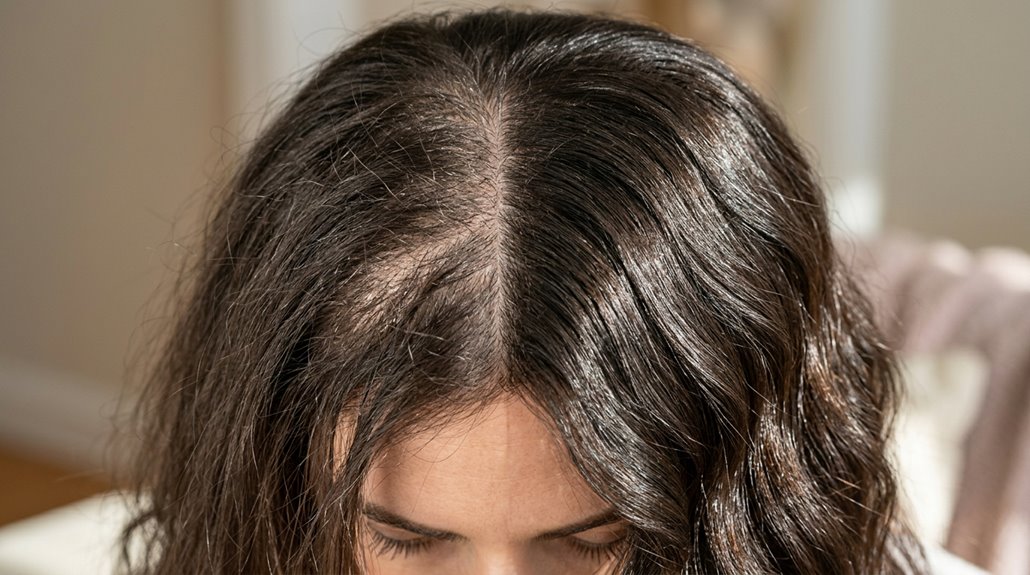
Does castor oil really help hair grow? The evidence suggests that while castor oil contains ricinoleic acid, which may inhibit PGD2 synthase—a pathway linked to hair loss—most studies are lab-based, not large-scale human trials. This means the proof is still preliminary and inconclusive.
Many users notice improved scalp health and less breakage, which can make hair appear thicker. However, this isn’t necessarily due to new hair growth. Castor oil’s thick, viscous texture may benefit dry or coarse hair more than fine or oily types, offering protection rather than direct growth.
Promotional claims often highlight impressive results, but these aren’t proven for everyone. Overall, while promising, the scientific evidence doesn’t definitively confirm that castor oil boosts hair growth in humans.
How Long Before You Can Expect to See Results From Castor Oil
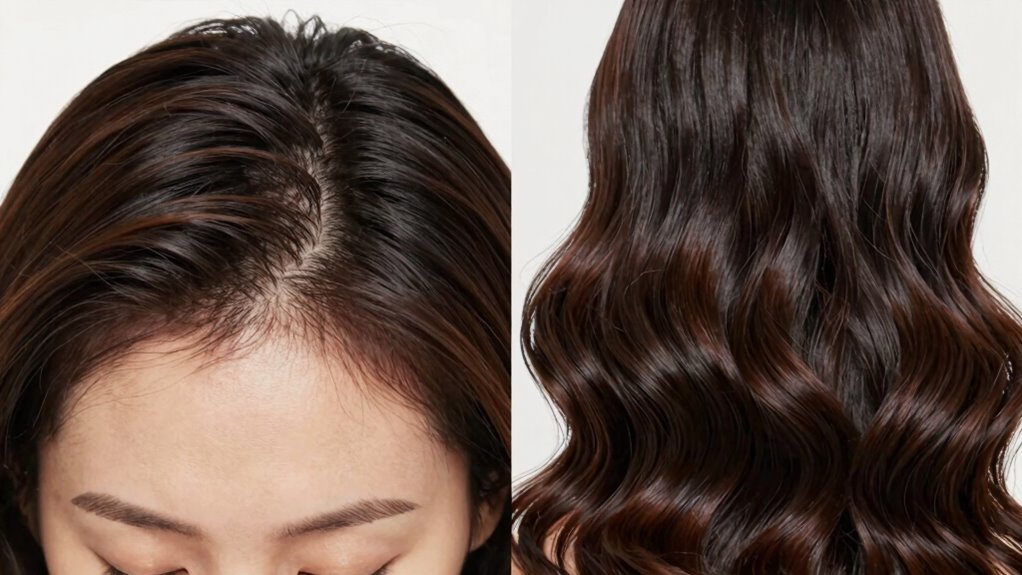
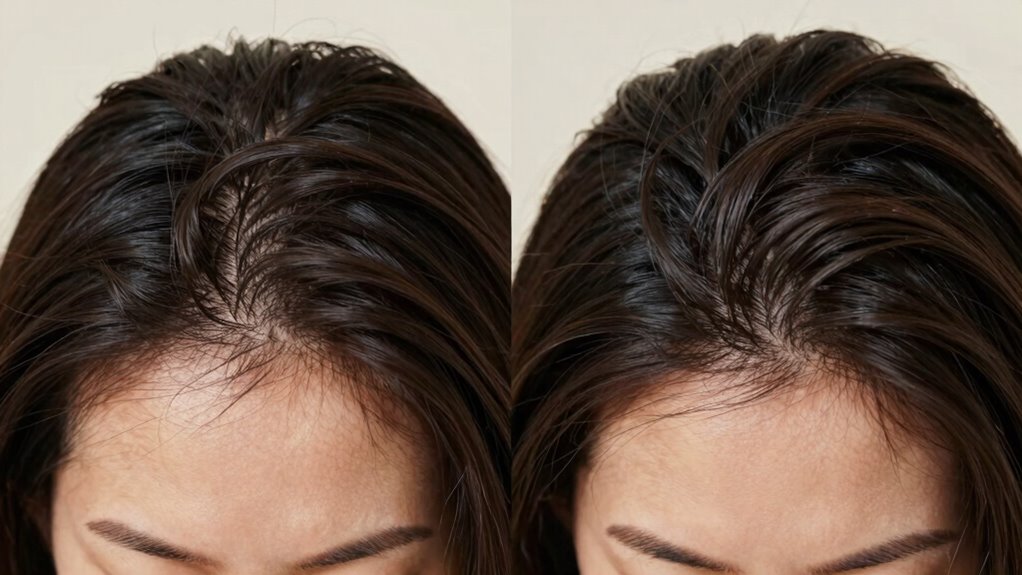
Typically, those who start using castor oil for hair notice that results don’t appear overnight. Consistency is key, and visible changes often take around six to eight weeks. During this time, users may observe improvements in hair texture and overall health, which can be seen in castor oil before and after photos. The castor oil benefits include reducing scalp dryness and promoting hydration, which are essential for healthy growth. For more noticeable effects like increased thickness and length retention, it may take three to four months of regular use.
Remember:
- Early benefits include better scalp moisture
- Results gradually build over weeks
- Longer-term use boosts fullness
Patience is essential for seeing the full castor oil results.
Which Hair Types Benefit Most From Castor Oil Treatments
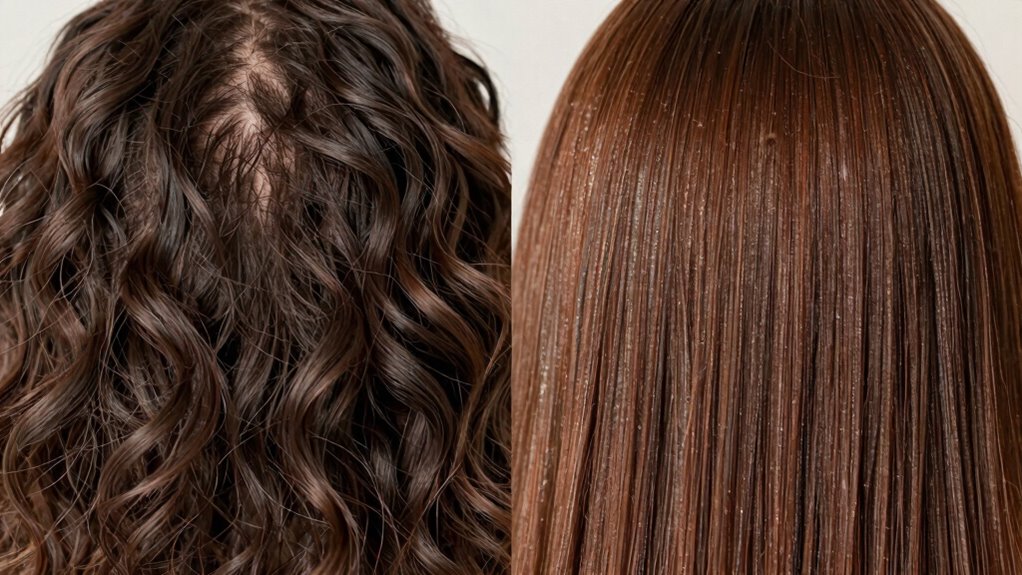
Certain hair types tend to see the most noticeable benefits from castor oil treatments. Dry, coarse, or chemically treated hair often responds best because castor oil’s rich ricinoleic acid forms a moisture-retaining coating, helping to hydrate and smooth the strands. This can lead to less breakage and a thicker appearance over time.
Conversely, fine or oily hair might feel weighed down or experience buildup, making the results less obvious. Heavier oils like castor are generally better suited for drier hair, while lighter oils work better for normal to oily types. Consistent use over weeks or months is key to seeing real improvements, especially in scalp health and overall hair strength.
For those with dry or damaged hair, castor oil can be a game-changer.
What’s the Best Way to Apply Castor Oil for Optimal Hair Benefits
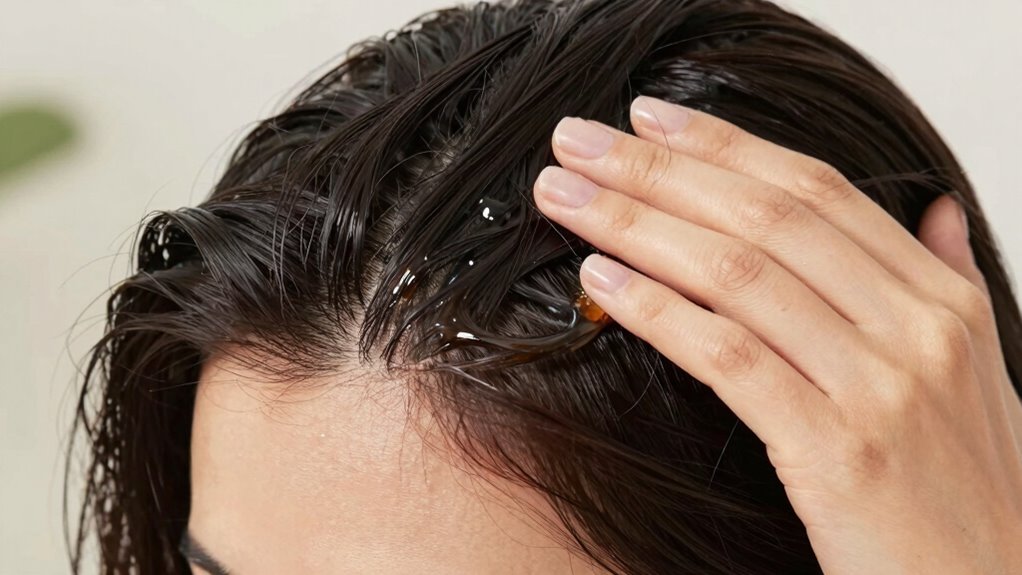
The best way to apply castor oil for hair benefits involves a gentle, deliberate process that maximizes its nourishing properties without feeling overwhelming.
First, mixing castor oil with a lighter oil like coconut or jojoba at a 1:1 ratio helps it spread evenly and reduces heaviness.
Next, section the hair to target the scalp directly, applying the oil carefully to the skin. Using slow, circular motions, massage for about five minutes to boost circulation.
To ensure maximum absorption, leave the oil on for 1–2 hours or overnight, covering the hair to prevent stains.
Remember:
- Mix with a lighter oil for better spreadability
- Focus on the scalp, not just the hair strands
- Massage gently to stimulate blood flow
- Use once or twice a week for best results
How Long Should You Leave Castor Oil in Your Hair for Results
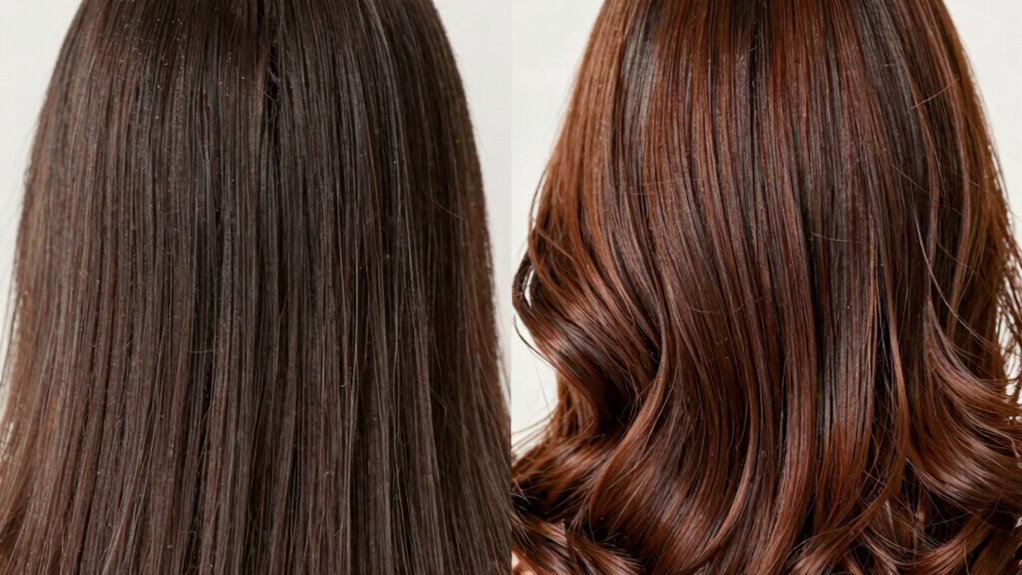
Knowing how long to leave castor oil in the hair is key to getting the best benefits without making a mess or causing discomfort. For most people, applying the oil and leaving it on for 1 to 2 hours works well, allowing the oil to coat the hair shaft and soften the scalp.
If hair is very dry or damaged, leaving it on overnight can help. However, it’s important to protect bedding and the scalp from staining or discomfort. For those aiming for optimal results, sticking to a weekly routine is recommended. It’s best not to exceed 48 hours of continuous oil on the scalp to avoid hygiene issues.
Remember to rinse thoroughly and shampoo well to remove any residual oil.
What Are the Limitations and Realistic Expectations When Using Castor Oil
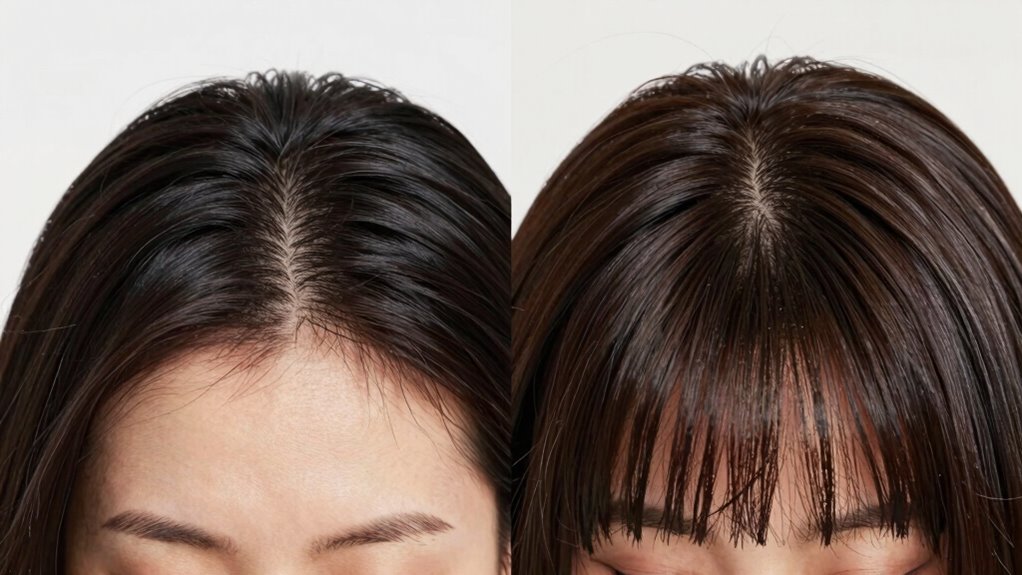
Have expectations about castor oil’s hair growth benefits sometimes outpaced by reality? While many hope for rapid hair growth, scientific evidence is limited. Most benefits are linked to healthier scalp and less breakage, making hair look thicker, but not necessarily growing faster. It’s important to understand that results vary based on hair type and consistency.
Heavier oils work better for dry, coarse hair, but can weigh down fine or oily hair, causing buildup. Claims of universal improvements or quick results are often exaggerated. Real progress usually takes weeks or months, not days, and depends on individual hair health. Remember, patience and proper use are key.
For example, regular scalp massages and gentle cleansing can help, but no miracle cure guarantees overnight growth.
Are There Any Side Effects or Risks to Using Castor Oil on Hair
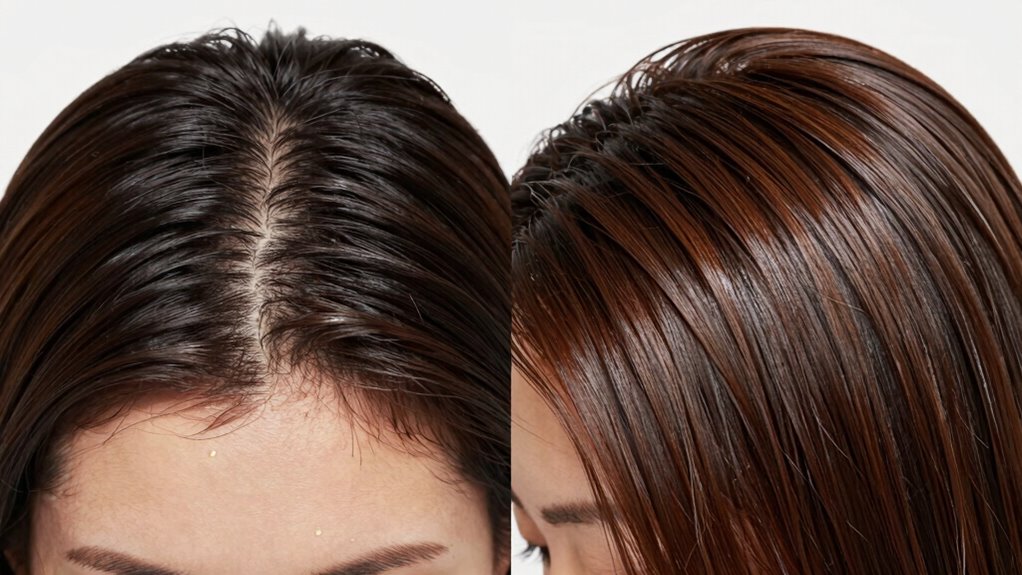
While castor oil is popular for promoting hair health, it’s important to be aware of potential side effects and risks. In rare cases, using castor oil on hair can cause hair felting or matting, where hair tangles into tight clumps. Some people might experience allergic contact dermatitis, leading to symptoms like skin rash, swelling, or itching.
If ingested, castor oil can cause stomach issues such as cramping, vomiting, or dizziness. Since castor oil is heavy and sticky, it’s a good idea to dilute it with lighter oils or wear gloves during application to avoid messes or skin irritation. Choosing hexane-free, cold-pressed castor oil helps keep it pure and reduces contaminants, making it safer for use.