
As an Amazon Associate, this website earns from qualifying purchases.
To showcase your glow in a skincare photoshoot, focus on soft, diffused lighting that creates a gentle, luminous effect by minimizing harsh shadows and highlighting skin’s natural radiance. Use close-ups to reveal textures and dewiness, demonstrating product effects up close. Incorporate in-use shots to capture application and freshness, and add interest with reflective surfaces or dynamic angles that enhance depth. Showcasing natural ingredients and textures ties the story together, and exploring these tips will reveal even more ways to make your glow shine.
1. Capture Luminous Skin With Soft, Diffused Lighting Techniques
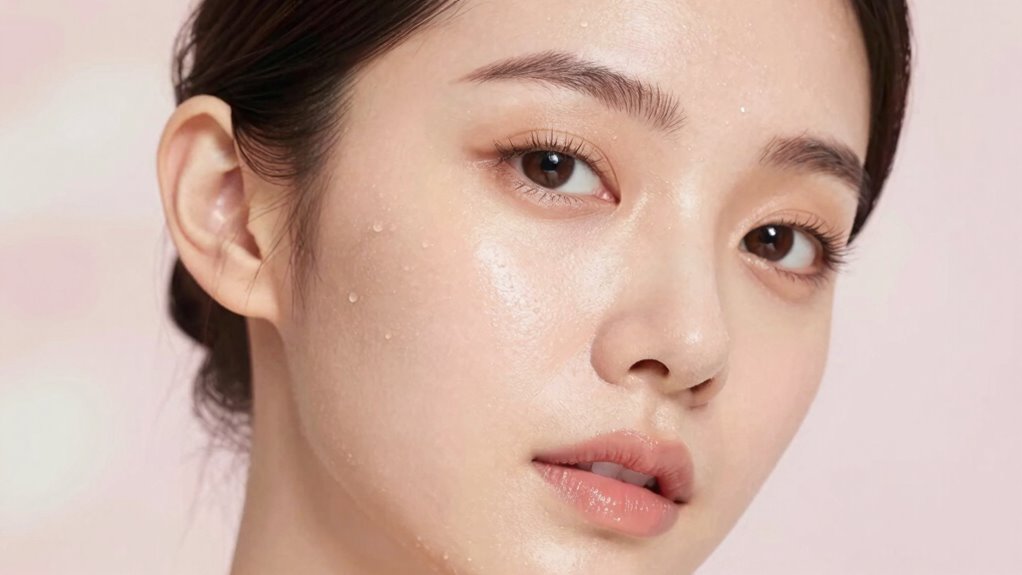
Have you ever wondered how photographers make skin look so radiant and glowing in photos? The secret often lies in using diffused lighting, which creates a soft, flattering glow. This technique reduces harsh shadows and evenly wraps light around the skin, enhancing luminous skin without washing out natural color.
In skincare photography, props like diffusers or softboxes help achieve this gentle glow. Natural light near a window can also soften direct sunlight, giving skin a silky appearance. Additionally, backlighting or halo lighting behind the model can accentuate translucency and highlight luminous edges on skincare textures and packaging reflections.
Using light modifiers such as white reflectors or diffusers ensures the skin tone remains natural while revealing subtle micro-texture and moisture, making the subject truly shine.
2. Use Close-Ups to Highlight Texture and Dewy Radiance
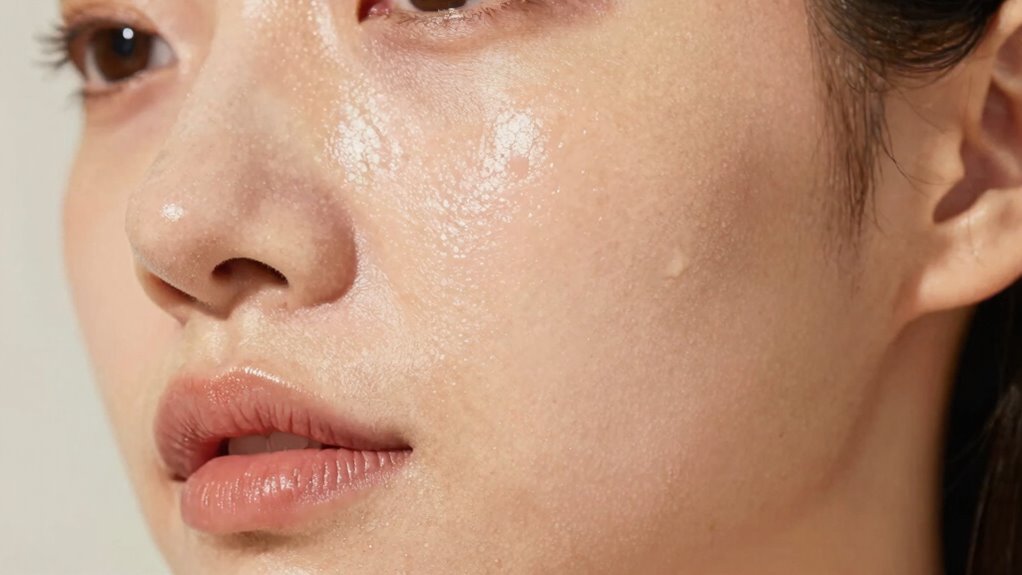
Close-up shots are a powerful way to showcase the intricate textures and radiant glow of skincare products and skin itself.
Using macro lenses reveals skin-like textures, such as cream thickness or oiliness, making the product’s effectiveness clear.
Ultra-high-resolution images capture tiny details like micro-droplets, surface sheen, and subtle color variations, all of which communicate dewy radiance.
Controlled, soft lighting enhances the dimensionality of these close-ups, highlighting texture without harsh reflections that can obscure details.
Showing the progression of texture—from thin layers to thicker swatches—demonstrates coverage and spread.
Multiple angles, like edges and centers, emphasize how the formula interacts with light and skin, reinforcing the feeling of a premium, luminous glow.
This approach makes textures and dewy radiance truly stand out.
3. Incorporate In-Use Shots to Demonstrate Application and Freshness
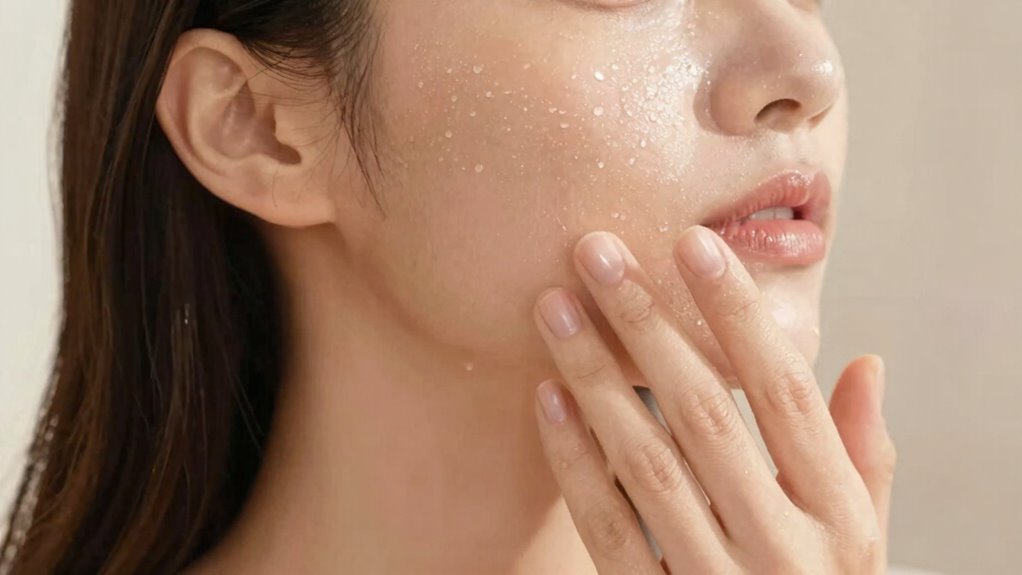
Would you like to see how a skincare product works right in action? Incorporating in-use shots captures application, illustrating texture and how it imparts a natural glow. These photos show models applying products, highlighting smoothness and absorption cues, making routines relatable. Close-ups emphasize dispersion and glide, revealing immediate visual effects on skin.
To deepen understanding, consider this table:
| Aspect | Example | Purpose |
|---|---|---|
| Texture | Creams spreading evenly on skin | Demonstrates consistency and ease |
| Application | Gentle massage motions in action | Shows routine and routine feel |
| Glow | Skin visibly radiant after use | Highlights fresh, dewy finish |
Using multiple angles and motion captures during application helps communicate how the product performs, reinforcing freshness and real-world effectiveness.
4. Create Visual Interest With Reflective Surfaces and Dynamic Angles
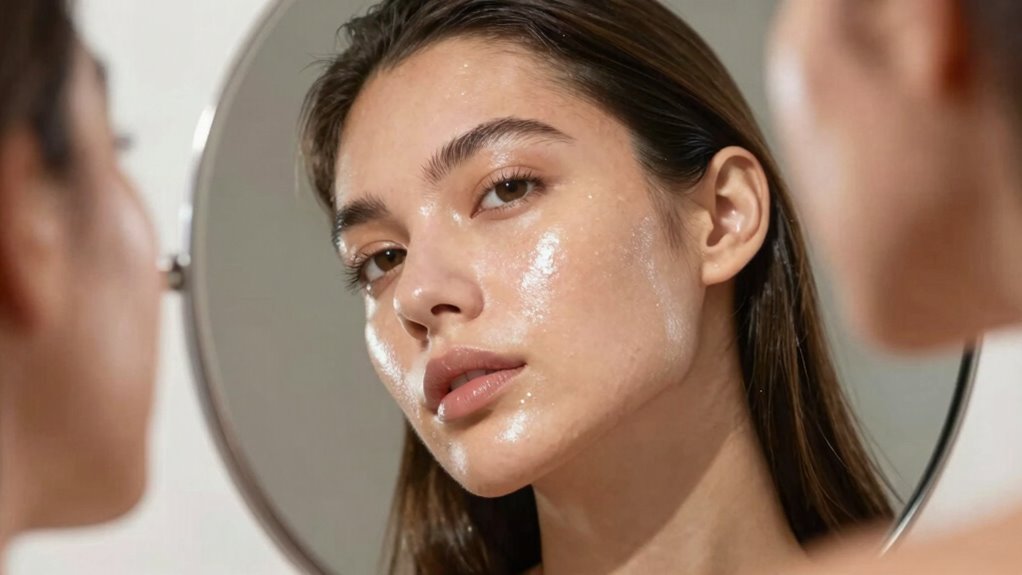
Ever wondered how to make skincare products stand out on camera? Reflective surfaces like glass, metal, and water can add depth and dimension, making products look more premium when paired with the right lighting angles. Using reflective mats or mirrors as backdrops creates layers that draw viewers in, but it’s important to manage glare with diffusers to avoid distracting hotspots. Recreating reflections on-set or in post-production can reinforce brand trust and add visual interest.
Combining reflective packaging with strategic light angles, such as a 45-degree key light, emphasizes different materials—whether glass, aluminum, or plastic. The trick is to balance reflections with product textures, ensuring creamy finishes or droplets remain visible without overwhelming the shot with glare. This technique makes products pop with clarity and sophistication.
5. Showcase Natural Ingredients and Textures as Visual Storytelling Elements
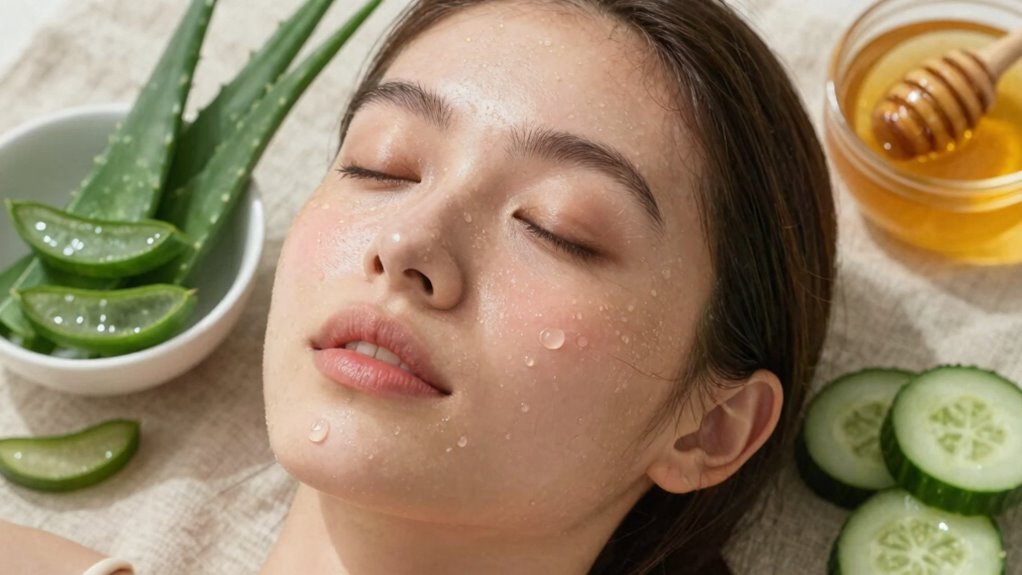
Natural ingredients like aloe vera, lavender, and vitamin C bring a fresh, authentic touch to skincare photoshoots. They serve as powerful visual storytelling elements, highlighting the purity and natural origins of products. Incorporating these ingredients as props in the backdrop creates a direct link between formulation and nature’s benefits.
Close-up shots of textures—creamy, oily, or gel-like—emphasize the product’s efficacy and sensory appeal. Capturing interactions, such as droplets or smeared textures, showcases freshness and user experience. When pairing products with prominent natural ingredients and contrasting colors, the visual story becomes more engaging and informative.
It’s important that these props align with the brand’s values, whether eco-conscious, luxurious, or clinical, while complementing the packaging without overwhelming it.
6. Style Backgrounds and Props to Enhance the Glow and Brand Vibe
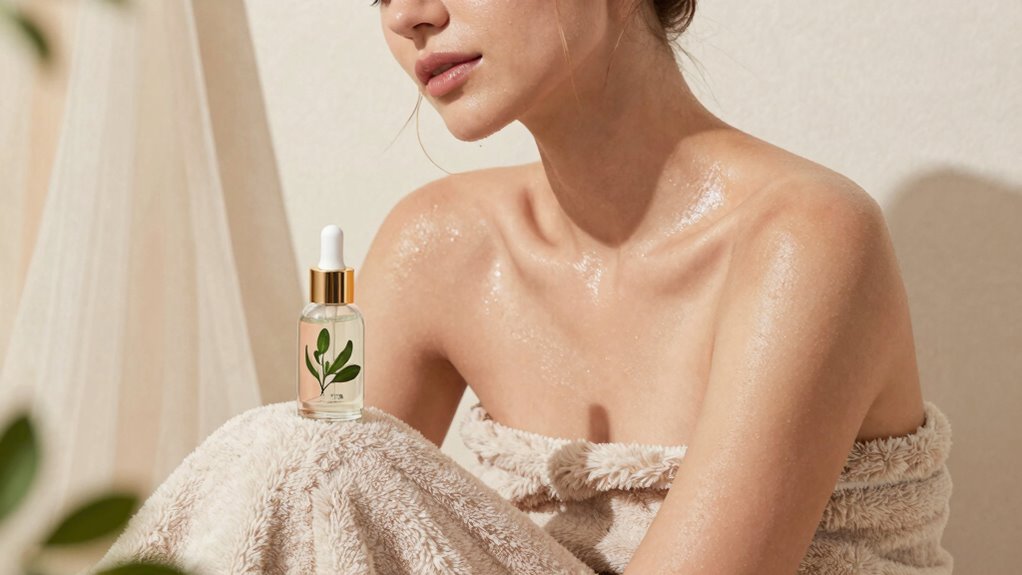
Have you ever noticed how the right background and props can make a skincare product truly shine in photos? These elements help highlight textures, bringing out the natural qualities of the product. Using ingredients as props in the background can visually connect the formula’s natural ingredients and draw attention to key components, making the product more appealing. Brightly contrasting colors can ensure these props stand out without overshadowing the main item.
Props that reflect the brand’s USP and vibe, like minimalist objects for a clean look or vibrant items for energy, reinforce storytelling. It’s also important to keep backgrounds consistent in color palette and lighting, creating a cohesive visual narrative across channels. When chosen thoughtfully, these textures and props elevate the glow and strengthen the brand’s identity effortlessly.
7. Add Motion and Lifestyle Elements to Convey Energy and Confidence
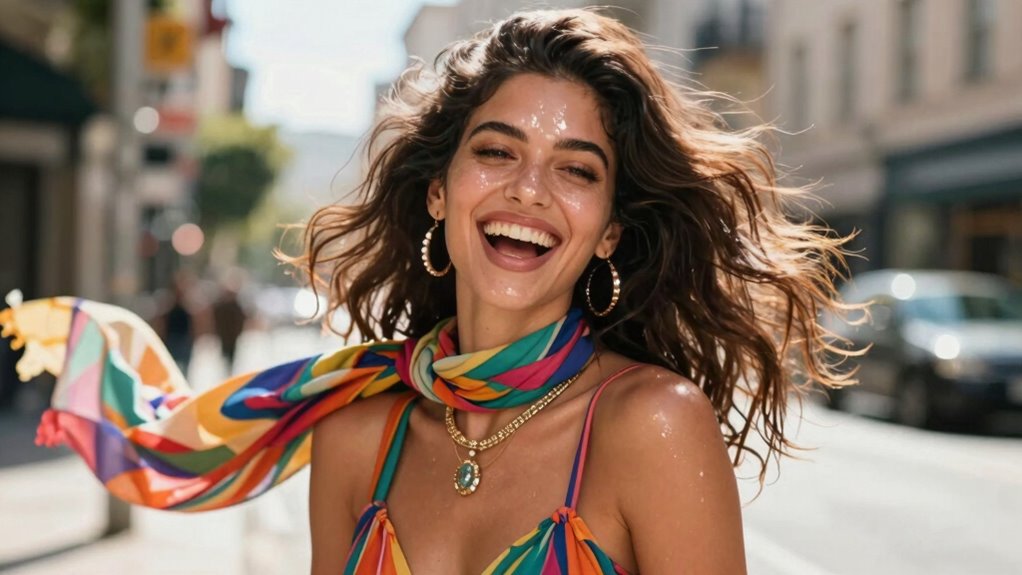
When it comes to showcasing skincare products, adding motion and lifestyle elements can truly bring the images to life. In skincare photography, capturing motion—like pouring, splashing, or applying products—adds energy and dynamism. Using fast shutter speeds freezes action for crisp, detailed shots, while slow shutter speeds create a flowing, relaxed feel.
Action shots boost engagement and help viewers relate, imagining real-world use. Incorporating lifestyle scenes, such as a person applying cream or relaxing in a spa, conveys confidence and everyday routines. Planning multiple takes ensures consistent lighting and composition, making the sequence cohesive.
Combining motion with lifestyle elements creates vibrant visuals that tell a story, making the skincare feel both natural and inspiring—perfect for capturing the glow and confidence every brand wants to showcase.