
As an Amazon Associate, this website earns from qualifying purchases.
Choosing the right skincare bottle depends on size, material, and how it dispenses the product. For daily use, larger bottles—like 120 or 200 ml—are practical, while travel-sized options, up to 50 ml, fit easily in luggage. Materials like glass protect sensitive formulas from light, and PET offers durability for on-the-go. Dispensing caps vary; pumps work well for lotions, while droppers suit serums. Exploring these choices reveals how they fit your routine and style, guiding more refined selections ahead.
How to Determine the Right Size for Your Skincare Bottle
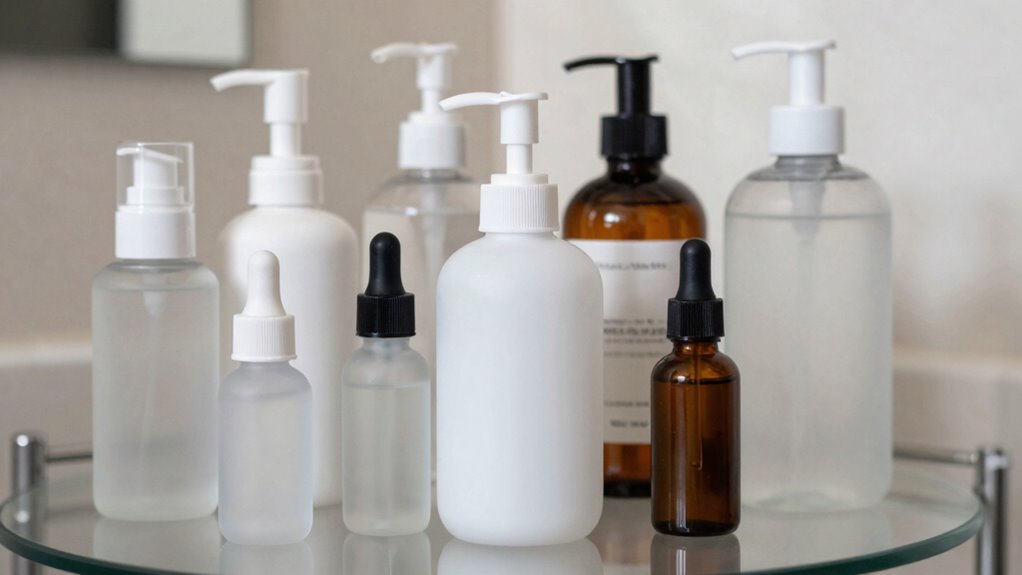
Have you ever wondered how to choose the perfect size for your skincare bottle? Selecting the right bottle sizes depends on how you plan to use the product.
For travel-size needs, bottles typically hold 10–50 ml, offering portability and complying with airline regulations. These are ideal for on-the-go routines or samples.
For daily use at home, larger bottles—ranging from 100–250 ml—are more practical, especially for lotions and creams. When considering dispensing tips, look for features that match your product’s consistency, making application easier.
Popular retail sizes include 120 ml, 150 ml, and 200 ml, often used for mid-market skincare. Think about your routine and storage space to pick a size that balances convenience and longevity, ensuring your skincare stays effective and easy to carry.
Which Material Best Preserves Your Product’s Integrity
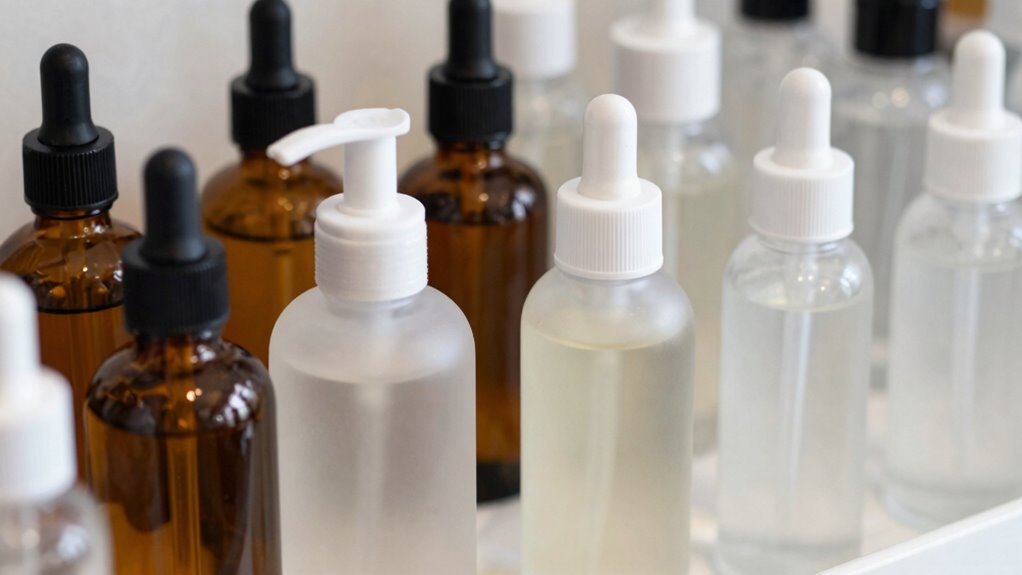
When choosing the right container for skincare products, the material of the packaging plays an essential role in preserving the formula’s effectiveness. For formulas sensitive to light or oxidation, such as vitamin C or retinol, selecting materials with strong light and air barriers is key.
- Glass bottles offer excellent chemical stability and block UV light and oxygen, helping maintain the product’s potency over time.
- Airless bottles reduce oxygen exposure and almost completely dispense the product, extending shelf life and minimizing contamination.
- PET bottles are lightweight and shatterproof, ideal for travel but less effective at blocking light and air.
- Laminate tubes provide a high barrier but can be harder to recycle, impacting sustainability.
Choosing the right material guarantees skincare stays fresh and effective longer.
What Dispensing Mechanism Suits Different Skincare Formulas?
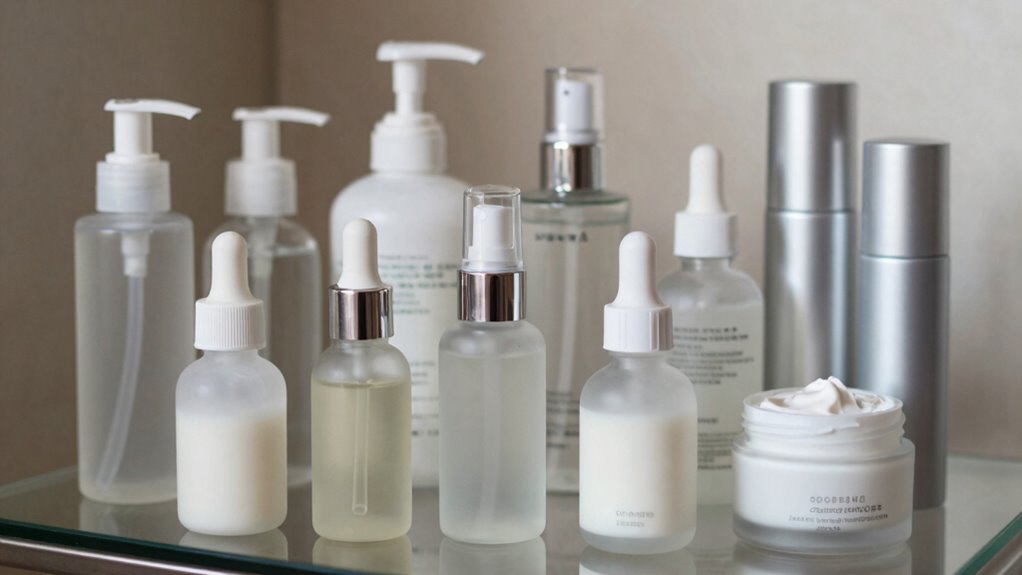
Choosing the right dispensing mechanism can make a big difference in how skincare products are used and preserved.
The dispenser type should match the product’s viscosity for optimal performance. Pump dispensers are perfect for lotions and thicker liquids, offering controlled application and reducing waste. Spray bottles work well for mists and toners, providing even coverage but are not suitable for thick creams. Dropper bottles excel with serums and oils, allowing precise dosing.
Flip-top or disc caps are great for cleansers and gels, providing easy access while maintaining protection. Airless bottles, although pricier, are excellent for extending shelf life since they limit air contact and nearly dispense 100% of the product. Choosing the right dispenser type ensures ease of use and product longevity.
How to Align Packaging Design With Your Brand Identity
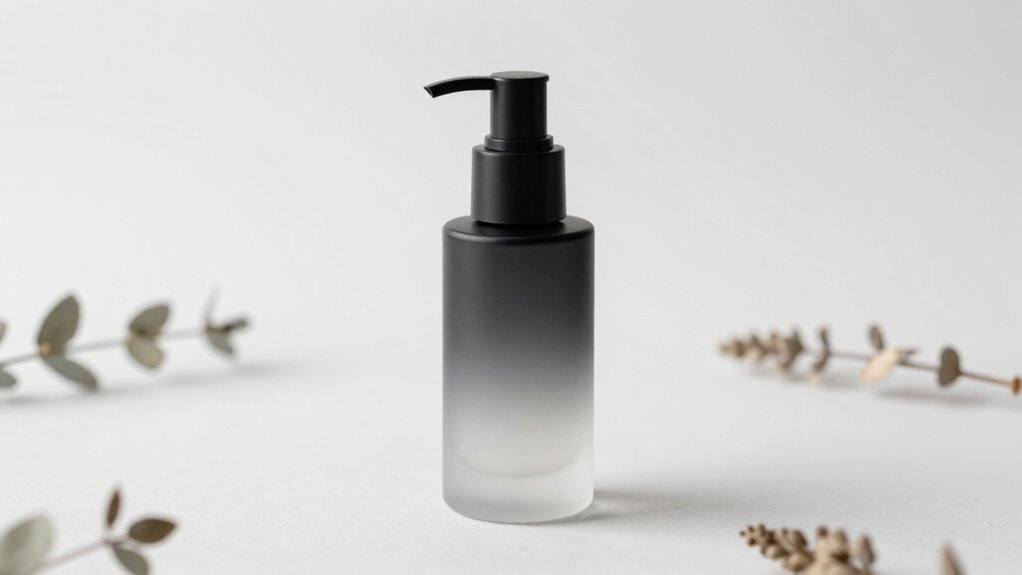
How a skincare packaging looks on the shelf often tells a story about the brand behind it. Effective packaging design should reflect the brand’s personality and appeal to its target audience. For instance, a luxury brand might choose glass bottles and elegant labeling to communicate sophistication, while a mass-market brand may opt for cost-effective PET containers with bold colors.
Here are four ways to align packaging design with brand identity:
- Use custom colors and design elements that reinforce brand recognition.
- Select materials that match the brand’s positioning. Luxury brands favor premium materials like glass.
- Incorporate ergonomic shapes for better handling and brand recall.
- Maintain transparency or storytelling features that elevate perceived product quality and trust.
Material selection and design choices should work hand-in-hand to tell a cohesive brand story.
What Factors Influence Your Packaging Choice and Cost
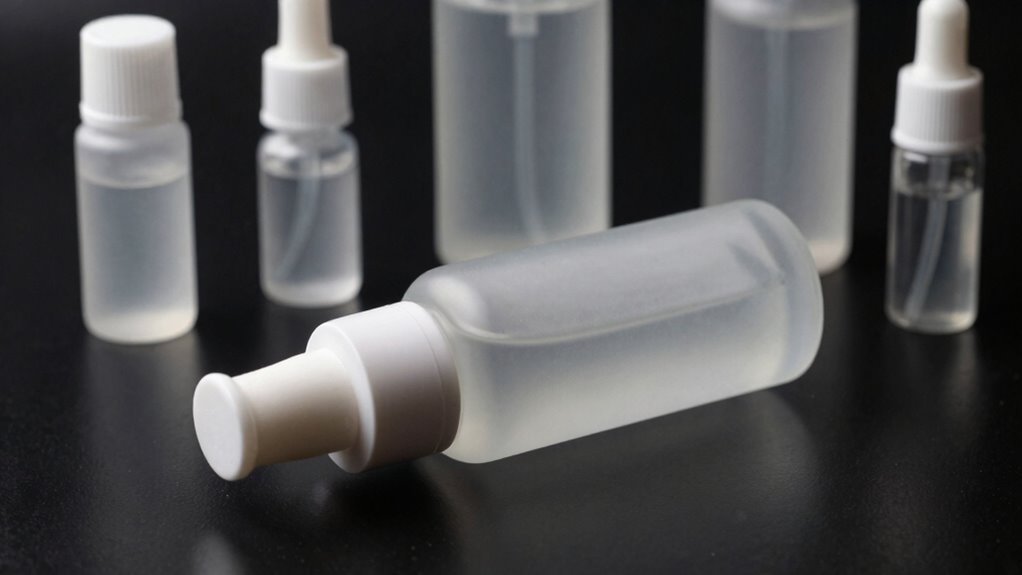
The factors influencing packaging choice and cost are as varied as the products themselves, and understanding these can help brands make smarter decisions. Material plays a big role here. PET bottles are lightweight and suitable for lighter skincare products, making shipping easier and cheaper. Glass offers excellent protection against light and oxygen, but it’s heavier and more fragile, which can bump up shipping costs and give a premium feel.
Dispensing mechanisms, like pumps, sprays, or droppers, must match the formula’s viscosity to work efficiently and reduce waste. Sustainability is also key; using recyclable materials like PET or mono-material pumps appeals to eco-conscious consumers and can lower costs over time. Overall, balancing these factors helps brands choose packaging that’s practical, eco-friendly, and budget-friendly.