
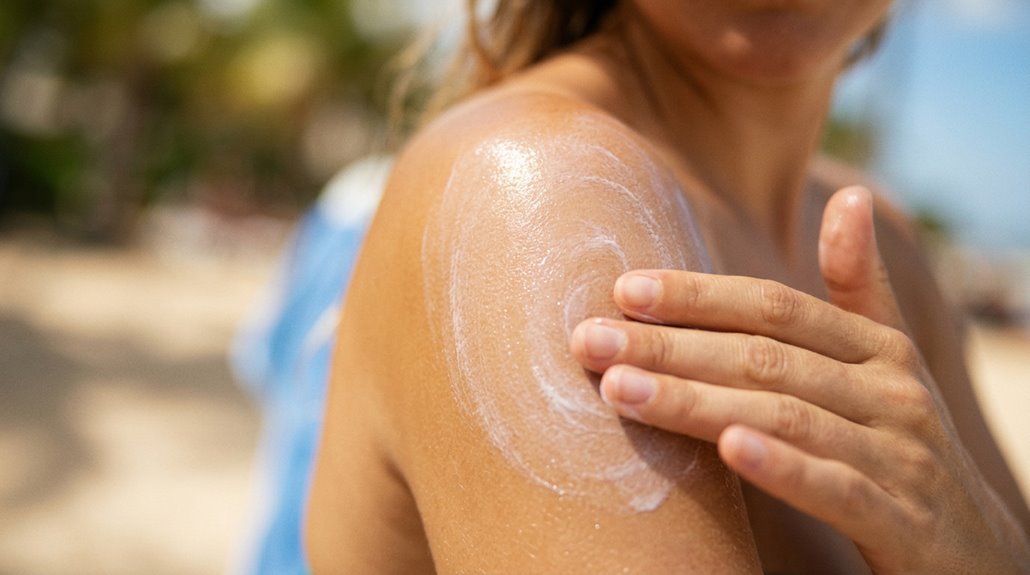
As an Amazon Associate, this website earns from qualifying purchases.
Applying sunscreen correctly ensures full protection from UV rays. It’s essential to use enough—about one ounce for the whole body and two finger-lengths for the face—and evenly cover all exposed areas, including ears, neck, and scalp. Don’t forget to rub it in thoroughly, especially in tricky spots like behind the ears or under the chin. Reapply every two hours, or sooner if swimming or sweating. Mastering these steps helps keep skin healthy longer—keep exploring for even more tips.
Why Applying the Right Amount of Sunscreen Matters for Full Protection
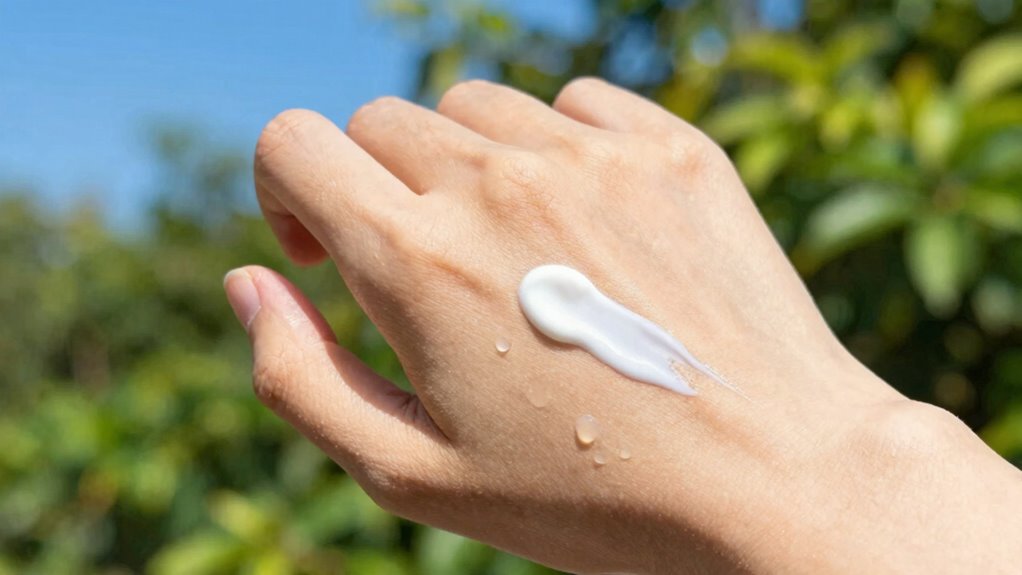
Have you ever wondered why your sunscreen might not be working as well as it should? The key is in the sunscreen quantity used and proper application. Many people apply only 25–50% of the recommended amount, which seriously cuts down protection efficacy.
To get full SPF protection, about 1 ounce—roughly a shot glass—is needed for your entire exposed body, and just half a teaspoon for your face and neck. Using too little creates gaps, especially on tricky spots like ears, neck, and scalp, leaving your skin vulnerable to burns. Applying generously and evenly is essential, and don’t forget to reapply every two hours or after swimming or sweating. Proper application isn’t just about quantity; it’s about ensuring every inch is protected.
How to Identify and Cover High-Risk Sun Exposure Areas

Many people overlook certain areas when applying sunscreen, leaving their skin vulnerable to sun damage. Recognizing high-risk sun exposure areas is key to effective sunscreen application and protective coverage.
First, the tops of the ears are often missed but are highly exposed. Second, the scalp, especially along thinning hairlines, needs attention—use sprays or powders designed for hair. Third, the backs of the hands frequently get overlooked but are exposed daily. Fourth, areas around the eyes and lips require special care; apply SPF lip balm and consider sunglasses to protect delicate skin.
The neck and chest also face frequent sun exposure, so don’t forget to cover these zones thoroughly. Identifying these high-risk areas ensures comprehensive protection during outdoor activities.
When and How Often Should You Reapply Sunscreen During Outdoor Activities?

When spending extended time outdoors, knowing how often to reapply sunscreen becomes just as important as applying it correctly in the first place. Regular sunscreen reapplication is key to maintaining outdoor protection. The general rule is to reapply every two hours, especially during long activities, to ensure continuous coverage.
If swimming or heavy sweating occurs, reapply immediately afterward since these actions wash away or degrade the sunscreen. Remember, sunscreen degrades with sun exposure, sweat, towel drying, and natural oils, so the reapply interval should be maintained even on cloudy days. For thorough coverage, don’t forget often-missed areas like ears, neck, and tops of feet.
Carry a portable sunscreen for easy reapplication. If wearing makeup, reapply sunscreen first, then dab over with a sponge to avoid smudging.
Choosing the Best Sunscreen Formulas and Application Methods for Your Skin
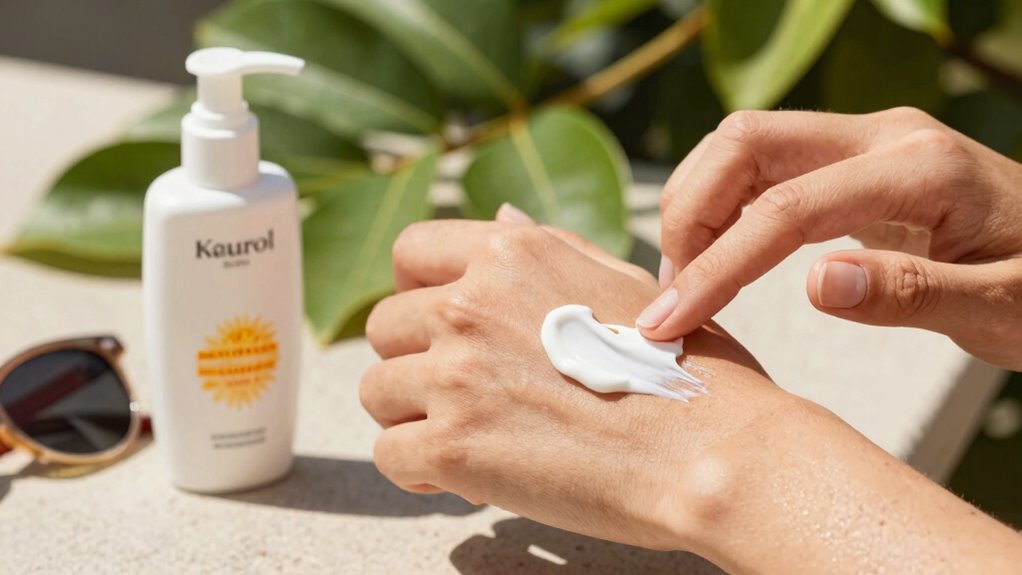
Choosing the right sunscreen formula can make a big difference in how well it protects your skin and how easy it is to use daily. Different formulations suit different needs and preferences. For example, lotions are great for full-body coverage, sprays are quick and convenient, sticks are perfect for targeted areas, and powders can be layered over makeup.
When selecting application methods, consider your activity. Water-resistant formulas work well for swimming, while lightweight, invisible finishes suit daily wear. For face-specific formulas, apply about two finger-lengths worth and choose water-resistant options up to 40 minutes. Remember, effective skin protection involves covering all exposed areas, including ears, neck, and even the scalp if hair thinning is an issue. Picking the right sunscreen formula and method helps ensure consistent, proper use.
How Much Sunscreen Do You Need for Different Parts of Your Body?
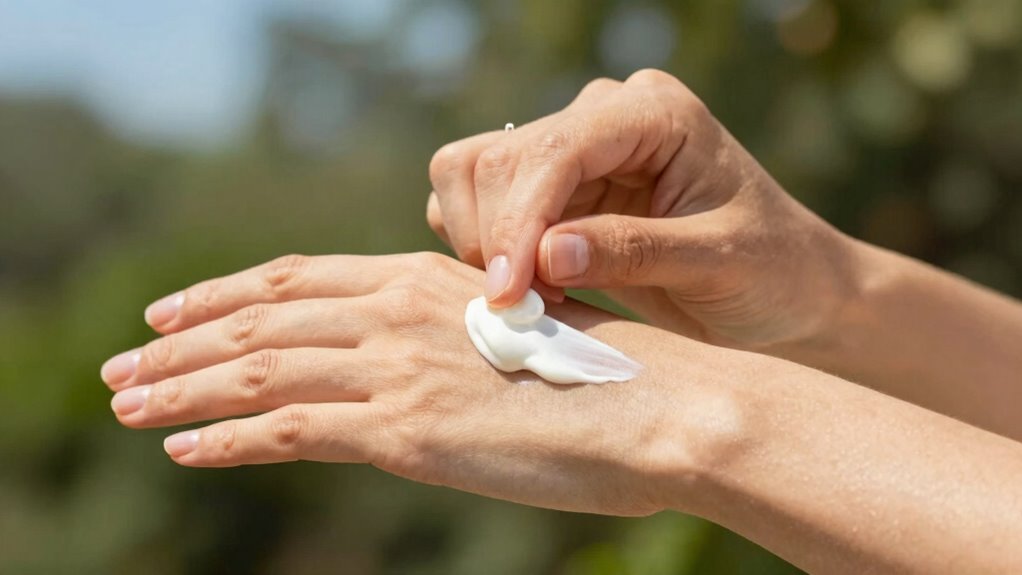
Knowing how much sunscreen to apply is just as important as choosing the right formula. The key is ensuring adequate body coverage without wasting product. For the face, using about two finger-lengths of sunscreen, or roughly a nickel-sized amount, is recommended. The two-finger rule helps estimate this coverage, ensuring even application before rubbing in.
When applying to the entire body, approximately 30 ml, or about a shot glass, is needed—though larger individuals may require more. To visualize, think of painting a fence: spread the sunscreen evenly across all exposed areas. To keep it simple:
| Body Part | Sunscreen Amount |
|---|---|
| Face and neck | Two finger-lengths or nickel-sized |
| Full body (average) | About 30 ml, or one shot glass |
| Larger bodies | More than 30 ml |
This approach ensures proper protection with just the right sunscreen amount.
Tips for Applying Sunscreen Effectively on Difficult or Hard-to-Reach Areas
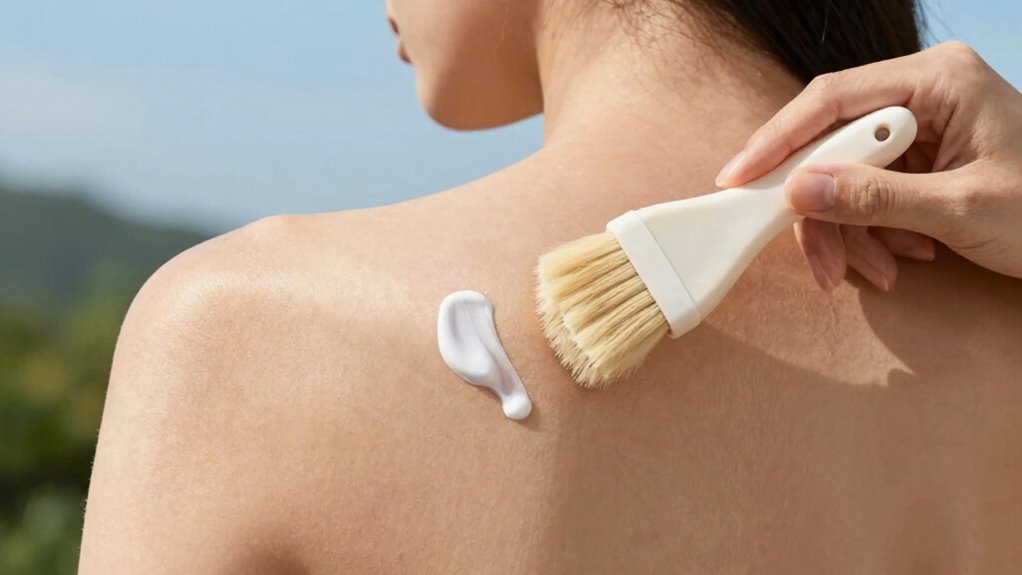
Have you ever tried to reach the back of your shoulders or the areas behind your ears, only to find yourself stretching and contorting in vain? When it comes to sunscreen application on hard-to-reach areas, a few simple tips can make a big difference.
- Use a spray sunscreen and spray until the skin glistens, then thoroughly rub it in to ensure full coverage.
- For your scalp or thinning hair, apply sunscreen directly to exposed skin or wear a wide-brimmed hat for extra protection.
- Don’t forget tricky spots like ears and tops of feet, apply sunscreen and spend a moment on thorough rubbing-in.
If reapplying over makeup, dab gently with a sponge or opt for a light formula to avoid disrupting your look.
Special Considerations for Applying Sunscreen to Kids and Sensitive Skin

Ever wonder how to make sunscreen application easier and safer for kids and those with sensitive skin? For effective sunscreen application for kids, using the right formats can make a big difference. Kids often prefer sticks or sprays because they’re quick and less messy, but all formats still require generous application and thorough rubbing.
When applying to children’s sensitive skin, avoid direct spraying on the face; instead, spray onto hands and gently rub in. Pump dispensers are especially helpful for kids who apply their own sunscreen, as studies show they deliver more product. Tools like Solar Buddies or brushes can assist in spreading lotion evenly.
Consistent use of broad-spectrum SPF 30+ and reapplication every two hours helps protect delicate skin from sun damage.
The Best Tools and Techniques to Ensure Thorough and Even Sunscreen Coverage
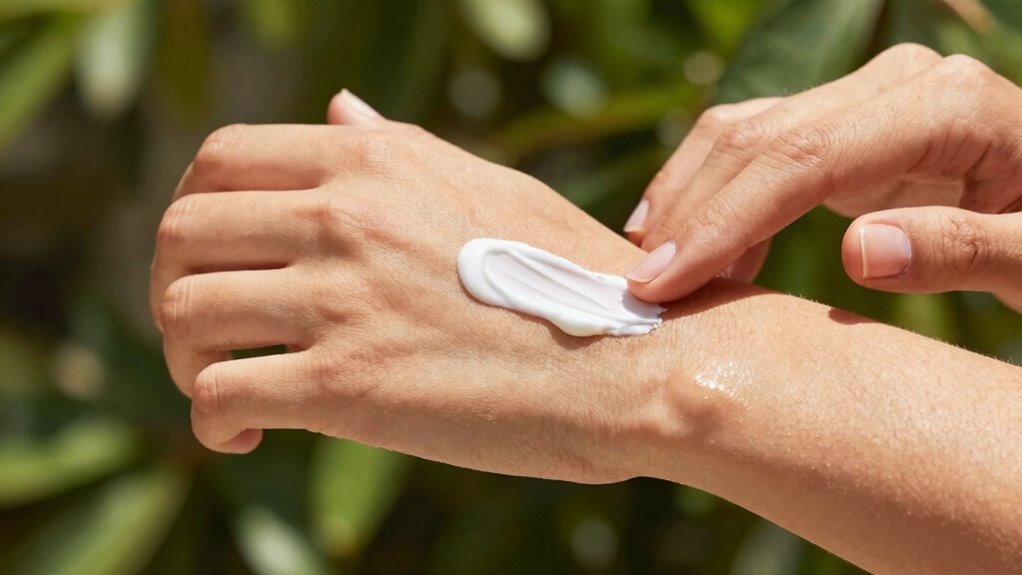
Applying sunscreen evenly across the skin might seem straightforward, but using the right tools and techniques can make a significant difference in ensuring every inch is protected. To achieve thorough coverage, consider these tips:
- Use a generous amount, about 30 ml for full-body coverage, and apply it in sections.
- Rub in the sunscreen thoroughly, especially on hands, to avoid missed spots.
Pay attention to tricky areas like ears, neck, and the tops of feet. Use spray-on sunscreens or sticks for hard-to-reach places like the back or scalp, and reapply every two hours or after swimming and sweating.
These techniques help improve sunscreen application, ensure thorough coverage, and maintain proper reapplication timing—key steps for effective sun protection.
Common Mistakes That Reduce Sunscreen Effectiveness and How to Avoid Them

Many people unknowingly make common mistakes that can substantially reduce how well sunscreen protects their skin. One major error is using too little sunscreen, which means applying less than the recommended amount—about two finger-lengths for the face and roughly 30 ml (1 oz) for the full body—dramatically decreases coverage. Missing key areas such as the tops of ears, scalp, backs of hands, lips, eyes, neck, and chest is also common, so thorough coverage is essential.
Reapplication every two hours, especially after swimming or sweating, is crucial to maintain protection. Relying solely on makeup SPF isn’t enough; dedicated sunscreen should be your first layer. These simple mistakes can leave skin vulnerable, but with proper coverage and reapplication, protection is much more effective.
How to Incorporate Sunscreen Into Your Daily Routine for Long-Term Skin Health
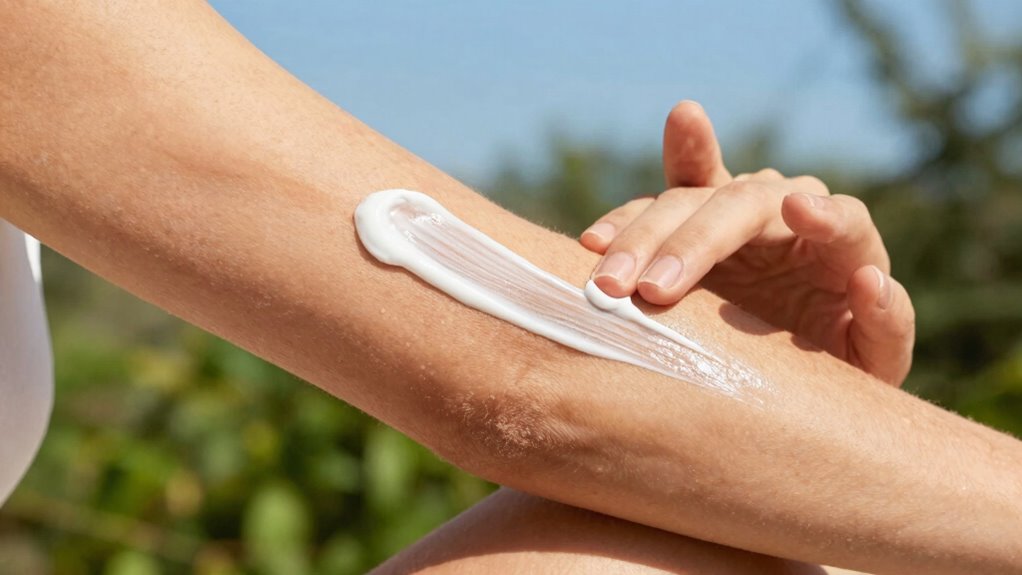
How can daily routines be adjusted to guarantee consistent and effective sun protection? Incorporating sunscreen into a daily skincare routine is key for long-term protection.
First, apply broad-spectrum sunscreen SPF 30+ every morning on all exposed skin, using about two fingers’ worth for the face and at least 1 ounce for the full body.
Second, reapply every two hours outdoors, especially after swimming or heavy sweating.
Third, use products like moisturizers with SPF or dedicated face sunscreens to simplify daily skincare.
Fourth, don’t forget often missed areas such as ears, neck, or tops of feet—protect these with SPF or hats.
Establishing these habits ensures consistent protection, helping maintain healthy skin over time and making sun safety an effortless part of daily life.