
As an Amazon Associate, this website earns from qualifying purchases.
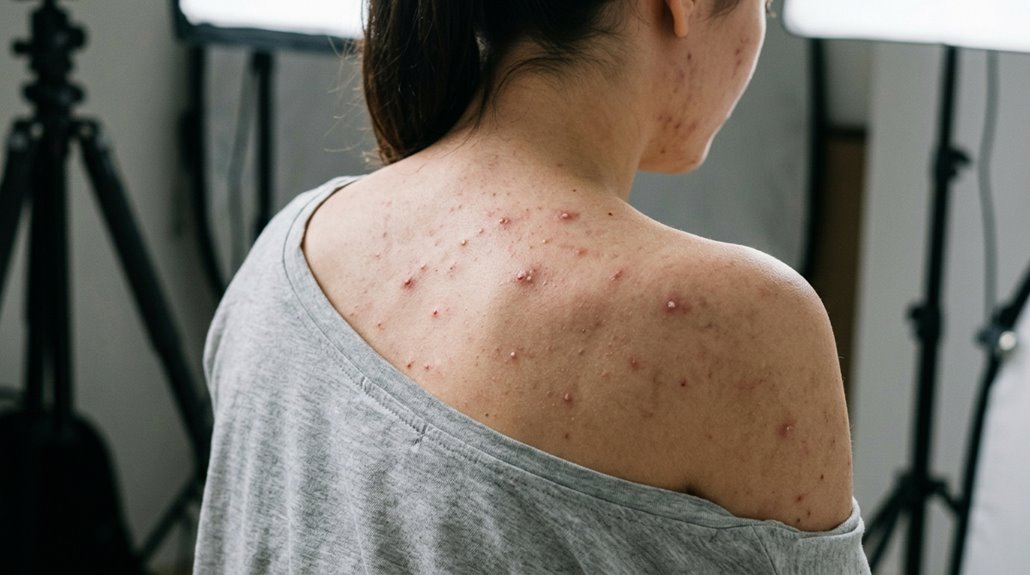
To clear back acne, start with a gentle skincare routine. Use mild, nonharsh cleansers twice daily and apply over-the-counter treatments like benzoyl peroxide or adapalene. Wear breathable clothing and shower promptly after sweating. Incorporate exfoliants like salicylic acid to prevent clogged pores. Manage triggers such as friction from straps and clothing. For persistent cases, seeing a dermatologist can reveal prescription options. Keep up regular habits, and you’ll find more tips to achieve clearer skin along the way.
Understand What Back Acne Is and Why It Happens
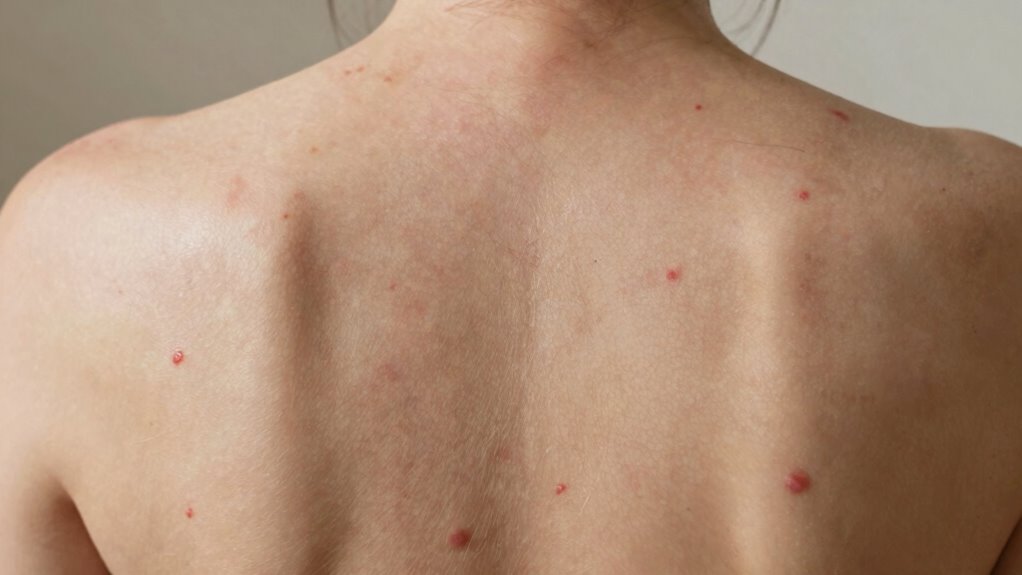
Have you ever wondered why back acne, or bacne, seems to pop up more often during certain times in life? It’s because back acne occurs when oil, dead skin cells, and bacteria block hair follicles on the back. Unlike the face, the back has more sebaceous glands and thicker skin, making it more prone to breakouts.
Genetics and hormones also play a role, especially during puberty, menstrual cycles, or pregnancy, when sebum production increases. Inflammation can cause whiteheads and blackheads, while deeper issues may lead to papules, nodules, or cysts. Sweat and friction from clothing or gear can worsen bacne by trapping dirt and oil.
A good understanding of what back acne is helps shape an effective treatment plan, preventing long-term scars or discoloration.
Identify the Types and Severity of Your Back Acne
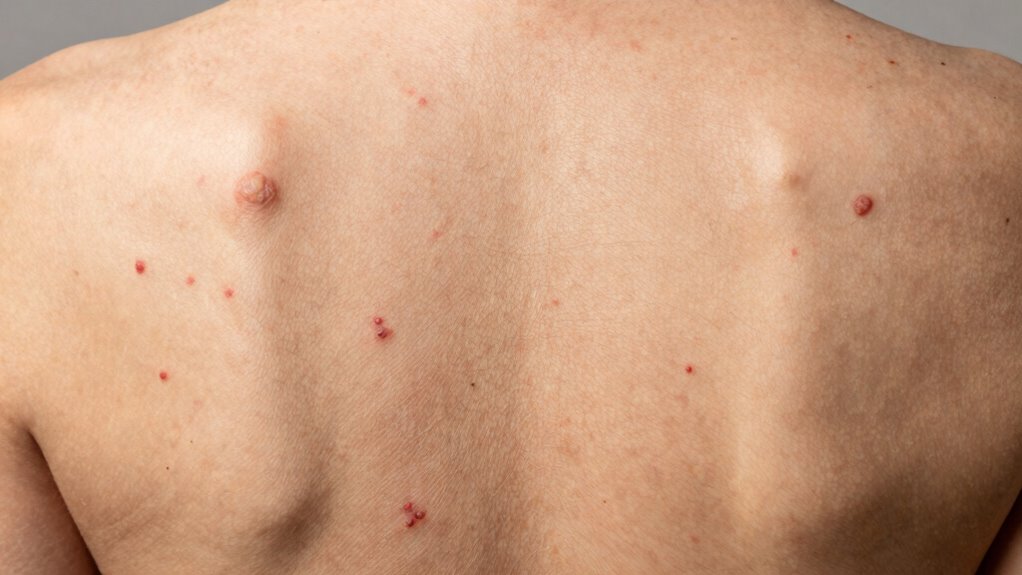
Determining the exact type and severity of back acne is an important step in creating an effective treatment plan. Back acne can include whiteheads, blackheads, papules, nodules, and cysts—each representing different levels of severity and inflammation. Recognizing these types helps tailor the treatment approach. For example, whiteheads and blackheads are milder, while nodules and cysts signal more serious issues that may require professional help.
The severity varies between individuals, and it’s common to see multiple types at once. Knowing your back acne types and severity guides the treatment plan, making it more targeted and effective.
| Back Acne Types | Severity Level |
|---|---|
| Whiteheads, blackheads | Mild |
| Papules, small bumps | Moderate |
| Nodules, cysts | Severe |
Adopt a Gentle, Back-Friendly Skincare Routine for Acne Prevention
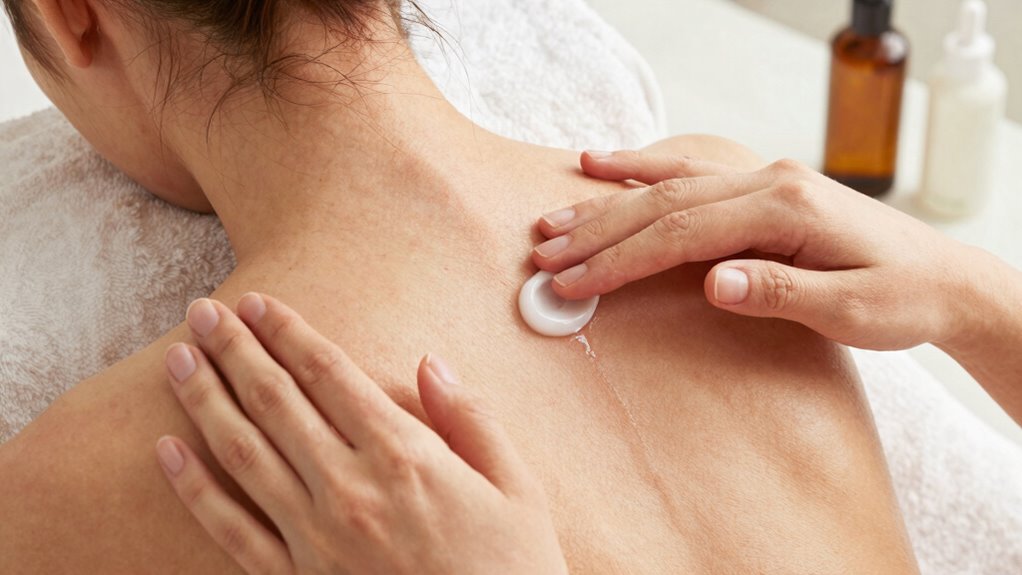
Starting a gentle skincare routine is a smart way to help prevent back acne from worsening. Proper care can reduce back breakouts and keep skin healthy.
First, use gentle cleansers and wash problem areas twice daily, avoiding harsh scrubbing that can irritate skin.
Second, choose noncomedogenic, water-based moisturizers and skincare products to prevent pore blockage.
Third, after showering, apply topical treatments like benzoyl peroxide or adapalene. Then, wait until they dry before dressing.
Lastly, wearing loose, breathable clothing and keeping hair off the back minimizes friction and sweat buildup.
These simple steps create an approachable, back-friendly routine that supports healing and prevents new breakouts. Making skincare less stressful and more effective is achievable by following these guidelines.
Wear Breathable Clothing and Manage Physical Triggers
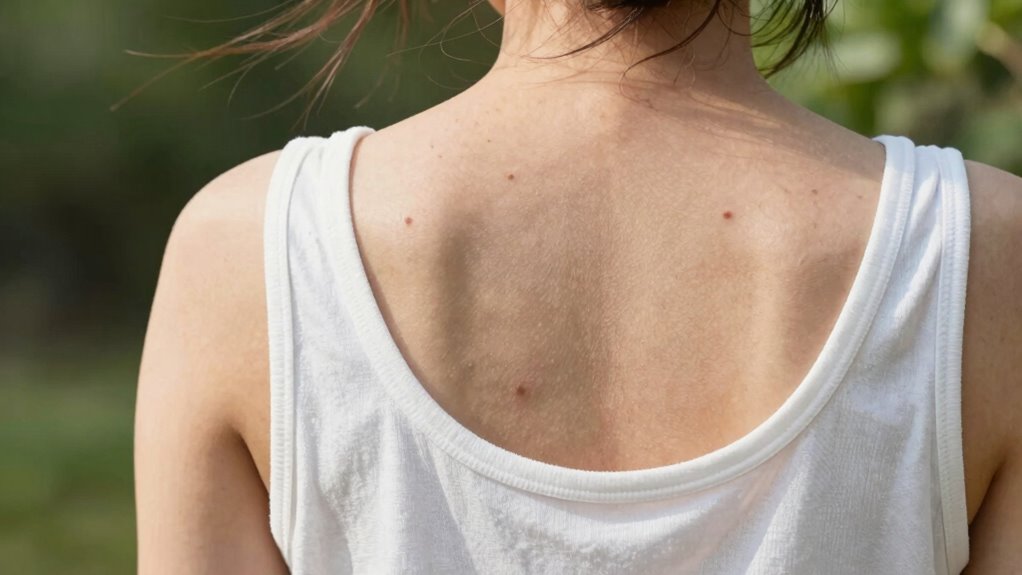
Many people wonder why their back acne seems to flare up during or after physical activity. Sweat, friction, and tight clothing often play a role. Wearing breathable clothing can make a big difference, as these fabrics help reduce skin irritation and keep sweat from trapping on the skin’s surface. Moisture-wicking workout gear is especially helpful, drawing sweat away from the back and keeping pores clear.
It’s also smart to avoid backpacks or straps that rub against the skin because friction can worsen breakouts. After exercise, shower promptly to wash away sweat, oils, and bacteria that can trigger acne. Regularly washing and sanitizing workout clothes ensures they stay free of irritants. Managing physical triggers with breathable clothing and sweat management creates a healthier environment for clearer skin.
Incorporate Over-the-Counter Treatments Effectively
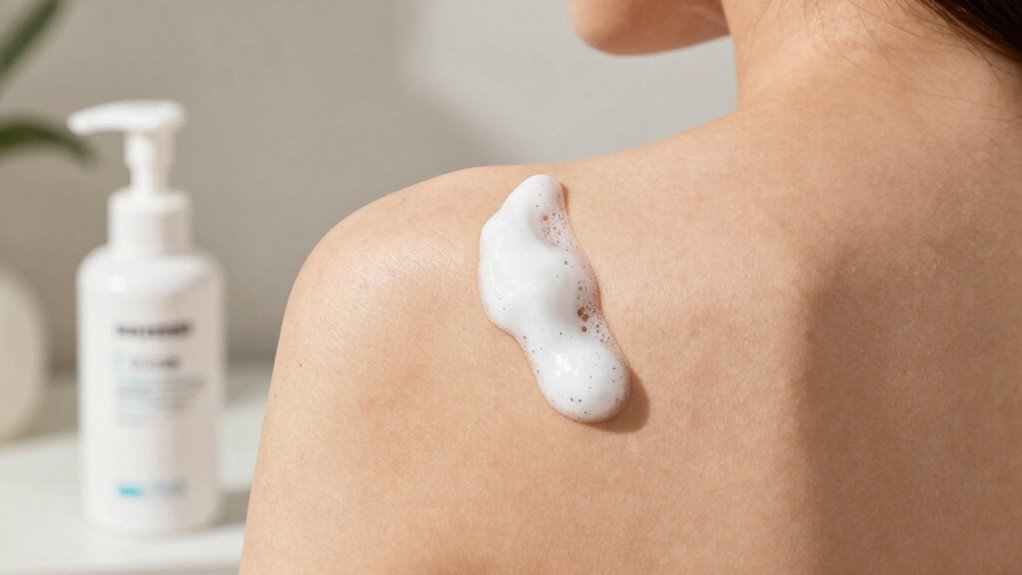
When it comes to managing back acne, incorporating over-the-counter (OTC) treatments can be a game-changer, but knowing how to use them effectively makes all the difference. First, starting with benzoyl peroxide washes at 2–5% concentration helps reduce bacteria and inflammation; apply after showering and let it dry before dressing.
Second, incorporating salicylic acid or glycolic acid exfoliants helps remove follicular plugs and prevent clogging. Just be careful with leave-on products to avoid irritation.
Third, using a noncomedogenic moisturizer keeps the skin hydrated without blocking pores. Lastly, consider topical retinoids like adapalene, beginning three times a week and increasing as tolerated. Proper use of these OTC options can make a real difference in clearing back acne.
Make Dietary and Lifestyle Changes to Support Clearer Skin
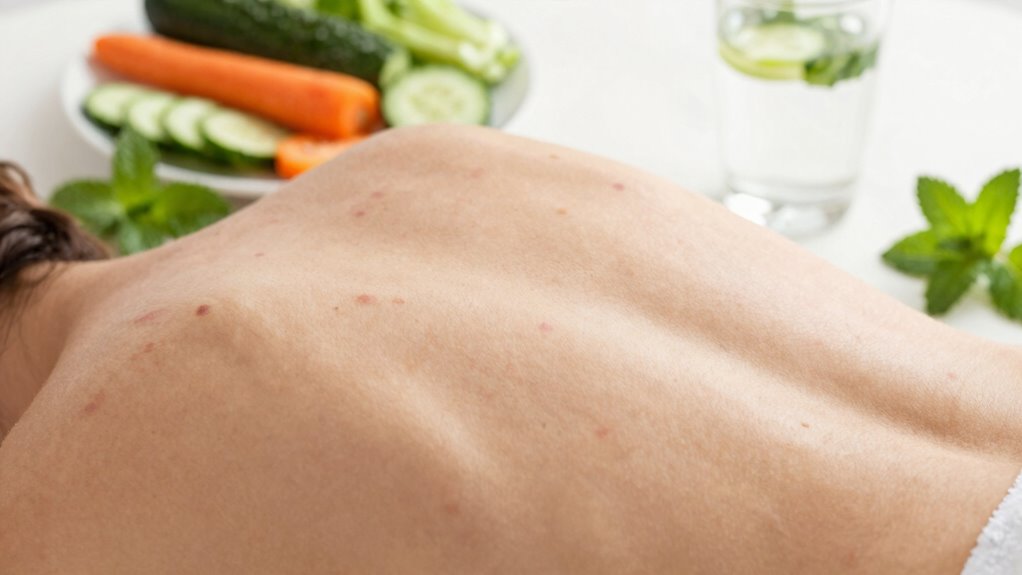
Have you ever wondered how much your daily eating habits and lifestyle choices impact your skin? Making small changes can support clearer skin by reducing inflammation and oil buildup. A balanced diet with fruits, vegetables, whole grains, and lean proteins can improve skin health. Limiting high-glycemic foods like white bread and potatoes may decrease breakouts. Including omega-3 fatty acids, zinc, and antioxidants can also help lower inflammation. Staying well-hydrated supports the skin’s healing process and enhances the effectiveness of topical treatments.
To help visualize these tips:
| Dietary Choices | Lifestyle Habits |
|---|---|
| Eat more fruits and veggies | Drink plenty of water |
| Limit sugary, processed foods | Manage stress and sleep well |
| Add omega-3s and zinc | Avoid excessive sweating |
Small steps in diet and lifestyle can make a big difference.
Know When to Seek Professional Dermatologic Care
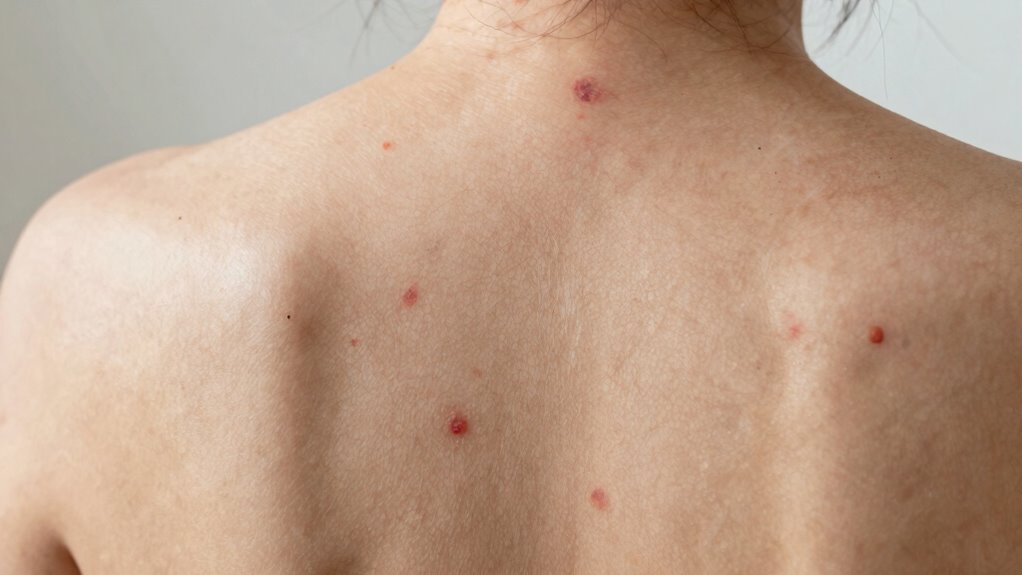
Deciding to see a dermatologist can feel like a big step, but recognizing when home remedies aren’t enough is important for effective treatment. If back acne persists after several weeks of basic care or if breakouts are severe or painful, professional help is needed. A dermatologist can assess the skin and create a tailored treatment plan, which might include prescription topical retinoids, antibiotics, or even oral medications like isotretinoin.
Here are some signs to seek a dermatologist:
- Persistent acne that doesn’t improve with home care
- Severe or painful breakouts
- Acne that causes scarring or hyperpigmentation
- Considering systemic therapies or special procedures
Addressing these concerns early can lead to clearer, healthier skin more effectively.
Follow a Step-by-Step Treatment Plan for Long-Term Results
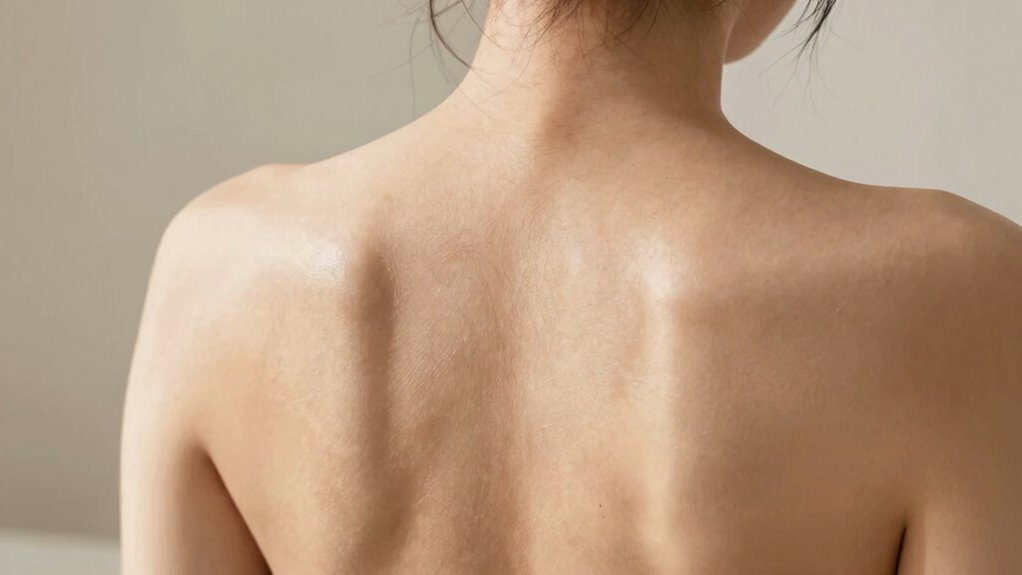
Following a structured treatment plan is essential for achieving long-term improvements in back acne, and it begins with taking thoughtful, consistent steps. Starting with a visit to a dermatologist, such as Midwest Dermatology, helps create a personalized dermatologist plan tailored to individual needs. The plan often includes gentle cleansing using dermatologist-recommended products that remove dirt and oil without drying out the skin.
Some treatments may involve professional procedures like extractions or HydraFacial treatments to reduce redness and improve skin health. Daily adherence to a dermatologist-approved, oil-free skincare routine is crucial. Some cases may require long-term treatments like Accutane. Patience is key; noticeable results usually appear within 4 to 12 weeks, with regular follow-ups to fine-tune the plan for lasting results.