

As an Amazon Associate, this website earns from qualifying purchases.
A simple nighttime skincare routine can boost skin’s natural repair process and give a radiant glow. It starts with a gentle double cleanse—using an oil-based cleanser first to remove makeup and oil, followed by a water-based cleanser for dirt. Next, incorporate exfoliation 2-3 times a week to renew skin cells, then apply a hydrating toner to balance pH. Target specific concerns with serums, finish with a nourishing moisturizer, and consider weekly treatments or devices. Keep it manageable; your skin will thank you. If you’re curious about more tips, there’s always something helpful to learn.
Understand Why Nighttime Skincare Matters for Glowing Skin

Have you ever wondered why nighttime is such an essential time for skincare? During the night, skin shifts into repair mode, boosting collagen production, cell turnover, and blood flow to fix damage caused by UV rays, pollution, and stress.
This is when your skin is most receptive to skincare absorption, meaning active ingredients can penetrate deeper and work more effectively.
Using the right products at night supports your skin’s natural overnight repair process, helping you achieve a radiant, overnight glow by morning.
Hydration is also key, as nighttime routines aim to lock in moisture and reduce water loss.
Nourishing ingredients like prebiotics and barrier-supporting elements strengthen your skin’s microbiome, ensuring it stays healthy.
Start With a Gentle Double Cleanse to Remove Impurities

A good nighttime skincare routine often starts with a double cleanse, especially after a busy day full of makeup, sunscreen, and environmental pollutants. Double cleansing involves two steps: first, using an oil-based cleanser, like a balm or liquid, to dissolve makeup, oil, and SPF. This step is key for barrier-friendly cleansing, gently lifting away impurities without stripping the skin. Follow with a gentle water-based cleanser to remove any leftover debris and dirt.
If no makeup or SPF was worn, a single, mild cleanse might be enough, helping to avoid over-cleansing that can damage the skin’s barrier. When layering, double cleansing works best for those with makeup or clogged pores, preparing the skin for subsequent skincare steps. Always use gentle techniques—avoid tugging—and pat dry to keep skin happy and healthy.
Incorporate Exfoliation Strategically for Cellular Renewal

Ever wonder how to boost your skin’s natural glow? Incorporating exfoliation into a skincare routine is a smart way to promote cellular turnover, which refreshes dull, dead skin cells. Using chemical exfoliants like AHAs or BHAs 2–3 times a week helps remove these cells, revealing brighter, smoother skin. It’s important to time exfoliation carefully—avoid doing it on the same night as retinol—and schedule it away from layering other serums to prevent irritation.
Pairing exfoliation with a pH-balanced toner supports the skin’s natural acidity, helping to hydrate rather than strip moisture. After exfoliating, follow with hydrating serums and moisturizers to lock in moisture and aid overnight repair. This strategic approach ensures your skin renews itself gently and effectively, boosting that sought-after glow.
Use Toners to Balance pH and Prepare Your Skin
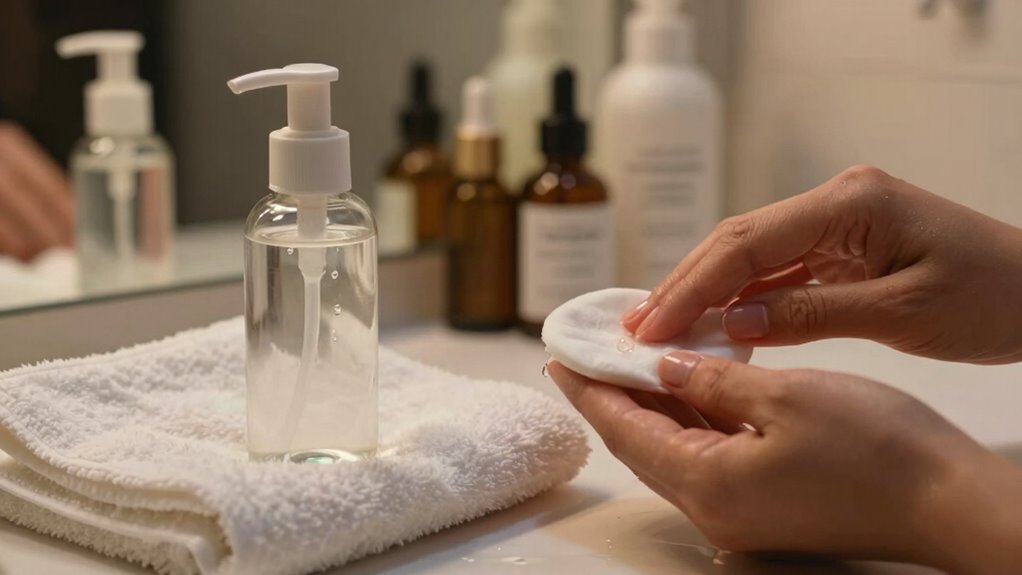
Sometimes, after cleansing, the skin feels a bit off—either too dry, tight, or even a little greasy—making it the perfect time to use a toner. A toner helps restore the skin’s pH balance and preps it to absorb serums and moisturizers better. It can contain ingredients like hyaluronic acid or vitamins, offering hydration and nourishment in just one step.
For example, hydrating exfoliants like the Hydra-Bright Pro 5 Liquid Exfoliant use five acids to brighten and soothe. When choosing a toner, consider your skin type: avoid high-alcohol formulas if your skin is dry or sensitive. Using a toner can feel like giving your skin a gentle hug, setting the stage for a glowing, healthy complexion.
Apply Targeted Serums to Address Specific Concerns

Have you ever wondered how to target specific skin issues effectively during a nighttime routine? Serums are the perfect solution. After cleansing and toning, applying targeted serums allows active ingredients like retinol, vitamin C, or antioxidants to work deeply within the skin. For example, retinol serums can help with anti-aging and improving skin texture, but they should be introduced gradually—starting twice a week—to avoid irritation.
Hydrating serums, such as those with hyaluronic acid, should be layered before moisturizing to maximize moisture retention overnight. For those concerned with dullness or uneven tone, serums packed with antioxidants can brighten and protect skin from free radicals. By choosing the right serums and applying them thoughtfully, the skin can effectively address specific concerns while maintaining a healthy, glowing appearance.
Layer a Nourishing Night Cream to Lock in Moisture
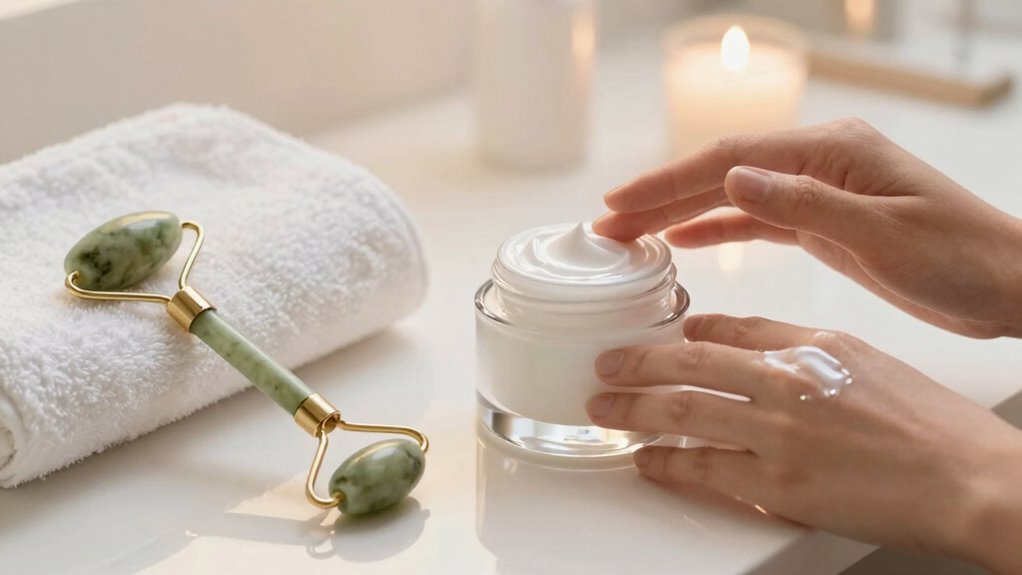
Why is layering a nourishing night cream such an essential step in a skincare routine? Because it seals in all the beneficial ingredients from serums and provides the skin with a barrier of nourishment. A good night cream is rich in antioxidants and barrier-supporting ingredients that support the skin’s natural overnight renewal process.
When applying, choose a texture suited to your skin type—lighter for oily skin or thicker for dry skin—ensuring comfort and effectiveness. Consider these key points:
- It enhances overnight hydration, making skin appear plumper and more radiant.
- It creates a moisture lock, preventing dehydration throughout the night.
- Proper layering helps maximize absorption of active ingredients.
- Using the night cream as the final step ensures your skin wakes up glowing and refreshed.
Add Eye and Lip Care for a Complete Routine
Eye and lip care in a nighttime routine might seem like small steps, but they play a decisive role in achieving truly glowing skin. Eye care targets delicate areas prone to puffiness, darkness, and fine lines, using products like peptide-rich eye creams or antioxidant serums. Applying eye cream before heavier moisturizers ensures the area absorbs nutrients properly.
Lip care, on the other hand, helps repair and lock in moisture overnight. Lip balms with occlusive ingredients or revitalizing treatments like vitamin C-based products work well. These steps seal in hydration and prevent dryness or cracking.
Incorporating eye and lip care into the nightly sequence—after serums and before or with your moisturizer—maximizes repair and keeps these sensitive areas healthy and radiant. This completes a well-rounded skincare routine.
Include Weekly Treatments to Boost Radiance and Hydration

Weekly treatments can make a noticeable difference in achieving radiant, well-hydrated skin, especially when incorporated into a night routine. These treatments help boost glow and moisture, giving skin that fresh, healthy look. Here are four ways to enhance your routine:
- Gentle exfoliation 2–3 times a week clears away dead skin cells, revealing brighter skin underneath.
- Hydrating masks or serums provide an extra boost of moisture, helping the skin stay plump and soft overnight.
- pH-balancing toners prepare the skin for serums and moisturizers, making active ingredients more effective.
- Night repair serums with growth factors or prebiotics nourish and strengthen the skin’s barrier, ensuring lasting hydration.
Incorporating these weekly treatments will leave skin luminous and resilient.
Optimize Your Routine With Devices and Nighttime Enhancements

Have you ever wondered how to get even better results from your nighttime skincare routine? Devices like LED masks and microcurrent tools can boost your routine, but they shouldn’t replace core steps like cleansing and moisturizing. These devices are best used after applying serums and before finishing with a moisturizer.
For example, LED light therapy supports collagen and skin renewal, aligning perfectly with repairing daytime damage. Microcurrent devices may help with firming and lifting, giving your skin a subtle boost. When incorporating these tools, it’s important to follow manufacturer guidelines and start slowly to see how your skin responds.
To visualize how these fit into your routine:
| Device Type | Purpose |
|---|---|
| LED masks | Support collagen, renewal |
| Wand tools | Target specific concerns |
| Microcurrent devices | Firming and lifting |
| Usage tips | Follow guidelines, start gradually |
Keep It Simple and Consistent for Best Results
Ever wondered what makes a nighttime skincare routine truly effective? Consistency and simplicity are key. A straightforward routine helps your skin repair while you sleep, boosting collagen, hydration, and absorption of active ingredients. To keep things manageable and avoid irritation, stick to a maximum of five products.
Here’s how to do it:
- Start with a gentle cleanser to remove makeup and impurities, think of it as giving your skin a fresh start.
- Apply targeted serums or treatments like vitamin C or barrier-supporting formulas to nourish deeply.
- Finish with a rich moisturizer to seal in hydration and protect your skin overnight.
Limit exfoliation to 2-3 times a week and avoid mixing retinol with exfoliants for safe, steady progress. Simple, consistent care leads to glowing, healthy skin over time.