
As an Amazon Associate, this website earns from qualifying purchases.
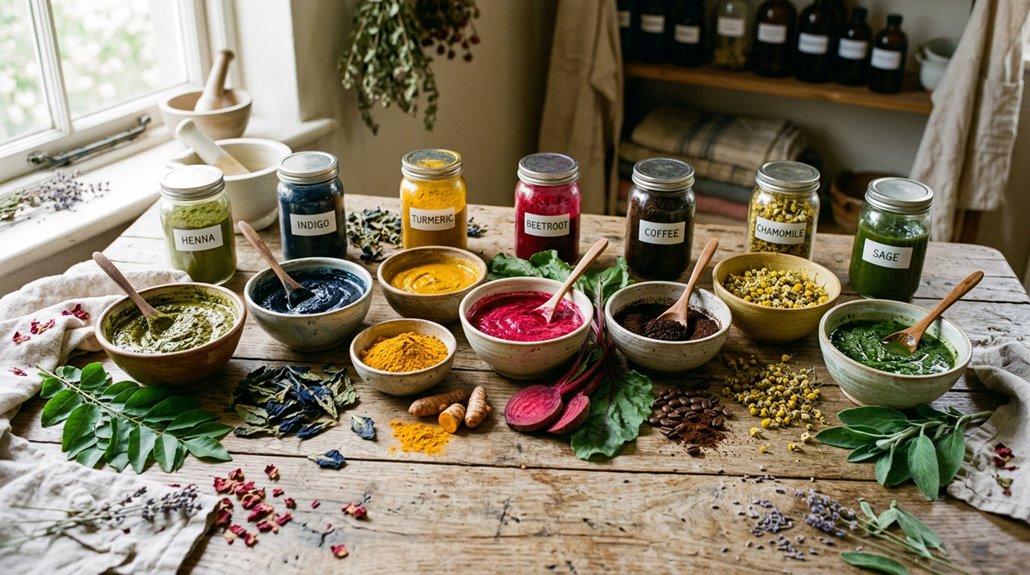
Natural hair dye options offer gentle, safe ways to refresh or change hair color. Using plant-based ingredients like henna for rich reds or indigo for dark shades creates vibrant, lasting results. Herbal rinses, such as chamomile for highlights or sage for darkening, add subtle touches. Combining henna and indigo allows gradual shading from red to black. Proper application tips ensure safety and longevity—like patch tests and sulfate-free shampoos. Keep exploring, and you’ll uncover even more ways to enhance your hair naturally.
1. Discover the Top Natural Hair Dyes for Every Hair Color
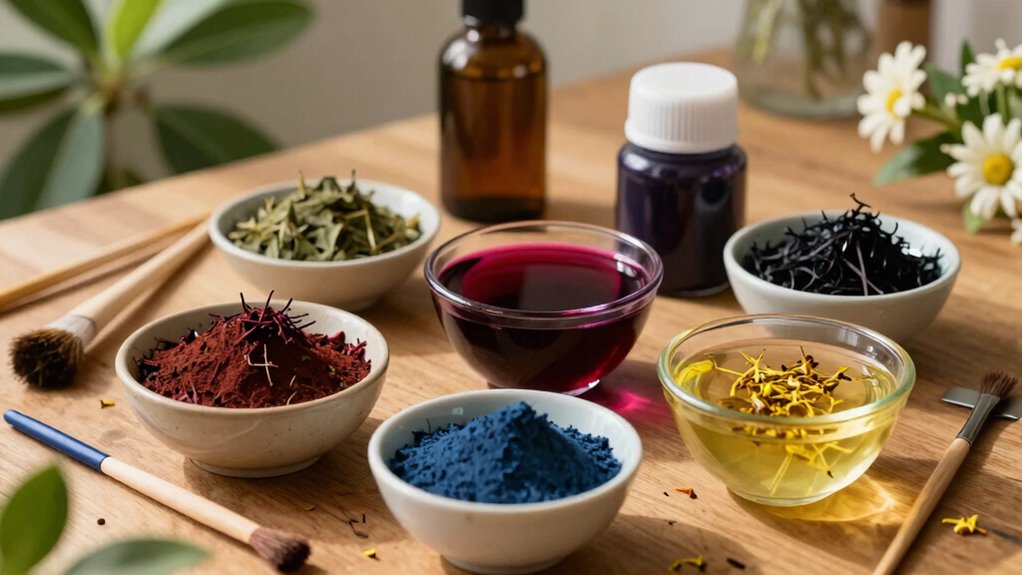
Have you ever wondered which natural dyes can beautifully enhance your hair color without harsh chemicals? Henna is perfect for creating long-lasting red to auburn tones and effectively darkening greys, although it does not provide complete gray coverage. When combined with indigo, it transforms into a natural, plant-based dye capable of producing medium to deep brown or even black shades, giving a rich, earthy look.
For blond hair, chamomile tea offers a gentle way to lighten strands and add a soft, sunny glow—especially when exposed to sunlight. These natural options are gentle yet effective, providing a safe alternative to synthetic dyes while allowing you to experiment with different shades using simple, plant-based ingredients.
2. How to Use Henna and Indigo for Rich, Vibrant Shades
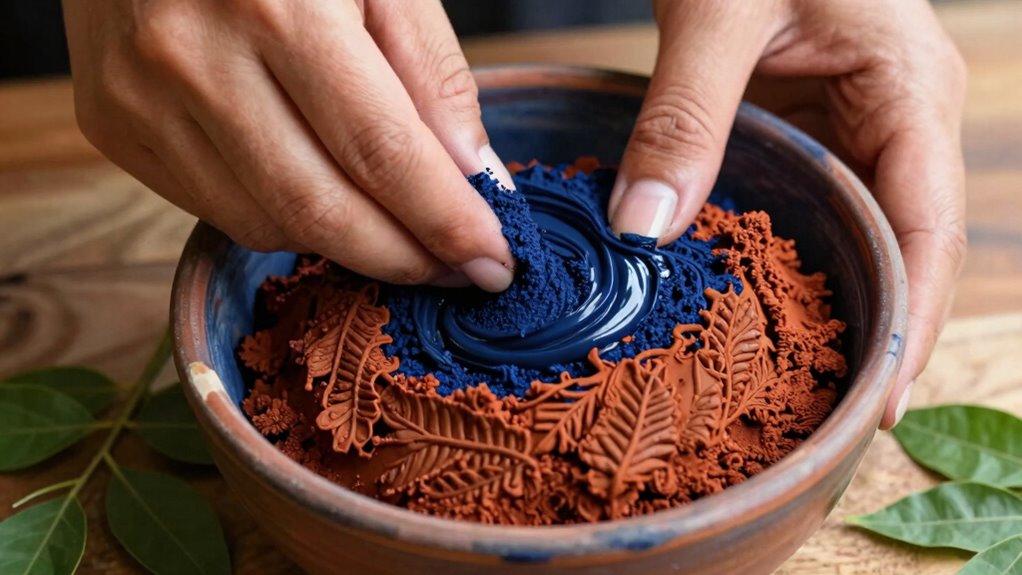
Using henna and indigo together offers a wonderful way to achieve rich, vibrant hair colors naturally, without relying on chemical dyes. The Morocco Method is especially popular, combining these plant-based dyes for dramatic results. Henna provides fast, permanent red to auburn tones, and it darkens greys noticeably.
Indigo, when added, creates medium to dark brown shades or even inky black if mixed correctly. To get the best results, prepare the henna paste first, allowing it to sit for several hours, then apply the indigo shortly afterward for deeper tones. This method guarantees even coverage and vibrant color.
It’s important to wait at least six weeks after chemical treatments to avoid unwanted orange or green hues. When used properly, henna and indigo offer a natural, cruelty-free way to transform hair beautifully.
3. Gentle Herbal Rinses and Lightening Techniques for Subtle Highlights
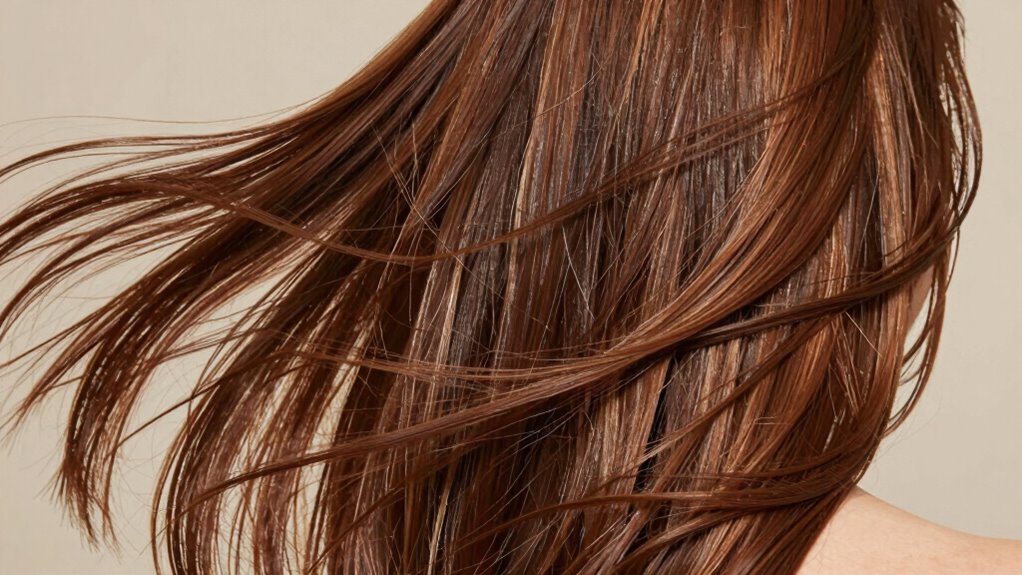
Ever wondered how to enhance natural hair color without harsh chemicals? Colloquial herbal rinses like chamomile are great for gentle, sun-assisted highlights. Brew strong chamomile tea, then let it cool before rinsing your hair as a final step. When exposed to sunlight, the tea’s natural compounds promote chamomile lightening, creating subtle, sun-kissed effects over time.
For slightly more noticeable highlights, adding calendula or saffron to the rinse can boost results. Lemon juice mixed with sun exposure also works, but it may dry out hair if used too often. Always test on a small section first to prevent unexpected color shifts, especially if your hair has been recently chemically treated. These natural methods offer a safe, soothing way to brighten your look gradually.
4. Creating Red and Auburn Tints With Safe Plant-Based Ingredients
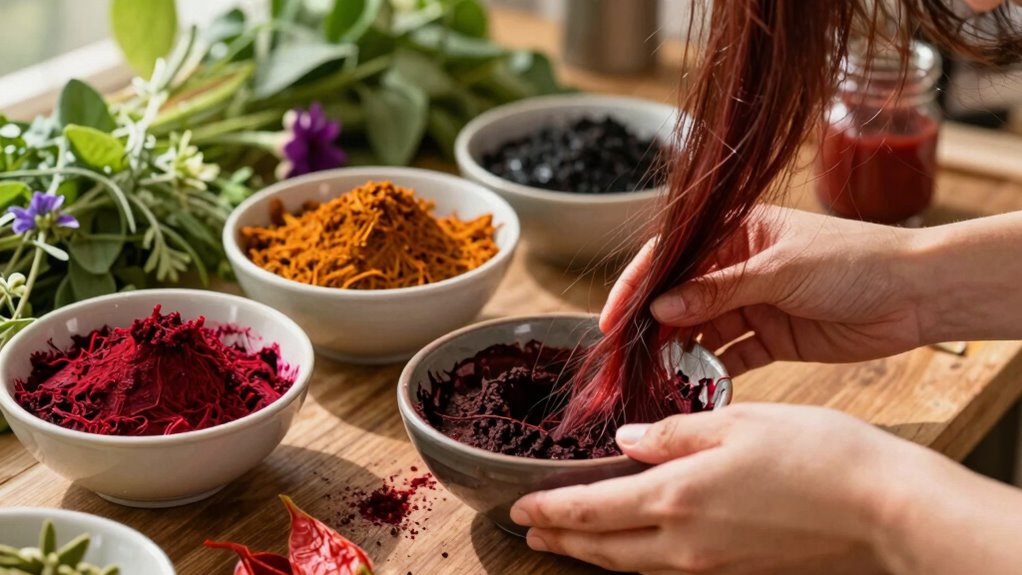
Curious about how to add warm red and auburn tones naturally? Natural dyes like hibiscus and henna are great options for achieving these vibrant hues. Hibiscus petals develop a rich red tint, especially with repeated applications that build depth over time, rather than offering an instant full coverage. Henna, on the other hand, provides warm auburn to red-brown shades and can be layered with hibiscus to enhance red tones.
Keep in mind that red outcomes tend to be lighter on darker hair, but combining henna with indigo can deepen the color. To make the most of these natural dyes, exposing hair to sunlight during application can help extend the vibrancy. Regular reapplications may be necessary to maintain the beautiful red and auburn shades.
5. Darkening Brown and Black Hair Naturally With Minimal Damage
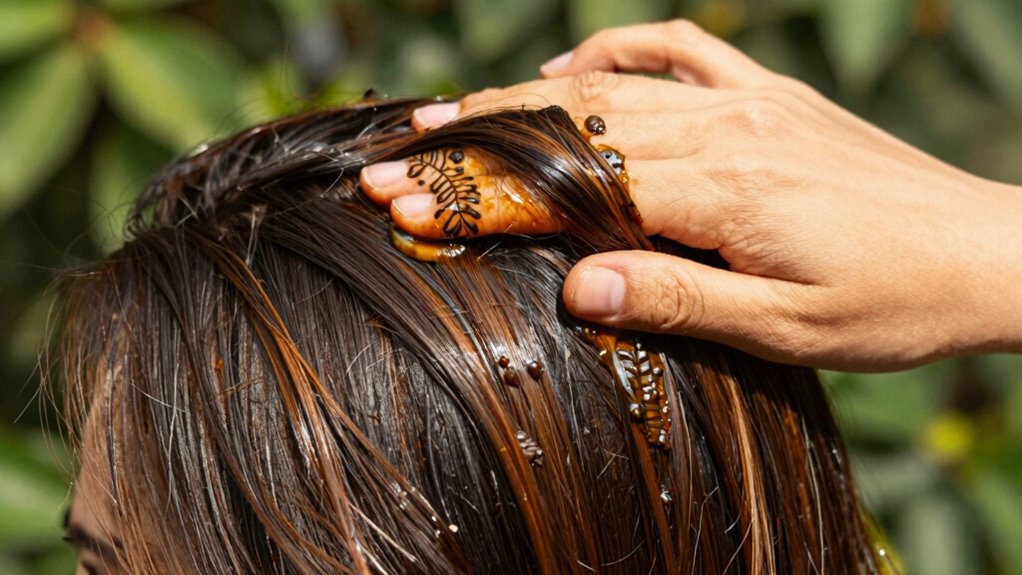
Darkening brown or black hair naturally can be achieved with gentle methods that respect hair health while reducing reliance on harsh chemicals. Using a mix of henna and indigo in the right proportions allows for a gradual, safe transformation. Henna adds warm red or brown tones, while indigo deepens the shade to inky black or rich dark brown.
Herbal rinses like sage, rosemary, or black walnut hulls can also help deepen the color gradually without damage. Imagine a deep, glossy black achieved through repeated indigo applications, subtle brown hues from herbal rinses that enhance natural shine, and a rich, warm glow from henna mixed with indigo for a custom shade. The gentle staining of coffee or black tea rinses that subtly darken over time can also be effective.
These natural techniques offer a safe, appealing way to darken hair with minimal fuss.
6. Tips for Applying Natural Dyes Safely and Achieving Long-Lasting Color
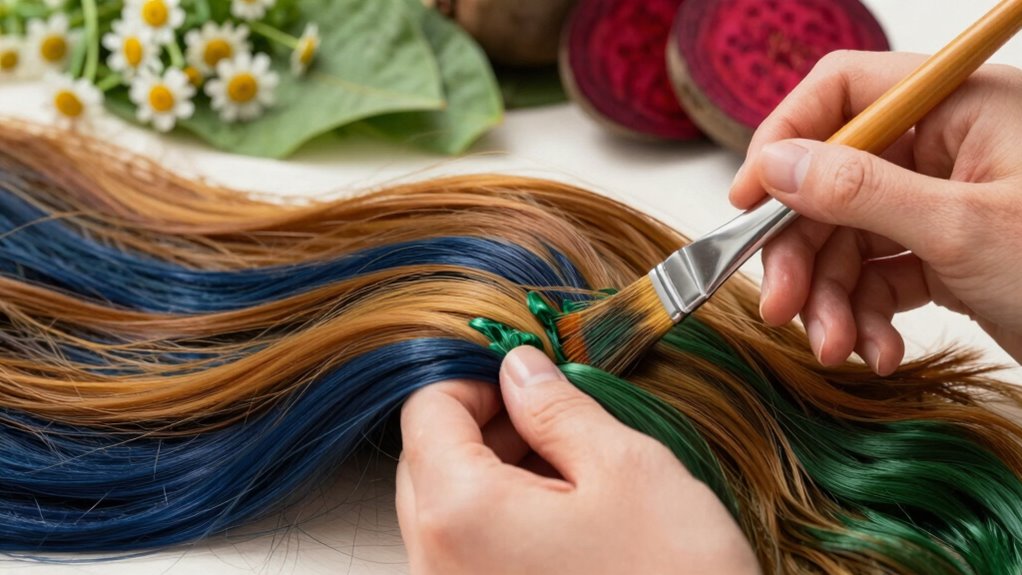
Applying natural hair dyes safely is essential to achieving the best results without compromising hair health. Starting with a patch test on a small hair section 24–48 hours before full application helps spot allergic reactions or irritation, ensuring safety. It’s also wise to test color on a strand first, especially if switching from chemical dyes. Additionally, wait 6–8 weeks after chemical treatments to prevent unexpected color mishaps.
To boost color longevity, reapply natural dye every 1–2 weeks and opt for gentle, sulfate-free shampoos that help preserve the hue. For light shades, chamomile offers subtle brightness; darkening shades can benefit from black tea or coffee rinses. Covering the hair with a plastic cap during processing ensures even pigment absorption, giving you vibrant, long-lasting results.
7. Troubleshooting Common Issues and Enhancing Your Natural Hair Color Routine
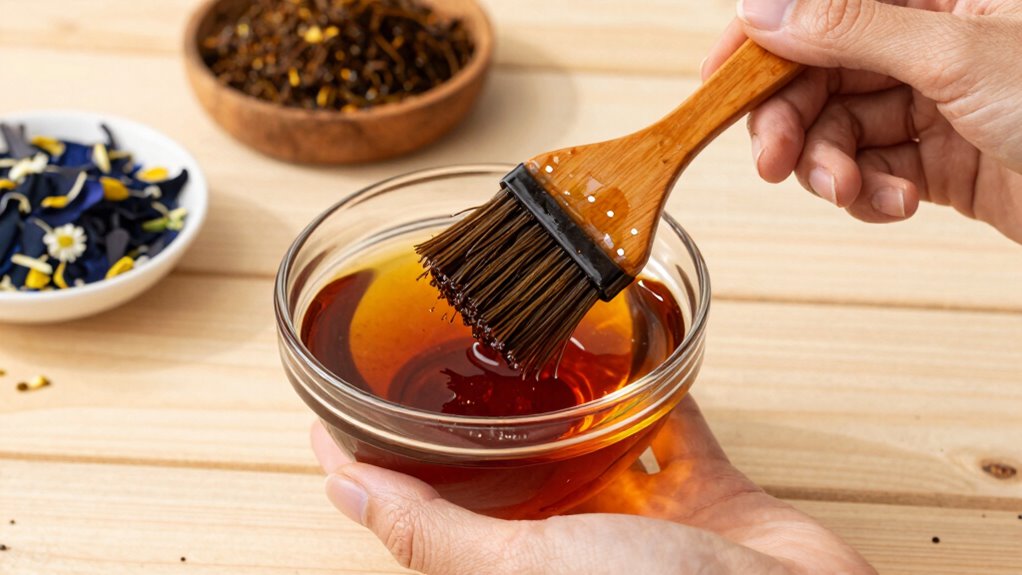
Have you ever wondered why your natural hair dye doesn’t turn out quite as expected? Sometimes, issues like uneven color or quick fading can be frustrating. To troubleshoot, consider the importance of patch tests to prevent reactions, especially with henna blends. Remember, natural dyes like henna and chamomile gradually fade, so consistent reapplication helps maintain your look.
For gray coverage, don’t expect complete opacity at first; greys will blend and darken subtly over multiple sessions. Combining henna with indigo can deepen shades but requires testing on a small strand first to get the perfect balance. Sun exposure and natural rinses, such as chamomile or black tea, also influence color intensity and longevity.
Imagine vibrant streaks that fade unevenly. Visualize duller, less vibrant hues over time. Picture patch tests catching skin sensitivities. Envision layered colors building gradually.