
As an Amazon Associate, this website earns from qualifying purchases.
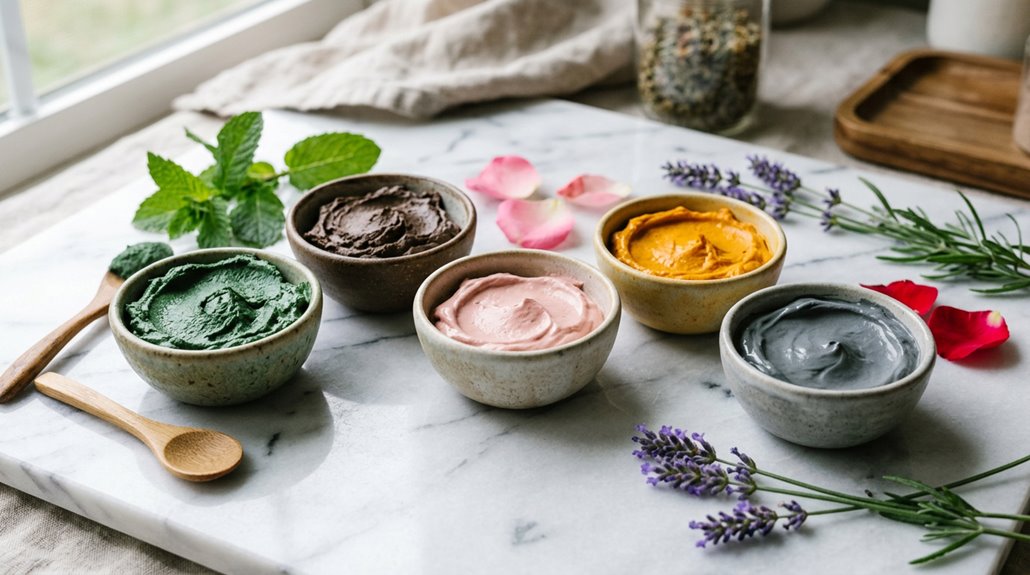
Clay masks can be easily customized for all skin types using simple ingredients. For example, dry skin benefits from adding honey or egg yolk for extra moisture, while oily skin responds well to apple cider vinegar or egg whites to control oil. Gentle options like green tea or rosewater suit sensitive skin. Using water-based additives such as teas, hydrosols, or milk helps activate the clay and personalize textures. For more creative ideas and step-by-step tips, discover how to craft masks that truly suit individual needs.
1. Understanding the Basic Science of Clay Activation and Water Mixing
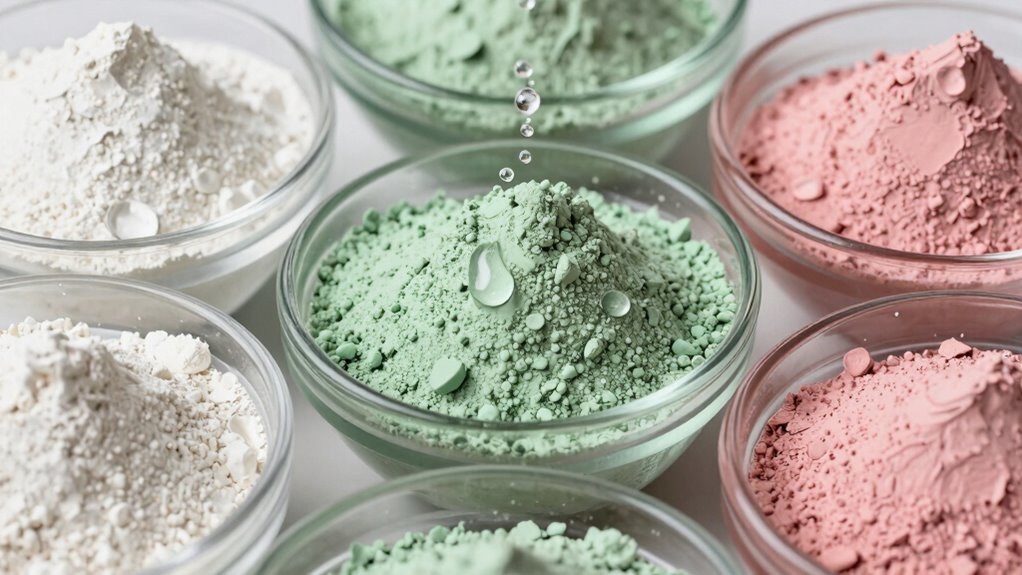
Ever wondered what really makes a clay mask work its magic? The secret lies in clay activation, which begins with hydration, the process of water soaking into the clay. When water is absorbed, it allows the clay to exchange cations and impurities, making it essential for binding and removing dirt. This activation sets clay apart from oil-based mixtures, highlighting the importance of water-based additives like hydrosols, teas, or milk.
These liquids influence not only the mask’s consistency but also boost its benefits. For example, adding yogurt can nourish the skin, while tea provides antioxidants. To keep the mask effective and gentle, any extras like vinegar or eggs should be incorporated within this water-based activation framework. Proper hydration is the key to maximizing clay’s cleansing powers.
2. How to Prepare a Simple and Effective Clay Mask at Home
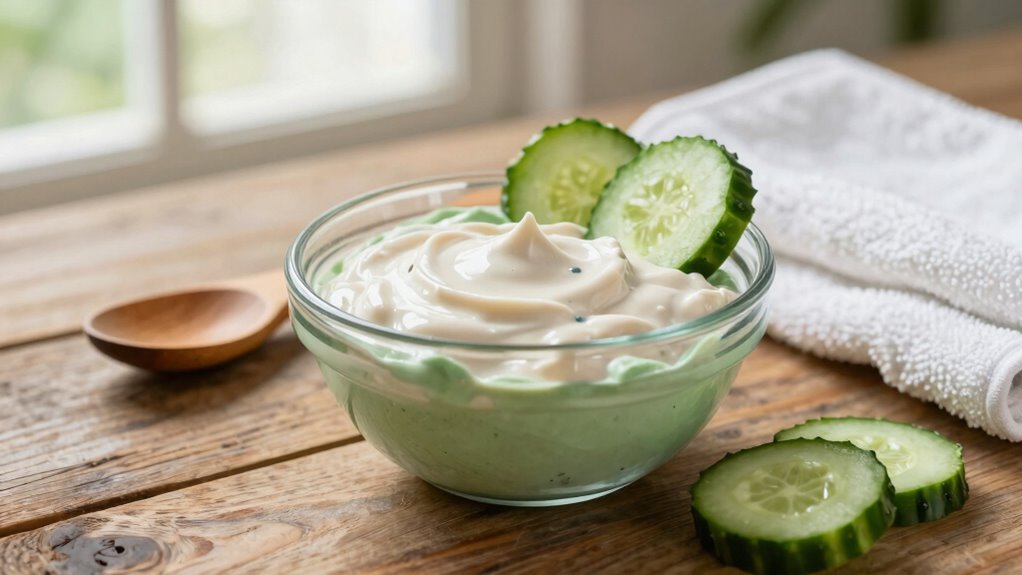
Preparing a simple and effective clay mask at home is easier than many realize, and it doesn’t require a long list of ingredients or complicated steps. To start, use 1/2 to 1 tablespoon of facial clay in a small non-metal bowl. Gradually add about 1/4 teaspoon of water, mixing until you achieve a creamy, mud-like consistency. Proper clay mask activation relies on water-based hydration, which helps the clay bind and draw out impurities without over-drying the skin.
For skin-type customization, consider adding gentle water substitutes like rose hydrosol or chamomile tea, depending on your skin’s needs. Keep in mind:
- Adjust water quantity for sensitive or oily skin
- Mix thoroughly to ensure smooth application
- Finish with moisturizer to lock in hydration
3. Using Water-Based Additives Like Hydrosols, Teas, and Food Ingredients for Better Results
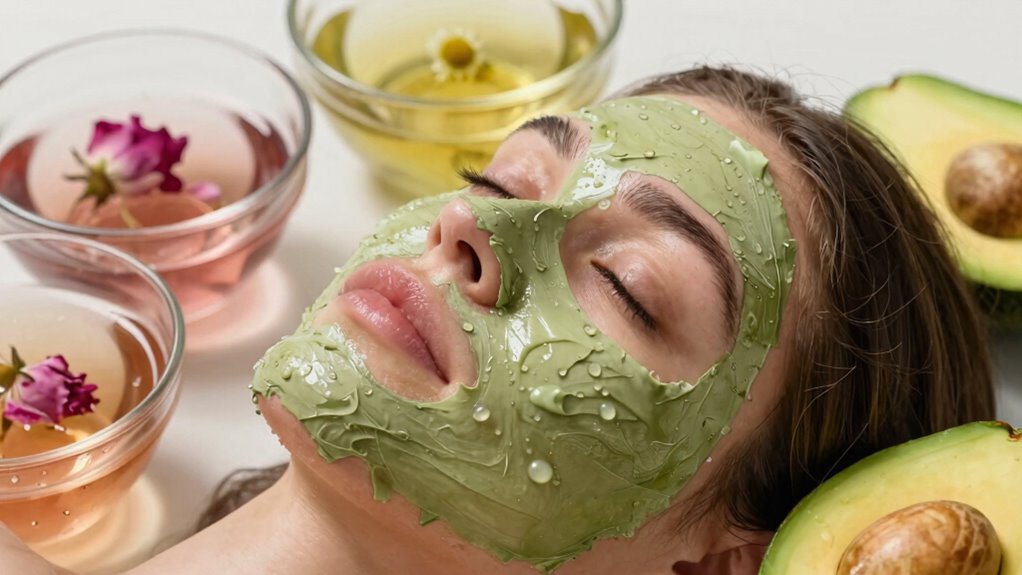
Have you ever wondered how to make a simple clay mask even more effective and personalized? Water-based additives like hydrosols, teas, and food ingredients can enhance clay masks by adding specific benefits. Hydrosols, aromatic waters from steam distillation, are gentler than essential oils and work well for facial use. For example, rose hydrosol suits all skin types and makes a lovely toner.
Teas, such as green or chamomile, offer targeted effects like antioxidants or calming properties. When replacing plain water in a clay mask, start with small amounts of these additives and gradually adjust until the mixture reaches a creamy, mud-like consistency. These water-based additives not only improve results but also help tailor masks to individual skin needs, making skincare more personalized and enjoyable.
4. Selecting and Combining Specific Ingredients for Targeted Skin Benefits
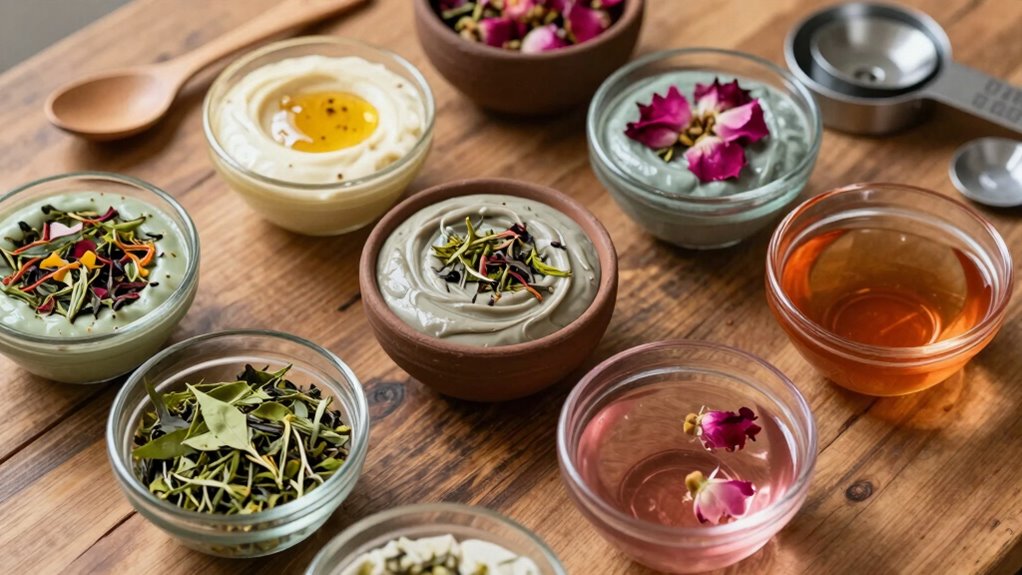
Choosing the right ingredients to mix into a clay mask can make a big difference in how it benefits the skin. For different skin types, specific natural additives work best. Dry skin may benefit from yolk or jojoba oil, adding moisture and nourishment, while oily skin responds well to egg whites or apple cider vinegar, which help control excess oil and bacteria.
When combining ingredients, water-based activation serves as a foundation, but adjusting with herbal teas, honey, or milk tailors the mask further.
For oily skin, bentonite clay with apple cider vinegar offers antibacterial benefits and gentle exfoliation.
For sensitive or normal skin, green tea or honey pairs with bentonite clay for antioxidants and hydration.
Combination skin balances oil control and moisture with rosewater and gentle additives.
5. Tips for Customizing and Safely Applying Your Clay Mask for Every Skin Type
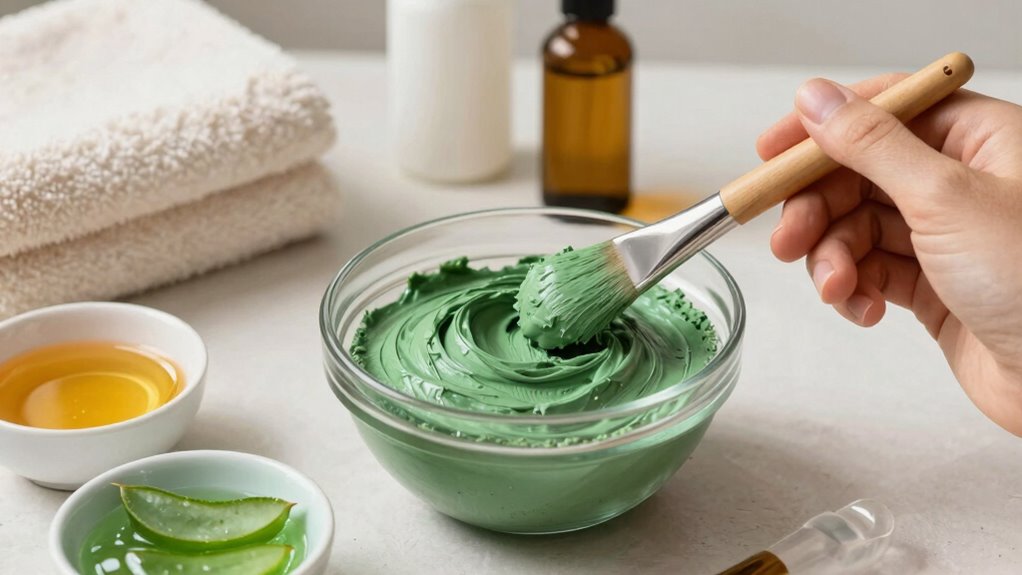
Ever wondered how to make your clay mask work best for your skin? That’s where clay mask customization and skin type guidelines come into play. Choosing the right clay—bentonite for oil control, French green for exfoliation, or kaolin variants for sensitivities—is essential.
When applying, use safe techniques such as mixing the clay with water, rosewater, or teas to keep it creamy and avoid drying out the skin. For oily skin, blending bentonite with apple cider vinegar works well, but dilute if your skin is sensitive. Dry or sensitive skin benefits from mixing bentonite with honey or rosewater, avoiding harsh ingredients.
Always rinse gently with water and never rinse large amounts of dry clay down the drain. Proper, safe application ensures a healthy, refreshing mask experience.