
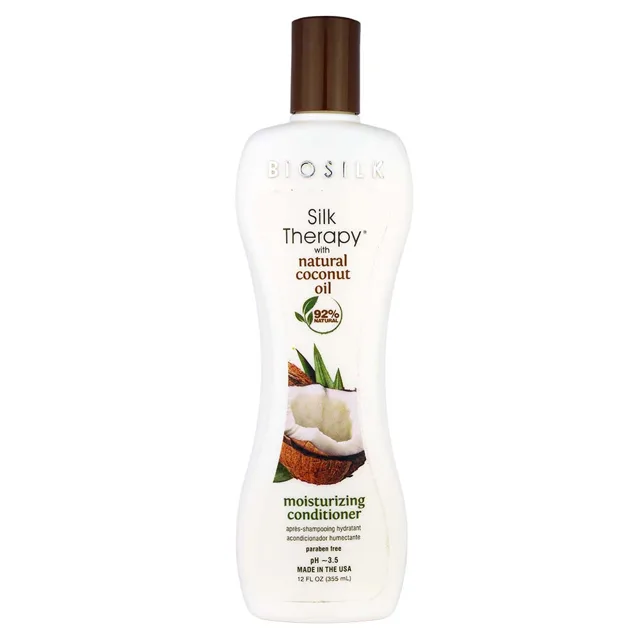
Biosilk Silk Therapy Coconut Oil Conditioner Review
We may earn a commission from some links on this page.
The Biosilk Silk Therapy With Organic Coconut Oil Moisturizing Conditioner is a rinse-out conditioner for hair that feels dry and thirsty. It pairs organic coconut oil with silk, the ingredient the Silk Therapy range is named after, and the brand says each use leaves hair soft, shiny and smooth. It is also silicone-free. This review sets out what the brand states about the formula, how it says to use it, and who is likely to get the most out of a bottle.
Table of Contents
Key Takeaways
- A rinse-out moisturizing conditioner for dry, thirsty hair.
- The formula is built on organic coconut oil and silk.
- The brand says it leaves hair soft, shiny and smooth, and adds strength.
- It is silicone-free, which suits anyone avoiding silicone build-up.
- Applied after shampoo from mid-shaft to ends, then rinsed with cool water.
- Sold in 5.64 oz and 12 oz bottles.
Coconut Oil and Silk
The two ingredients in the name tell you what this conditioner is for. Coconut oil is one of the most common conditioning oils in hair care, used to soften dry lengths and make them easier to comb. Silk is the signature ingredient of Biosilk's Silk Therapy range, and the brand pairs it with the oil here to leave hair feeling smooth and looking shiny.
The brand describes the result in plain terms: hair that is soft, shiny and smooth after each use. It also says the conditioner adds strength and helps shield strands from heat and the elements. That makes it a moisture-first conditioner rather than a volumizing or clarifying one, which places it squarely with dry, rough or frizz-prone hair.
The formula is silicone-free. Silicones are what give many conditioners their instant slip, but they can build up on some hair over time, so a silicone-free conditioner is a common choice for anyone who washes often or prefers a lighter feel at the roots.
How to Use It
The directions are simple. After shampooing, apply the conditioner generously from mid-shaft to the ends, which is where hair is oldest and driest. Then rinse with cool water; the brand says the cool rinse seals the cuticle and enhances shine.
Keeping it off the roots matters most for fine hair or an oily scalp, since an oil-based conditioner at the roots can make hair look flat. On thick, coarse or curly hair you can use more, and a few minutes in the shower before rinsing gives it time to work through the lengths.
Because it is a rinse-out conditioner, it fits into an ordinary wash routine. If your ends are very dry, a leave-in conditioner after the rinse is an easy second step, and one is listed further down.
Detailed Features
These are the details from the product page, sorted by what they mean for your hair.
| Ingredient or feature | What the brand says |
|---|---|
| Organic coconut oil | Moisturizes thirsty hair. |
| Silk | Leaves hair soft, shiny and smooth. |
| Silicone-free | No silicones in the formula. |
| Strength and protection | Adds strength and shields strands from heat and the elements. |
| How to apply | After shampoo, generously from mid-shaft to ends; rinse with cool water. |
| Sizes | 5.64 oz and 12 oz. |
The table is what the product page states. There are no test figures on the page, so the results are the brand's description of what the conditioner is designed to do rather than measured outcomes.
Advantages and Disadvantages
The strengths are the short, moisture-focused formula and the silicone-free label. The limits come from what any rinse-out conditioner can do.
- Advantages: coconut oil and silk for dry hair, silicone-free, simple directions, two bottle sizes so you can try the smaller one first.
- Disadvantages: an oil-based conditioner can weigh down very fine hair if too much is used, the product page gives no full ingredient list, and the heat protection the brand mentions does not replace a heat protectant before hot tools.
It is not a treatment for hair loss or a fix for split ends; no conditioner is. It is a moisturizing step that makes dry hair softer and easier to manage, which is what most people buying a coconut conditioner want.
Who It Suits
Dry, coarse, wavy or curly hair is the natural fit. If your ends feel rough after a wash or tangle easily, a coconut oil conditioner is aimed at you, and the silicone-free formula suits anyone who has found heavier conditioners leave a coating behind.
Fine hair can use it too, with a smaller amount kept to the ends. If your hair is already soft and you only need a quick detangle after frequent washing, a lighter daily conditioner is a better match, and one is listed below.
As with any new hair product, patch test if you have a sensitive scalp, and stop if you notice itching or irritation. You can find the Biosilk Silk Therapy Coconut Oil Conditioner in both sizes at the link.
Frequently Asked Questions
Is It Silicone-Free?
Yes. The brand describes the conditioner as silicone-free.
How Do You Use It?
After shampooing, apply it generously from mid-shaft to the ends, then rinse with cool water, which the brand says seals the cuticle and adds shine.
Will It Weigh Fine Hair Down?
It can if you use too much. Fine hair does better with a small amount on the lengths and ends only, kept away from the roots.
Does It Protect Against Heat?
The brand says it helps shield strands from heat and the elements. A rinse-out conditioner is not a substitute for a heat protectant applied before blow-drying or using hot tools.
What Sizes Does It Come In?
It is sold in a 5.64 oz bottle and a 12 oz bottle.