
As an Amazon Associate, this website earns from qualifying purchases.
To choose the right amla oil, it’s important to consider hair texture, porosity, and scalp condition. Fine or low-porosity hair benefits from lighter oils, while coarse or high-porosity hair needs richer formulas. For dry or itchy scalps, soothing blends with herbs like lavender help. Using simple tests, like a water float test for porosity, can guide choices. Knowing your goals—whether nurturing, growth, or balancing oil—ensures better results. If curious about more tips, this guide has plenty to offer.
How to Assess Your Hair Type and Texture for Optimal Oil Selection
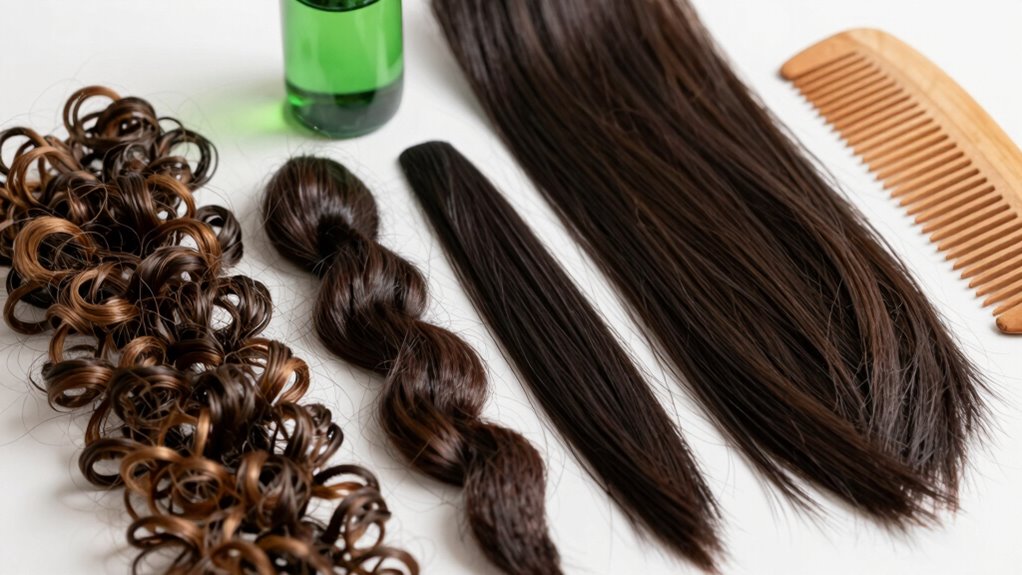
Ever wonder how to choose the best Amla oil for your hair? Understanding your hair’s porosity and texture is key to making the right oil selection. Porosity shows how quickly moisture enters or escapes hair. For instance, high porosity sinks fast in water, indicating it needs more hydrating oils, while low porosity floats, favoring lighter oils.
Texture refers to whether hair is fine, medium, or thick, affecting how much oil it can handle comfortably. Combining these factors helps determine the ideal oil—lighter oils for fine, low-porosity hair, and richer, more nourishing oils for coarse, high-porosity hair. To test porosity at home, place a clean strand in water and watch how it behaves. This quick step guides better oil choices for healthier hair.
Key Factors to Consider When Choosing Amla Oil for Your Goals
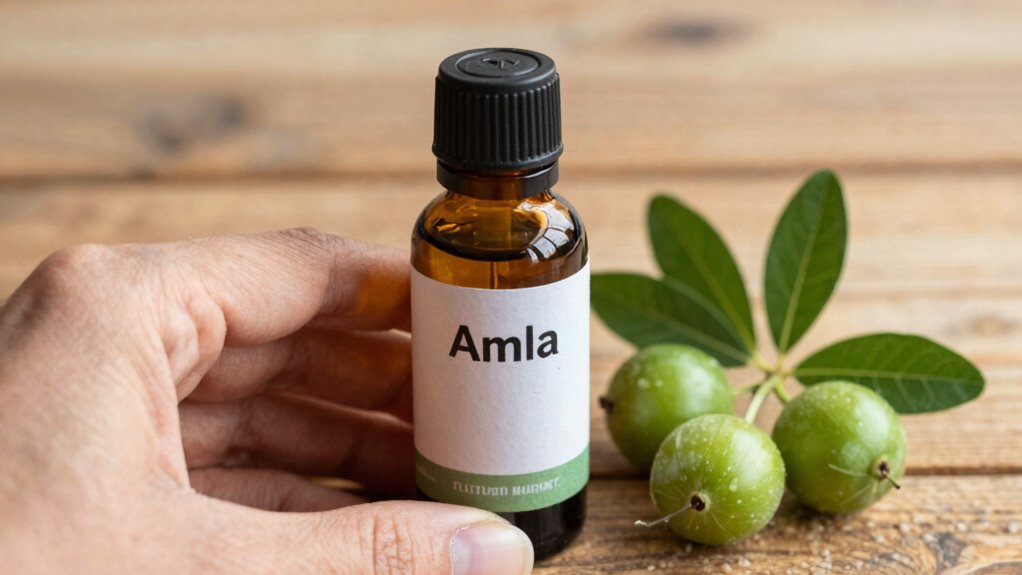
When choosing Amla oil to support specific hair goals, it’s helpful to regard how the oil interacts with your scalp and hair needs. High-quality amla oil with pure ingredients and lab-tested safety ensures better results for scalp health and hair growth routines.
For thinning hair, look for oils rich in antioxidants and tannins to nourish roots. Blending Amla oil with lighter oils like rosemary or almond can prevent greasiness and improve hydration.
For growth-focused goals, combining Amla with rosemary oil (3–6 drops per tablespoon) boosts effectiveness. Consider these factors:
| Factor | Importance | Example |
|---|---|---|
| Amla oil quality | Ensures potency and safety | Pure, lab-tested formulations |
| Scalp health | Supports nourishment and strength | Nourishing antioxidants |
| Hair growth routine | Aligns with your goals and daily practices | Weekly treatments, blends |
Best Amla Oil Formulations for Different Hair Types and Concerns
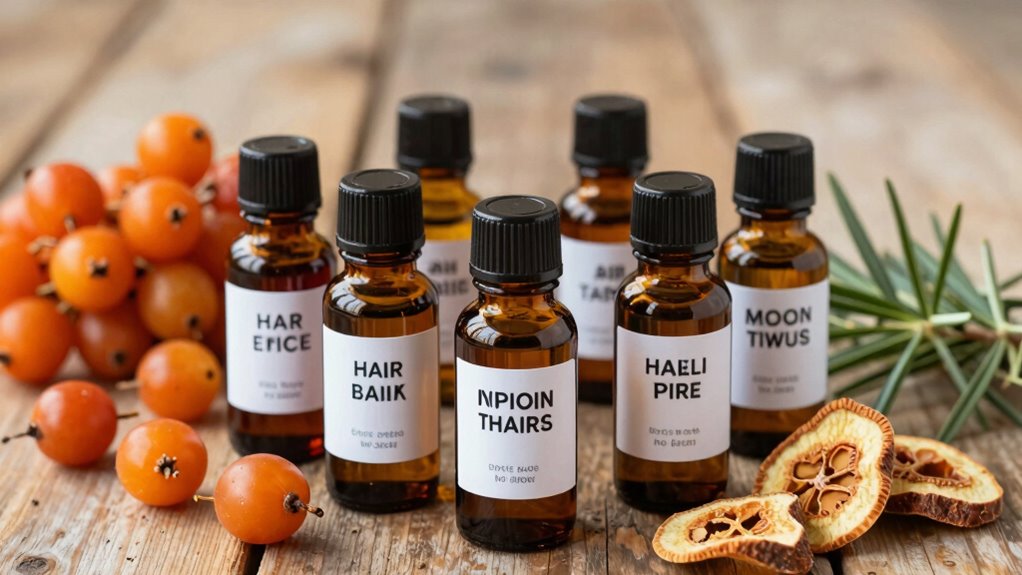
Choosing the right Amla oil formulation depends heavily on individual hair types and specific concerns. For curly or coily hair, amla oil serves as a great foundation for scalp nourishment and long-term strength, helping curls stay hydrated and healthy.
Use amla oil before wash day or as a weekly treatment for scalp health and stronger hair over time. Pair amla oil with lighter oils like jojoba or coconut to keep the blend light, promoting non-greasy results. For growth support, combine amla oil with rosemary oil, applying a few minutes to the scalp, then rinsing after 30 minutes to 2 hours.
For oily scalps or fine hair, apply sparingly to the scalp and focus more on mid-lengths and ends to avoid heaviness while still benefiting from scalp nourishment.
How to Match Your Scalp Condition With the Right Amla Oil
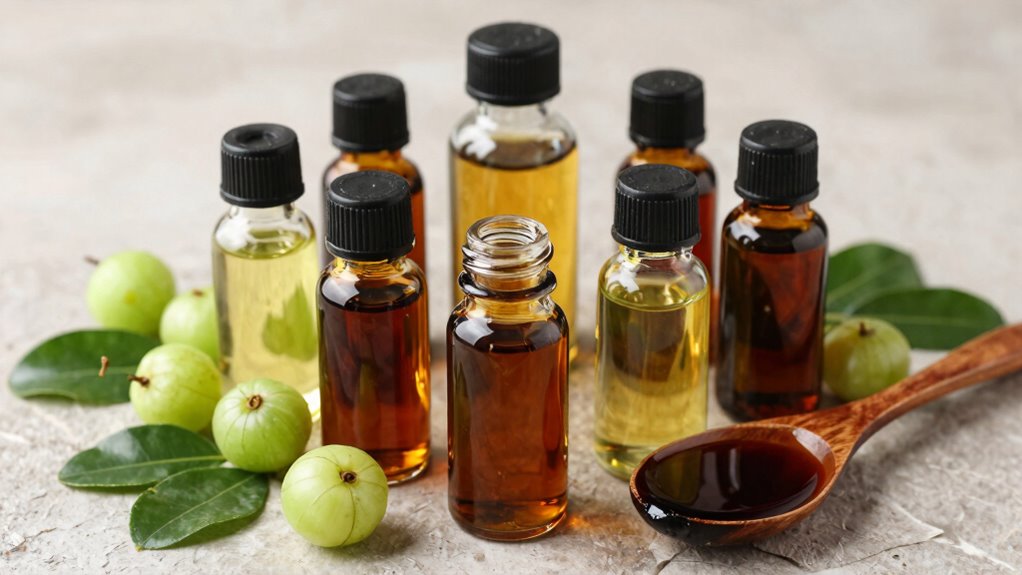
Understanding your scalp condition is key to choosing the right Amla oil, as different issues require different solutions. For itchy or very dry scalps, oils with soothing compounds like lavender, rosemary, or tea tree can calm irritation and hydrate the skin. These help nourish follicles and reduce discomfort.
If your scalp is oily, lightweight, non-greasy Amla oil works best, balancing sebum production without leaving residue. Assessing your scalp’s health guides you to select oils that support growth, hydration, or repair. For example, Amla oil promotes nourishing follicles and long-term softness, making it suitable for dry or sensitive scalps. Meanwhile, adding rosemary oil can boost circulation when diluted, aiding overall scalp health.
Matching your scalp condition ensures you get the most benefits from your Amla oil routine.
Tips for Applying Amla Oil Effectively Based on Hair Texture and Goals
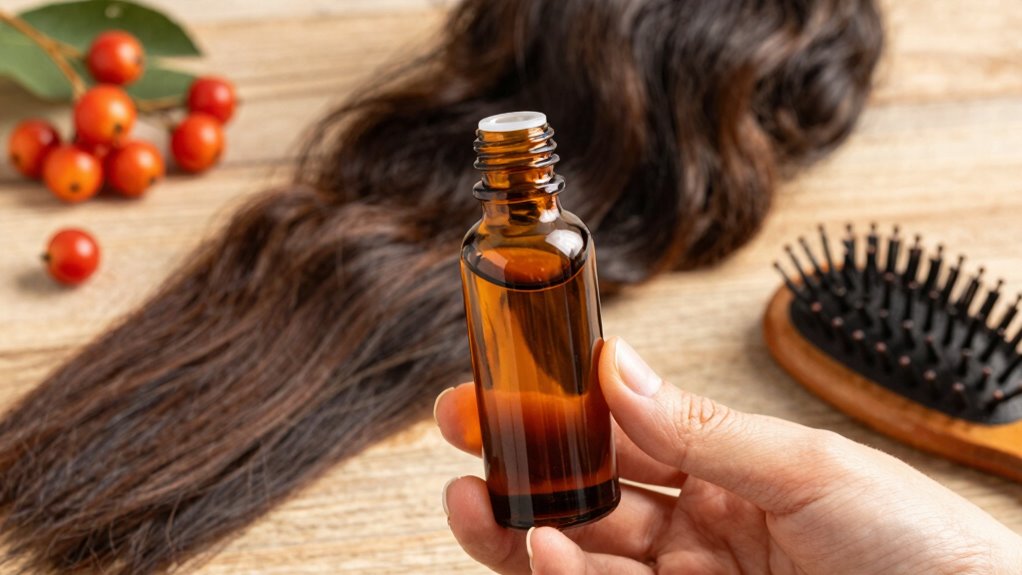
Have you ever wondered why some Amla oil routines work better than others? The key lies in tailoring application to your hair texture and goals.
For curly or coily hair, it’s best to use amla oil as a scalp treatment, applying lightly to avoid greasiness. Then, wash it out after 30 minutes to 2 hours.
Fine hair benefits from focusing amla oil on the scalp and mid-lengths, using less on the ends to prevent heaviness.
For dry or dull hair, blending amla oil with coconut oil nurtures roots and shafts without overloading.
To boost growth, pair amla oil with rosemary, massaging the scalp for 3–10 minutes and leaving it on for 30 minutes to 2 hours. Adjust your routine based on your hair texture for healthier, happier hair.
Common Mistakes to Avoid When Using Amla Oil on Your Hair
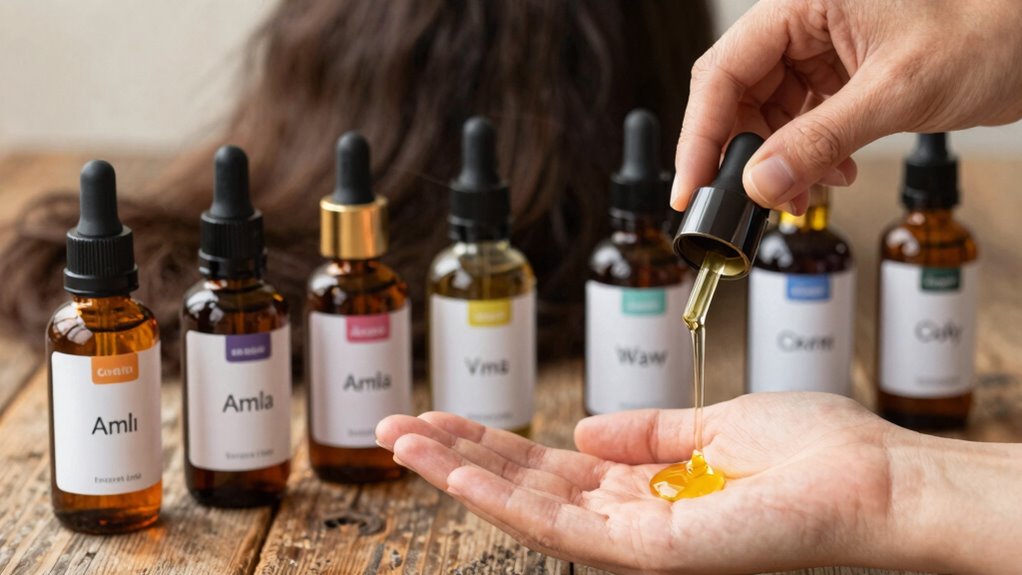
While amla oil can be a wonderful addition to hair care routines, there are common pitfalls that can undermine its benefits. Amla oil caution is essential, especially for those with sensitive scalps, as it can cause irritation if not used properly. For example, applying it directly to damaged or irritated skin can worsen discomfort.
It’s also important to consider hair type suitability. Fine or low-porosity hair may struggle with heavy oils like castor mixed in, leading to buildup. Additionally, using amla oil on very oily scalps daily can weigh down roots and make hair look greasy.
Lastly, after sun exposure, heat can increase scalp sensitivity, so applying amla oil without soothing ingredients can cause irritation. Awareness of these common mistakes helps ensure the oil works in harmony with individual hair needs.
How to Incorporate Amla Oil Into Your Hair Care Routine for Best Results
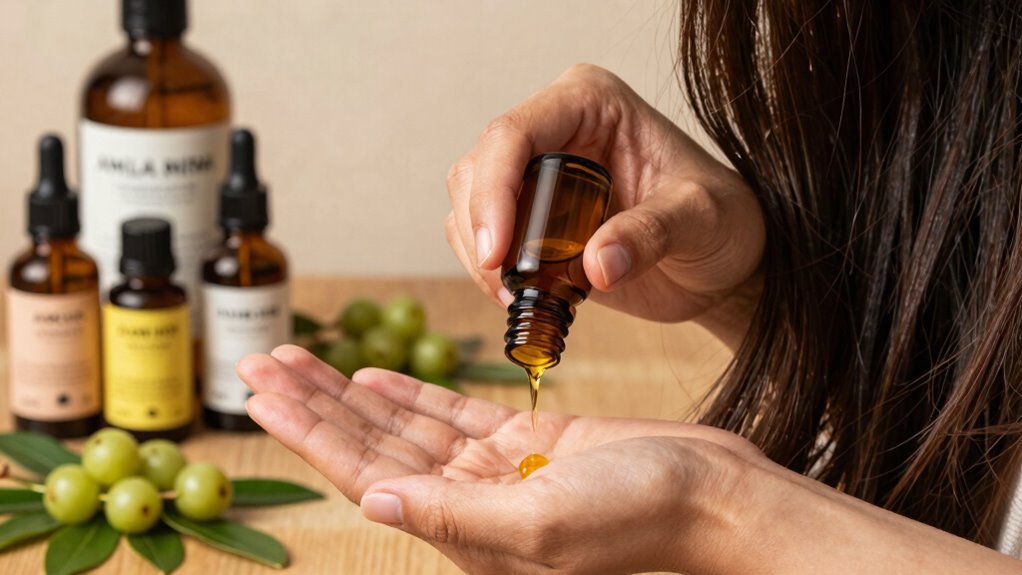
Wondering how to get the most out of amla oil for your hair? Incorporating it into a consistent hair care routine can boost scalp health and strengthen roots.
First, apply amla oil as a pre-wash treatment by massaging it into the scalp and letting it sit for 30 minutes to 2 hours, then rinse thoroughly.
To enhance benefits, pair amla oil with lightweight carriers like jojoba or coconut oil, applying lightly to avoid greasiness.
For an Ayurvedic twist, blend it with rosemary or bhringraj for a scalp massage of 3 to 10 minutes.
A practical approach is to warm a small amount, massage into the scalp, wait, then rinse.
Repeat weekly or biweekly to support hair growth and overall scalp health.